Showing posts with label China. Show all posts

Thursday, February 6, 2014

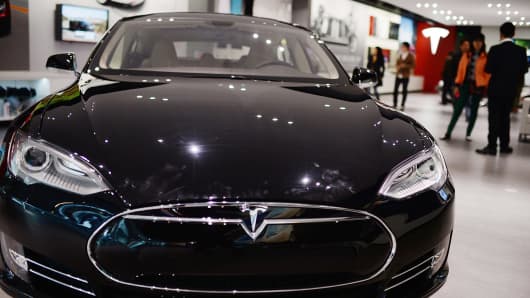
Carmaker Tesla WINS China fans with "fair" pricing strategy

Carmaker Tesla WINS China fans with
In China, where higher prices mean prestige luxury can US electric carmaker Tesla a bold step win win the markup, which some of his competitors only half by taking customers and cachet command.

Although it runs the risk of downs, Tesla's marketing strategy could be a model for other imported its brand at a lower level brands, the Chinese State-run media and regulatory authorities demolish shopper for allegedly with inflated prices under fire came.

An unusual blog post detailing last month of lower-than-expected 734.000 yuan ($121.400) China price for its higher-end model S electric car company. The price still 50 percent higher than in the United States includes only "inevitable" taxes and transport costs, it said.

"If we industry practices to follow, could we S come with the charge twice as much for the model in China, as we in the United States. But we are different things,"Tesla's blog said on 22 January, written for the consumer by popular Chinese social media channels.

The blog with the title "A fair price", drew overwhelming support from China's active netizens are. A reader survey on popular site QQ.com, which more than 80,000 votes, showed that 90 percent of consumers move the U.S. carmaker supports.

Analysts said lower pricing strategy premium could deter segment buyers ensuring additional typically want to spend quality and cachet.

"Price transparency helps out, because people see that as being different, but lower price itself, I see no great influence," said Andreas Garcia, Shanghai-based principal focus consultancy a.t. Kearney. automotive.

Automakers charge often steep premiums in China. Daimler-high-end Mercedes-Benz SLS AMG model costs 3.1 million Yuan ($509.000) in China, according to its local site, 150 percent higher than the starting price in the United States. Volkswagen Audi TT Coupe costs 519,000 yuan ($85.800) in China, about twice the U.S. starting price.

While other car companies already offer price discounts to lure buyers with China, Tesla is the first, a clear statement to charge the Chinese buyer, the same as in overseas markets, transparency in a nice marketing ploy.

"Not just the pricing strategy, but rather to show it, like the communication with Chinese consumers during one pricing is transparent world", said Shawn Wu, Shanghai-based project manager at the consultancy of SmithStreetSolutions.

Last year, Tesla's total car sales were approximately 22,500, especially in the United States. The California based company plans, shops in 10 to 12 Chinese cities open until late 2014 says that he expects that China one-third the sales growth this year to.

Risky game

Foreign manufacturers of products made of milk powder and hand bags have traditionally been steep premiums for high end products in China, where the price is often closely linked to quality and prestige.

But with more attention from State media and increasingly conscious buyers, consumers unhappy with artificially high prices, grew, Oceanne Zhang, head of said market insights for consultant Kantar retail in Shanghai.

"prices you can only abroad or travel abroad and they realize that what they pay extra, is no premium on other markets. It's only a bonus payment in China, "she said.

Companies, including US retailer Wal-Mart stores and Starbucks Coffee House have attracted attention due to their high prices of Chinese State television and regulators.

China Central television (CCTV) in the sights taken has international automotive manufacturer for the high prices. A report in December singled out companies such as Audi and Jaguar Land Rover, owned by India's Tata Motors.

Imported milk powder companies nutrition, Danone and New Zealand have also come in focus about their high prices with Mead Johnson dairy Fonterra Co-operative Group, which included all last year under the microscope.

Tesla's strategy, she hopes, breaks the form of the high pricing of imported products, said Veronica Wu, Tesla's new head of China operations, which the California joined-based carmaker in December of tech giant Apple.

"I hope it will. I think that it is the right thing", said for the first time in China, Wu in Tesla's flagship store in Beijing who last year opened for business at the end. High prices asked CCTV to say that the market had become a "treasure Bowl" for global automakers last year.

Friday, December 13, 2013

China to end anti-dumping duties on U.S. auto imports

China to end anti-dumping duties on U.S. auto imports
SHANGHAI, Dec 13 Reuters) - China on Friday said it would stop collecting anti-dumping and anti-subsidy duties on certain types of cars from the United States imported, if the measures on Dec. 15.

14 December 2011, China began collecting punitive tariffs on sedans and sports of utility vehicles (SUVS) with engines of 2.5 litres and above imported from the United States in retaliation for US trade policy.

China said then that U.S. automakers General Motors co and Chrysler Group will receive State subsidies and their vehicles on the Chinese market, which damaged threw China's auto industry.

On Friday by the Commerce Ministry in a statement said on its website the obligations would be cancelled because it had received no applications for a renewal in the anti-dumping investigations.

Growth of the market for imported cars in China this year in line with the domestic car market, facilitates campaign partly on Beijing's anti-extravagance.

In the first 10 months 908,000 imported vehicles in China to 9.6 percent from the previous year after China Automobile trading co., Ltd. were sold compared with an increase of 21.7 percent over the same period last year.

The State car importer expects the import vehicle market 7 percent grow next year.

Wednesday, November 13, 2013

GM to move to international headquarters in Singapore from China

GM to move to international headquarters in Singapore from China
General Motors co said on Wednesday it seat international activities 2014 will be moved to Singapore from Shanghai in the second quarter.

The move comes after GM split operative China from its international units this year say the specializes in the Chinese automobile market, which would facilitate world's largest.

Moving is expected to support headquartered Asia as come blow to Shanghai, attempted with the likes of Singapore and Hong Kong as a location for multinational companies to compete.

GM said it had as other locations for the relocation and looked to keep the headquarters in Shanghai, but finally decided on Singapore.

"It offers several advantages, including greater proximity to CIO key markets like ASEAN and India, the Middle East and Africa," said Lori Arpin, Vice President communications for GM's international operations.

Many multinational companies are lured to Singapore's shores, with its competitive tax rates, use of English, skilled workers and high standard of living.

Its headline corporate tax rate is 17 percent, although a lower rate of companies, their regional headquarters there base can benefit if certain criteria such as job creation and spend a certain amount meet at money in the City-State.

Singapore is one of the most expensive countries in the world to own a car, and is not known as an important basis for car manufacturers.

General Motors said that it had around 120 employees in Singapore the "key parts" of the company in the region, Asia-Pacific, Africa, the Middle East and Chevrolet and Cadillac Europe would monitor.

The new base but will house some of its sales and marketing, finance, government relations, human resources, information technology and legal functions.

Thursday, November 7, 2013

China's BYD says more U.S. employees for California property to rent

SHANGHAI, Nov 4 Reuters)-Warren Buffett-backed Chinese car manufacturer BYD Co Ltd said that it would hire more local employees at the new electric bus factory in California, its latest response to criticism that it violated work rules in the United States.

BYD has temporarily borrowed, some Chinese engineers and experts to Chinese technology in local employees of integrated Los Angeles transfer and no American workers will be displaced, BYD said in a statement on Monday.

BYD plans to another, bus production begins it added to hire local employees. BYD employs approximately 40 local workers in the factory.

Advocacy group Los Angeles Alliance for a new economy said that the carmaker employees pay the required minimum wage have failed, and it accused of human rights violations. The company $100,000 fine after California authorities the fees the New York investigated according to a current report times.

BYD said last week the labour rights group spreading "Misinformation".

In the statement on Monday, BYD said it "dedicates itself to make sure that its employees be treated fairly" and details some of its workers conditions in the factory.

BYD stepped up efforts to sell electric vehicles from abroad. It has this year among others to the U.S. cities of Los Angeles and long beach and to Amsterdam Schiphol airport provide completed several contracts.

Tuesday, October 1, 2013

Peugeot partner possible China does not provide GM

Peugeot partner possible China does not provide GM
NEW YORK, Sept 27 Reuters)-General Motors co, which always struggling, believes his ailing Europe fix that a key partnership in France would survive, even if the French do together ties with China's Dongfeng motor group co. Ltd, a top GM Manager said on Friday.

In June reported the Reuters news agency, that the founding family of PSA Peugeot Citroen had offered, control over the automaker give up, as it tries to revive plans for a closer connection with GM backed by fresh capital injection.

"We are not PSA only partner... I think that it would complicate our situation, just as it would difficult for some of their other partners," GM Vice Chairman Steve Girsky told Reuters in an interview in New York, referring to a possible partnership between Peugeot and dongfeng.

He acknowledged, that the such a link on GM Alliance with Peugeot would depend the impact of Dongfeng on how much influence had. He said that another factor would be whether all vehicles in such a partnership in China would be sold where is GM joint venture partner SAIC Motor Corp.

Peugeot had also talks fruitless over the sale of a stake to a consortium of Dongfeng listed sources said in June.

GM has so far refused to invest more money in Peugeot, an attitude, on Friday confirmed the Girsky. GM is Peugeot's second-largest shareholder behind the Peugeot family.

He said "We our 7 percent first and foremost not bought, because we wanted to influence in PSA, but because we wanted to help them at the time with their capital procurements".

Girsky said Peugeot has not raised the issue with GM and he refused to say whether the U.S. automakers would be willing, have diluted its stake in the PSA.

"We have had no discussions. "We don't know what to do, and if they decide what they are doing, they pick up the phone and call us."

STRENGTHEN THE BRAND

Fixing by GM is the priority and the Alliance with Peugeot to help, said Girsky. GM and PSA still work together, to build two minivan-like vehicles on the same vehicle platforms from 2016, but largely for the European markets are also discussed other unidentified products, he said.

GM money losing European unity since a major focus for investors the automaker in the fall of 2010 for a bankruptcy reorganization and a $49.5 billion U.S. bailout stock market went. In November 2011, accused Chief Dan Akerson Girsky overhaul of Europe, the 13 years have suffered losses.

Girsky said the European car market, the 20-year earlier this year has depression, bottoming, but GM is a huge industry volume restore not expected in the next year or two.

GM fighting costs from its Opel in Europe and the commitment received that, to launch new models will give out business $5.2 billion by end 2016. Now needs to focus on GM what the brand stronger and Girsky was Opel said market on pace for the first time in 15 years to not lose share in the region.

Girsky said talks with the union representing workers at the Bochum, Germany, plant scheduled to close by the end of 2014, were ongoing but to say if she would wrap up or what the cost for GM would be rejected. The Detroit company issued to close a plant in Antwerp, which employs 2,600 people $527 million in the year 2010. The Bochum plant has 3,300 employees.

Girsky, the United Auto Workers Union in talks with Chrysler CEO Sergio Marchionne 2009 fall insolvency while the company, said he was a "fascinated viewers", that just talks between the head of Chrysler and the UAW retiree health trust, a large share of who owns U.S. carmaker.

Chrysler, 58.5 percent owned by Italy's Fiat SpA, filed paperwork late on Monday in a step in the direction of the initial public offering of the shares owned by the UAW, which owns the rest of Chrysler by the trust.

Marchionne runs with the IPO of the Union called on both sides not much buyout in more than a year talks agree.

The UAW wants more than 5 billion $ for their share higher than what offered Marchionne. Chrysler IPO filing contained a warning from Fiat that the Italian carmaker can reconsider the benefits of deeper ties with Chrysler.

"I think that she'll reach an acceptable compromise," said Girsky of the talks. "This is the sort of thing that really not even until the end, resolve, because both sides have somehow push interest to see the others how far they can go."

Monday, September 9, 2013

McLaren launches its locomotives in China

McLaren launches its locomotives in China
British supercar manufacturer McLaren opens showroom in China on Monday as it races global rivals in the world's second largest luxury car market to catch up.

McLaren automotive, P1 supercar based £1 million, is the entry as part of an aggressive drive to ramp of its Asian presence to 13 dealers this year and hopes that the region in the future will account for one-third of its global sales.

Mainland China has become an important market for luxury of Marques such as Ferrari, Lamborghini and Bentley. Despite a recent slowdown of in economic growth, the country is likely the Decade inevitability as the biggest premium car market end.

"China is one of the most exciting and dynamic markets in the world, where we also receive, seek, is," said Ron Dennis, McLaren Chairman. "Our entry into China... represents an important milestone in the development of the company."

The Woking manufacturer that sold exported 1,400 cars and 80 percent of production in the last year, is targeting 10 percent of future revenues from China come.

A resurgence in the UK automotive industry at the turn of the Millennium but now roaring back as a world leader in the production of the high end heard McLaren written off growth.

With car demand hit by the continent economic gloom as Russia and India battle fields for high end car brands, specifically the emerging newly-minted ranging China and other emerging markets become crucial.

Ferrari, which entered mainland China 2004 sold around 350 cars in the country in the first six months of the year - around 10 percent of global supplies. China is the United States's second-largest market for Lamborghinis.

"Entry into the Chinese market is a great honor and a great opportunity for McLaren automotive, and it refers to the further development of the company," said Mike Flewitt, Chief Executive.

China is the 27 retail market for the automaker, the is its sales presence in Asia were ramps in this year, cut the tape on dealers in cities such as Tokyo, Hong Kong and Sydney.

Indonesia and Malaysia present 2014 follows a concerted action since 2010 McLaren extend brand after the formula 1 and sports cars sold worldwide.

Saturday, September 7, 2013

Car profits, more than half from China rise

Car profits, more than half from China rise

Want global automakers, in the middle of one of its best years ever, is the rest of this decade rake in even greater profits, according to a new report. The challenge arises where revenues returned before the recession stand production in North America are specially designed for the big three (GM, Ford, Chrysler),.

"North America and China are the largest profit pool," said Hans-Werner Kaas from McKinsey & co. "China, in particular the premium market see the greatest growth."

McKinsey notes until 2020 more than half of the Chinese global car will grow profits by 50 per cent. The report projects emerging as the area where auto manufacturer primed to increase yields.

With U.S. auto sales surging this summer, grows, to build pressure on the automaker to add capacity, more cars and trucks. At the end of the year, half will be will be sold in the United States that operated North American by the big 3 models, which run three layers according to IHS automotive.

So when will the big 3 and add other car manufacturers, more assembly lines and plants?

"I'm sure that these discussions are already underway," said Kaas. "But the domestic automakers will expand carefully over the capacity."

Auto executives in Detroit and elsewhere in the near future have to make a decision, he added. It takes 18 to 24 months to bring a plant online. If sales at their current grow, North American car production are as far as possible extended period of a few years.

"Domestic automakers will hit the limits of capacity in North America by 2015, so is it no doubt executives have to start talking about the expansion of," Kaas said.

Volkswagen is building Audi models for the United States will provide a final assembly plant in Mexico.

China and emerging markets

McKinsey projects that emerging markets generated a larger share of the global auto sales in the next seven years. Such markets, including China, Russia and India, are responsible for half of all cars and trucks that are sold each year. The consulting firm expects that this share will rise to 60 percent by 2020.

The growth, particularly in China, that's why Kaas says that car manufacturers must still move more production to this country and emerging markets.

"Urbanization and industrialization drive growth in China and that will continue for many years," he said

General Motors, Ford, and Volkswagen all races to new plants, and run in China are General.

On Friday, standard and Poors raised Ford Credit rating to investment grade and picked up General Motors Outlook positive because of the success, which have both companies in China partly.

Monday, August 26, 2013

Electric carmaker Tesla hits roadblock in China about brand

Electric carmaker Tesla hits roadblock in China about brand
Popular electric carmaker Tesla Motors plans which enter the world's largest car market stalled have after a businessman in China trademark rights to the name claims, has the people close to the Californian company of Reuters.

The maker of the top-selling US electric car, the premium model S sedan with a price tag of $70,000, was originally hoping sources, but this idea on ice because of partially on the brand had to launch a flagship showroom in Beijing at the beginning of the year after three.

As a result, the 10-year-old company sits first storefront in China, in the Mall Parkview green Fangcaodi in the capital to planks. Although it gives no trace of Tesla, the shop with posters of the model S will, adorned, which launched in the United States last year in the life was.

In addition to the brand issue nor Tesla product registration with Chinese authorities, the sale of the model S, including complete, though one of the sources said almost Tesla through the process.

Kingston Chang, general manager of China, Tesla does not respond to requests for comment.

Atsuko DOI, one on the basis of Tokyo Tesla spokeswoman said the company this week started had "Reservations" for the battery-powered model S in China. In 2010, the company opened its first Asian showroom in Tokyo.

DOI said "We plan to open a Beijing-download this year" in an e-Mail this week without a more information.

Zhan Baosheng, the businessman in Guangdong Province, China has the "Tesla" brand in China, according to his agent, register the processed the papers to the name of the State administration for industry and commerce.

An official with Jinda brand, the Guangzhou agency that used Zhan, to a registration for the name Tesla said Zhan of the name registered in the year 2006. She refused to give any details about Zhan.

According to Jinda trademarks trademarks Zhan to the Tesla name in English and Chinese.

Zhan runs a website with the Tesla-China domain and operates a Tesla-branded account on popular Chinese microblog site Sina Weibo, collecting information from consumers, the placing of orders for or are interested in obtaining more information cars about his "Tesla".

Zhan of the Tesla Web site carries a brand logo a Tesla logo and showcases a product, if the car nothing like the Tesla model S. the website says the company "is nearly identical to the American dream to build China's best electric car."

Legal experts know brand disputes in China said it would be difficult for Tesla, which solve brand, if she buy Zhan out.

China has rules that protect well-known brands, which may trap but not relatively new company like Tesla.

"In the e-car market everyone knows about Tesla. But the burden is on Tesla to prove that its brand is recognized by car customers (in General), that it uses and eligible funded the brand for a sufficient time in China for the determination of the famous brand,"said Vincent Wang, Shanghai-based partner law firm Davis Wright Tremaine.

For years, Apple was involved before reaching $60 million deal last year for the rights to use the iPad brand in China in a similar case.

All roads lead to China

Tesla's founder billionaire Elon Musk expressed excitement at the development of the Chinese market, display on the high demand rich extension class for luxury cars because of the country.

"It is the world's largest market for premium sedans. If you something like, say the Mercedes S-class, they sell about half of its worldwide production in China, "musk said earnings during a conference call earlier this month.

Musk said that the company a special Chinese version S was developed from the model with a comfortable back seat. Many owners of exclusive deal with driver vehicles in China.

Passenger car sales totalled although electric 15 million in China last year and hybrid car sales numbered less than 24,000.

General Motors has the hybrid Chevrolet Volt in China since the beginning of 2012 sold. Daimler has launched in a joint venture with BYD co., also an electric car brand called the Denza.

Even when start a global car manufacturer electric cars in China, she said based consulting firm automotive foresight have a demanding future Yale Zhang, Director of the Shanghai.

High price tag and the lack of infrastructure charging could pose a problem. Positioning of green cars as "toys for the rich is a good suggestion, but even then Tesla happiness would be to sell a few hundred" model S sedans a year, said Zhan

Tuesday, August 13, 2013

WRAPUP 1-China Edition, which adds data to RS economy based

Beijing, Aug 9 Reuters)-China's factory production increased in July at the fastest pace since the beginning of the year, add to a run data suggest that the world's second largest economy can stabilise growth after more than two years of stability.

A constant economy would be a relief for Chinese leaders, who worry about a further slowdown derail their efforts to compensate for the economy of its credit and investment-driven growth model to one in favor of consumption.

Annual production exceeded 9.7 percent 9.9 percent in July compared with the previous year, the fastest growth since January and February, increased the production of National Bureau of statistics data showed.

This was followed by surprisingly strong trade data on Thursday and given targeted measures since mid-year to support SMEs and the base added to signals of the economy can exporters, after slowing down in nine of the last 10 District have found.

"While we would say no, that China still out of the Woods is the recent rise in the sentiment was palpable and, less than 7 percent in 2013 now to decrease the economic growth seems pretty far-fetched talks", said Chester Liaw, an economist at forecast PTE in Singapore.

The Government made it clear that to accept puts it some slowdown as his reforms, but expressed also confidence its growth target of 7.5 percent this year--the slowest in China would growth for 23 years.

China's CSI300 index reversed early losses after the data gain 0.4 per cent at the end and after its largest weekly in a month.

And the Australian dollar, which applies as a proxy for China due to its, extensive trade was 0.4 percent on the day to the highest since 30.Juli.

Separate data showed that consumer inflation ran a benign annual rate of 2.7 percent in July, close to forecasts. A decline in producer prices by 2.3 percent, a 17 month of now deflation, was also suggested the prospects for price developments tame.

Premier Li Keqiang has stressed policy would not change if economic growth via an unnamed lower bound, which kept many 7 percent as, but analysts were confident that moderate price pressures would allow some relaxation.

"The subdued inflation reading necessary scope for implementation is a mini-fiscal stimulus," said Lu Ting, an economist at the Bank of America Merrill Lynch.

A Reuters survey last month found that China is expected not lowering interest rates until late 2014, although a minority of analysts think that a cut is necessary to achieve the growth of 7.5 percent target.

STILL NO CHANGE

Thursday trade export 5.1 percent in July compared with the previous year has increased data showed, a smart bounce sent out their first fall in 16 months in June and imports jumped 10.9 per cent as China home record amounts of some commodities.

Analysts warned still concluded that the data has been driven in the past two days by an actual increase of in final demand.

Said that imports partly by delayed deliveries and unprocessed offers companies, recovery from June, after a break and new companies which were blown up in the business.

As well, some caution was offered, in the interpretation of's Rovolution production data.

A breakdown of the factory data showed performance rose by 8.1 percent in July compared to June growth, hope, while the volume of crude oil in refineries processed climbed 7.1 percent from June in close to 11 percent down.

Performance includes power generated, but lost due to inefficient grid. Power consumption, has fallen steadily on the other side and July numbers are this month.

And although the volume of crude oil in refineries cannot process an instrument for final demand, China consumption data for diesel the most important fuel for vehicles and which demand has fallen, as the economy has cooled, publish.

Huang Guohua, a senior official in the Customs Administration said the trade report with the Chinese and global economies remain caught in a complicated environment not turn initiate.

"It is doubtful, to infer that the recovery in the (trade) signaled a turning point", Huang said. He added, have stable growth this year thanks to Government support measures.

Friday, August 9, 2013

GM shares China of the international units, hires former Volvo CEO

DETROIT, Aug 2 Reuters)-General Motors co said on Friday that it has divided critical activities in China by its international units, which is now run by the former Chief Executive of the Swedish automaker Volvo.

Tim Lee, who ran international operations unit for almost four years, was appointed Chairman of GM China and retains its position as the global Chief of manufacturing.

The trains allow more about China, the world's largest automotive market, as well as other rapidly growing and emerging markets focus, the company said GM.

"It will be in a better position to take on the competition and even greater use all opportunities that are available in the international market place" GM spokeswoman Katie McBride said.

GM said that Stefan Jacoby, a former head of Volvo, who worked also as an Executive at Volkswagen AG, as the head of the other international operations will do. This region comprises 100 countries and territories in Africa, Asia, Europe and the Middle East.

Jacoby, 55, begins his job Monday and will report to GM CEO Dan Akerson.

Jacoby left Volvo in October 2012 after the company missed its revenue targets, including aggressive growth plans in China. Sources said at the time, Jacoby, an important meeting and the strategy Board had clashed with the Deputy Chairman at Volvo.

Jacoby a slight stroke in September 2012, but GM officials said he is fit to international business activities of the company run and turned it off to discuss his health. Volvo said Jacoby left, had his condition nothing to do with the decision to remove him.

Jacoby is the latest former VW Manager GM join.

In January, GM VW named Karl-Thomas Neumann its money losing Opel unit in Europe to drive. Five months later developed GM Tim Mahoney, a former VW Executive as head of global marketing. Last summer, Michael Lohscheller VW U.S. auto manufacturers turned to Opel chief financial officer.

Akerson wants Lee to China, where GM is the market leader, and start on the product of the company's aggressive plans to focus.

GM has more than 60 vehicles worldwide starts this year and in the year 2014, including the recently introduced Chevrolet Silverado and GMC Sierra full-sized pickups, are the main profit generators.

To register for 12 Bob Socia, President of GM China, continue to Lee, two wholly-owned foreign companies, joint ventures and more than 55,000 employees in China is responsible.

"Tim is crucial to building on our success in China and to ensure proper vehicle starting around the globe", Akerson said.

China will still be included in GM coverage is international activities when it comes to financial, however, McBride said.

Sunday, April 28, 2013

China auto market balloons; pollution could choke growth

Ford and General Motors are reviving two familiar nameplates at the Shanghai Auto Show this week in a bid to make inroads in China, where the auto market could soon eclipse the U.S. and European markets combined.

The Ford Escort and Buick Riviera remain concept vehicles for now, but both offer hints of what the two U.S. manufacturers may have in store for Chinese consumers. Once a backwater event, the Shanghai gathering is now one of the world’s most significant car shows, with dozens of new vehicles debuting there this year.

Senior General Motors officials forecast that sales in China could top 35 million annually by 2022. That’s more than double the peak of the American market nearly a decade ago.

“No market is more critical than the China market for us,” Tim Lee, president of General Motors’ International Operations, told reporters.

You may hear the same thing from other manufacturers, whether Volkswagen, Toyota or Ford. And they’re backing that up by using the Shanghai Auto Show to reveal some of their latest products. Among the new models debuting in China’s second-largest city this week are:

· The Buick Riviera Concept, a futuristic show car that “offers a preview of Buick's future design language," suggested Shanghai GM President Ye Yongming;

· The Ford Escort, a lower-priced take on the popular Ford Mondeo, known to Americans as the Fusion. A production version would target first-time family buyers in smaller cities;

· The Volkswagen iBeetle, which boasts an iPhone docking station and app that serves as entertainment system and allows you to monitor oil levels;

· The Acura Concept SUV-X, which will likely reappear as a compact entry-luxury crossover.

The Acura is just one of an assortment of high-line models on display in Shanghai. China, the largest outlet for several luxury brands, is expected to overtake the U.S. market before decade’s end to become the world’s largest luxury car market.

Mercedes-Benz headed to Shanghai with its GLA concept, while BMW presented its X4 coupe-crossover. Maserati showed off its sporty Ghibli sedan.

Porsche debuted the Panamera S E-Hybrid, its first plug-in hybrid – a nod to China’s focus on battery power.

“The Chinese could create the inflection point that transforms the battery car into a viable reality,” David Cole, chairman-emeritus of the Center for Automotive Research, recently told TheDetroitBureau.com.

Chinese bureaucrats have increased incentives for buying qualified electric vehicles – sometimes to more than $20,000.

At issue is pollution and congestion in major Chinese cities – wild cards that could short-circuit China’s automotive market. In a recent report, Jun Ma, chief Chinese economist for Deutsche Bank, warned that the government could take measures, including “constraining auto ownership growth.”

Some fear Beijing could limit auto sales or even force a shift to electric power. Critics counter that with electric cars could worsen the country’s environmental problems because of China’s electricity is generated by coal.

Some makers are doing better than others. General Motors, long locked in a battle for market dominance with Volkswagen, was up nearly 10 percent during the first quarter, setting an all-time record.

Toyota is barely achieving half that growth after a 4.9 percent increase in 2012. Japanese marques, in general, continue to suffer as the result of an ongoing dispute over a chain of uninhabited islands claimed by both Japan and China.

While luxury cars clearly have a market in China, many industry analysts stress that the real growth in years ahead will come from first-time buyers in second, third and fourth-tier cities just beginning to feel the benefits of the Chinese economic boom. With a population estimated around 1.5 billion, that could be enough to maintain the momentum of the last decade.

Copyright © 2009-2013, The Detroit Bureau

Friday, March 15, 2013

China on track to become globe-top luxury-car market

China on track to become globe-top luxury-car market
Paul A. Eisenstein, the Detroit Bureau - 2 days

After luxury cars in China, the world's second largest market for expensive vehicles by 2016 and number one by the end of this decade when it will likely surpass the United States according to a new study by the consulting firm McKinsey & co. make it demand

But industry analysts and planners caution, several obstacles could delay or quite the boom in China, both at the level of the mainstream and luxury automobile short circuit asked.

Sales of premium vehicles are probably equal that of all of Western Europe until 2020 as incomes rise further in what now the world's second largest economy, according to is McKinsey & co. China the world's largest automotive market already total.

The delivery of upscale cars will probably rise reached 2.25 million by 2016, according to estimates of the McKinsey's and 3 million by the year 2020. McKinsey said in comparison with luxury-vehicle sales of 1.25 million in the last year, in the new report. The growth rate is expected to significantly exceed the entire Chinese market.

Increased income helps significantly as the General aspirations of Chinese consumers, who were prevented from owning luxury until recently. Also driving the shaft is the increased presence of the luxury manufacturers.

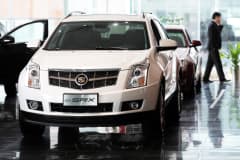
General Motors recently began production of the Cadillac XTS in Shanghai and expects to achieve revenues of the Caddy brand in China to 100,000 units by the year 2015. Virtually all large high-line brands, such as Mercedes-Benz and BMW, are already active in the country. And new decision makers are looking for access.

"We expect it to our market are number one", said Victor Muller, founder and Chairman of the small, Dutch Spyker cars, introduced plans for new products and global growth during a preview at the Geneva Auto Show this week.

Ford Motor Co. plans to start selling its Lincoln nameplate in China next year while PSA Peugeot Citroen its flagship DS car dealership in Shanghai, preparation is according to the report.

Nissan considers China as important, that set it before recently new headquarters for the luxury brand in Hong Kong. It tries, German Marques, led by Audi, which accounts for about 80% of the segment Highline challenge according to McKinsey.

"Now presented China's premium car market for a considerable chance for stragglers," authors Sha Sha, Theodore Huang, and Erwin Gabardi wrote in the McKinsey report. "Japanese and US attackers have to create another chance on a market presence."

Luxury car sales have compared increased 36% per year over the last ten years the rate of 26% for the entire car market, according to McKinsey. The segment remains attractive for automakers as 111 Chinese cities premium car dealerships, always even do not says a separate analysis from Morgan Stanley & co.

59% Said the respondents in its survey of Chinese consumers, a Chinese manufacturer of car that never will manage to build a luxury model, reaps the worldwide recognition not that they choose a local brand with purchase of premium vehicles, while 16% believe.

The luxury market can meet the high expectations, set by McKinsey and others?

The Chinese Government announced it GDP growth of 7.5% has opened unchanged target this year from 2012 as annual session this week. The country was also a lower inflation target of 3.5%, target, prices under control, according to the forecast at the premier hold Wen Jiabao's work report, as he opened the national people's Congress.

McKinsey noted that China's economy makes its historic shift to more consumption and service-driven model, sustainable growth of the country to help at a slower pace, but in the next decade and beyond.

"Showed that in November the new Government's China policy help 18th Congress of the Communist Party at the economy in this direction, even if investment will move - the historic engine of China's growth - still command the lion's share of the economy in the near future," the McKinsey analysis mentioned, adding that Government policy should "more and better - for China's future economic profile paid jobs and thus the proportion of the national income remains in the hands of consumers to create decisive."

But not everyone is quite so confident. Some skeptics note, that demand was unsafe vehicles after luxury last year forcing manufacturers such as Mercedes, get to adopt stronger price dynamics.

TheDetroitBureau.com last week reported that, there are growing concerns about a slowdown in the automotive market, the consequences of new efforts to endemic pollution could issues that steadily deteriorate in cities such as Beijing.

"they overnight can change policy if they want to," cautioned Spykers Muller, and which could bring total Chinese car market to a halt or just slow down.

The most likely scenario, however, is, that regulatory authorities require automakers to "battery cars and other clean technologies even more quickly than currently charged". Could play that well for some luxury brands, but as a manufacturer by Ferrari up to Audi have have been introducing new hybrids, plug-ins and full electric vehicles that could meet the new standards.

Copyright © 2009-2013, the Detroit Bureau

Tuesday, October 2, 2012

US starts trade case against China over auto parts

President Obama talks about his plan to encourage jobs creation in the U.S. to a crowd of supporters in Cincinnati, Ohio.

By NBC News staff and wire reports
Updated 11:35 a.m. EDT: President Barack Obama threw down the gauntlet against China on Monday, accusing the country of unfair trade practices that "harm working men and women."

"And today, my administration is launching new action against China - this one against illegal subsidies that encourage companies to ship auto parts manufacturing jobs overseas," Obama said in advance excerpts of a campaign speech he plans to give in Ohio, the heart of auto parts manufacturing in the United States.

"Those subsidies directly harm working men and women on the assembly line in Ohio and Michigan and across the Midwest. It's not right; it's against the rules; and we will not let it stand," said Obama, who has faced criticism from his Republican rival Mitt Romney over not being tough enough against China on trade.

Earlier Monday, The United States Trade Representative's office annnounced a request for dispute settlement consultations at the World Trade Organization with China about auto parts. The trade representative Ron Kirk said the subsidies give an unfair advantage to Chinese auto parts exporters which compete with producers based in the U.S. and other countries.

"We insist upon having a level playing field on which our world-class manufacturers can compete. Today we are continuing to make it clear to our trading partners that we will fight to support each job here at home that this sector supports,” Ambassador Kirk said.

Fifty days ahead of the presidential elections, Obama's speech also takes a swipe at Romney, accusing him of not supporting actions that the administration has taken against China trade practices.

"You can talk a good game, or you can play one - and my experience has been waking up every single day doing everything I can to give American workers a fair shot in the global economy," Obama said.

Quoting an unnamed administration official, The New York Times reported Monday that the domestic auto parts industry lost about half of its jobs from 2001 to 2010. The official said imports of Chinese auto parts grew by seven-fold over the same time period. The official asked to remain anonymous because of White House policy against discussing a new policy before it is announced officially.

But some of the jobs losses could have been due to a shrinking economy and lower demand for autos (which has since begun to pick up). Some may have been due to automation too.

The U.S. Trade Representative's office said it was also taking the next step in a separate World Trade Organization case it launched in June against Chinese duties on U.S. auto exports.

The USTR's announcement came not long after China filed a complaint at the WTO Monday to challenge a new U.S. law on "countervailing duties," or tariffs intended to combat export-promoting subsidies.

The complaint potentially affects close to 30 products that have previously been targeted by U.S. duties, a trade official familiar with the case said.

The complaint was aimed at a U.S. law passed in March which allowed the United States to apply countervailing measures to Chinese exports retrospectively.

Commerce Ministry spokesman Shen Danyang said China hoped the United States could "correct its mistaken policy and appropriately resolve China's concerns".

In a brief statement on the initial filing by China, the WTO said the products included steel, tires, magnets, chemicals, kitchen appliances, wood flooring and wind towers. China will file a full complaint with more details in the next few days.

Under WTO rules, China's filing of the complaint has set the clock ticking on a 60-day period during which the United States can try to settle the dispute in bilateral talks. After that, China could ask the WTO to adjudicate.

Reuters contributed to this report.

Republican strategist Rich Galen and South Carolina Democratic Party Chairman Dick Harpootlian debate whether or not President Obama's plan to take aim at China's trade policies can really save jobs in the U.S.

Monday, October 1, 2012

How China can build a $7,000 'good-enough' car

How China can build a $7,000 'good-enough' car

Carlos Barria / Reuters file

Geely Automobile Corporation has been a leader in producing inexpensive cars. The subcompact Panda has been one of its most successful models.

BEIJING -- China keeps getting better at making cars. One reason: It's getting better at cutting corners.

Zhejiang Geely Holding Group Co, one of China's biggest car makers, conducted 20 to 25 crash tests when it developed its popular Panda model, engineers involved in developing the car told Reuters. Global car makers typically conduct 125 to 150 crash tests for each new model. By relying more on computer simulations, Geely saved at least 200 million yuan ($31.57 million) and two years in development time on the Panda, the engineers said.

Paring back on crash tests, skimping on frills, simplifying designs, using cheaper materials and, in a departure for the industry, outsourcing most of their design and engineering, are having a profound effect on the cost bases of China's dozens of car makers. Some are now able to sell cheap and cheerful small cars for about 40,000 yuan ($6,350) -- less than half the price of a plain vanilla Toyota.

Ten years ago, no discerning Chinese consumer would have bought China-designed cars. Not only were such vehicles accused of being illegal counterfeits of foreign models, but their quality and safety were also mistrusted.

Now, despite their homely looks, some indigenous models are striking a balance between no-frills affordability and acceptable quality. In China, it is the age of the good-enough car -- and that has potentially significant implications for the world auto industry.

Models such as the Panda and the Great Wall Haval H3 are becoming popular not only in China but increasingly so in emerging markets, from Indonesia to Egypt and Ukraine. They are driving China's auto exports to record levels, even as growth in China's auto market slows down.

Exports of Chinese-produced vehicles are forecast by China's auto association to hit one million vehicles this year from 849,500 vehicles last year. Some automotive analysts are predicting a 50 percent increase to 1.25 million vehicles.

Some executives at big foreign manufacturers say China's new model of creating good-enough cars poses a serious challenge to the way the international industry operates.

"This is a warning shot to the established engineers who have told their management time and time and again that this is the minimum cost they can achieve with their existing design and production methodology," says Shiro Nakamura, a top Nissan Motor Co. executive and the company's chief designer. "Now the Chinese are saying they can cut another 30, 40 percent of the cost."

It normally takes four to five years for established players like General Motors Co and Toyota Motor Corp to come up with a new car from the ground up. Chinese manufacturers can now do so in just two and half years by deploying an abbreviated design process.

"Perhaps the Chinese achieve their low cost by sacrificing quality standards," says Nakamura. "But in many ways their way also points to ‘over quality' or ‘waste' we have built into our conventional design process over the years."

The Chinese approach is a product of the extraordinarily fast rise of its auto industry. As the country opened up to the West, car makers were faced with relatively poor customers at home and sophisticated products made abroad. Global automakers could sell their pricey cars to rich Chinese, but local Chinese automakers had to come up with cheap cars for the masses.

Rapid growth in the economy spurred the creation of more than 100 registered automakers across China by the early 2000s -- but they lacked expertise. Their solution in coming up with affordable cars was simple: copy the designs of foreign makers.

"Around 2000, China began embracing an approach it described as ‘reverse-engineering.' It was essentially a fancy word for copying," says Dai Ming, a senior engineer at CH-Auto Technology Corp, an independent design and engineering company based in Beijing. "The problem with those copied cars was that the Chinese were able to emulate the shape of a foreign car, but not its soul."

Chinese car makers tended to sift through a foreign vehicle to identify expensive, non-critical features and functions to skimp on or eliminate, such as a door that closes with a proper "thump," as well as power windows and passenger-airbags. The result was often dubious quality and durability. After a few years of use, bumpers and door handles would start falling off.

Dai says of the typical cheap knock-off model: "It didn't drive well like the foreign car, either, and in some cases it was a safety hazard on the road."

A clutch of design firms is driving the advances in affordability and quality in the industry, including CH-Auto, where Dai works; IAT Automobile Technology Co. of Beijing; and TJ Innova Engineering & Technology Co. of Shanghai.

China's indigenous automakers are so new many have not had time to groom their own engineers, and their best engineers are usually occupied more with manufacturing than design. Companies thus often outsource product design and development to outside engineering houses filled with Chinese engineers trained overseas.

Automotive analysts say these houses are responsible for helping engineer seven to eight out of every 10 cars China's indigenous car makers sell here. By using the same few design and engineering firms, Chinese car makers have effectively created a shared pool of home-grown automotive technology.

CH-Auto, for instance, has helped design an array of cars over the past decade, each time gaining fresh expertise, which it deploys for its next project -- in most cases for a different company. CH-Auto was established in 2003 by a small group of jobless Chinese engineers who had trained with Beijing Jeep, a now-defunct joint venture set up initially by Beijing Automotive Industry Holding Co. and American Motors Corp.

CH-Auto and its rivals say they have moved beyond aping foreign designs. Instead of copying the shape of a component or an entire foreign car, they try to match its performance as well -- often successfully -- even as they improvise and simplify the original design to cut costs. The aim is to make cars affordable to China's emerging middle class, people who are earning 50,000 to 60,000 yuan a year ($7,900-$9,500).

"It's not copying. It's not that simple anymore," said Wang Kejian, president of CH-Auto, a former Beijing Jeep engineer who was trained for a time in Detroit by Chrysler. "Since Chinese car makers have no accumulated vehicle design technology or know-how, we have to develop our own by studying foreign cars and use local parts suppliers to approximate the components and the cars."

Geely Automobile, which owns Swedish carmaker Volvo, turned to CH-Auto around 2005 for help on a project that led to the Panda, now one of China's most popular small cars. CH-Auto was responsible for the exterior styling and engineering the underpinnings. The rest was handled by Geely, according to the two companies.

CH-Auto and Geely made a clear departure from copying with the Panda. To be sure, they still selected a car to emulate or bench-mark -- in this case, the Aygo, a "city car" that Toyota produces in Czech Republic and has been selling in Europe since 2005.

But instead of simply producing a fake Aygo, engineers at CH-Auto first studied and tested the Aygo and its components -- often with the help of three-dimensional digital scanners -- to collect data on their design and performance. Then they tried to manufacture components by adapting parts made in China to match desired functions and performance. If suitable local parts weren't available, they worked with suppliers to create new ones by simplifying the scanned Aygo designs.

The purpose was "not to copy but approximate the Aygo," Dai said.

One example is the Panda's chassis. The under-body carriage, which the suspension and wheels are attached to, is key to how a vehicle handles corners on the road.

The Aygo, which starts at 6,462 pounds (about $10,000) in Britain, has a relatively sophisticated under-body structure formed in a single piece by using a process called "hydroforming," in which pressurized water is used to shape metal. For the Chinese this was a problem.

CH-Auto and its chassis suppliers have no proven know-how in hydroforming. And the light-weight steel that Toyota uses for the Aygo's under-body carriage was too pricey for Geely to use in a car to be sold in China.

Geely and CH-Auto's solution was to use cheap "everyday" steel commonly available in China, Dai said. Geely and CH-Auto divided the Panda's chassis frame into two pieces -- upper and lower units -- to simplify their structure so they could be easily stamped rather than using the more expensive hydroforming method. Then Geely welded those two pieces to create a chassis frame for the car.

"The problem was our solution compromised the Panda's NVH," Dai says, using the acronym for noise, vibration and harshness, the key attributes of drive feel.

Dai's engineers tweaked the Panda's suspension, adjusting the so-called rubber bushes, or isolators, to make them softer to better absorb shocks and vibrations.

Despite using cheaper materials and processes, Geely and CH-Auto were able to largely match the performance of the Aygo's platform in terms of the vehicle handling and NVH, which Dai says was confirmed by a third-party testing company. More important, by tweaking the design and using cheaper materials and manufacturing processes, Geely and CH-Auto were able to produce a platform for the Panda with "roughly half" the Aygo's cost, according to Dai.

Despite the advances in design, safety standards in Chinese-made cars still lag those of U.S. and European manufacturers, in part because its government doesn't impose as stringent a body of safety requirements.

What's more, Chinese car makers ignore what they consider minor, non-critical risks, such as using far fewer crash tests with dummies.

"If the client only gives me two-and-a-half years to design a car, then I can only eliminate major risks. And the smaller risks, well, there's nothing we can do," says CH-Auto's president Wang.

China does have vehicle safety standards, and any automaker launching a new car needs to meet them. But there is no required number of crash tests.

Geely and CH-Auto do not want to do as much crash-testing as global automakers because creating prototype cars costs up to 2 million yuan a car ($316,000), CH-Auto's Wang said.

A Geely spokesman, Victor Yang, would not say how many crash tests Geely conducted on the Panda. But Yang noted that the Hangzhou-based automaker conducted "more than what's typically performed in China." For cars being developed today, it routinely conducts more than 70 crash tests, Yang says.

By contrast, an established global player such as Toyota routinely tests a new car by crashing it a "minimum 120 to 150 times," according to a Toyota chief engineer who spoke on condition of anonymity. If the car is sold in many different markets around the world, Toyota crashes even more cars, he said.

Nevertheless, the Panda is a watershed product for both Geely and CH-Auto. The car's stylized exterior -- featuring a Panda-eyed grill and tail lamps in the shape of paws -- was considered cute and timely when launched in 2008 to coincide with the Beijing Olympics.

The exterior contrasted with the car's highly utilitarian interior, including exposed screws and a plasticky dashboard. The 1.3-liter, 86-horsepower motor pulls the Panda from a standstill to 100 kilometers an hour in an unthrilling 13.1 seconds. Nor is the Panda, like other no-frills Chinese cars, ready to meet the stringent safety regulations of Europe and America.

But there is one very eye-catching thing about the car: its price. A new Panda starts around 40,000 yuan ($6,400) in China and about 5,000 euros ($7,400) abroad.

After the Panda, CH-Auto's business began booming. It developed or helped develop a slew of cars and sport-utility vehicles for Changfeng, an automaker affiliated with Japan's Mitsubishi Motors. The Changfeng projects then led to deals with Jiangling Motors Co. and Chongqing Changan Automobile Co., as well as Beijing Auto.

One of CH-Auto's upcoming models is a Beijing Auto vehicle based on technology the company purchased from the now defunct Saab of Sweden.

CH-Auto also has a major contract from Dongfeng Motor Co. -- the 50-50 joint venture between Nissan and Dongfeng Motor Group Co. The team will develop a subcompact car based on the Nissan March (known as the Micra in Europe) to buttress a new "indigenous" brand called Venucia launched in China earlier this year.

The advent of the good-enough car is emboldening Chinese automakers to build up their own product development capabilities to rely less on CH-Auto and other independent engineering houses.

Geely, one of China's top indigenous car makers, is expected to sell about 370,000 cars in China and 90,000 abroad this year. By 2016 the company forecasts its export volume will hit as high as 300,000 or possibly 400,000.

"My vision," said Geely Chairman Li Shufu, "is to sell outside China the same number of cars we sell within China."

Copyright 2011 Thomson Reuters.

Sunday, May 13, 2012

Automakers eager to open up the 'other' China


Odd Andersen / AFP - Getty Images

Volkswagen Chairman Martin Winterkorn, left, German Chancellor Angela Merkel, middle and China's Prime Minister Wen Jiabao. Earlier this year, VW signed a contract for a new plant in Xinjiang.

By Paul A. Eisenstein, msnbc.com contributor
Despite an unexpected slowdown in sales earlier this year, the Chinese auto market is expected to hit an industry-record 20 million vehicles this year – prompting manufacturers to announce billions of dollars in new factory investments designed to keep up with booming demand.

Ford will invest nearly $1 billion to double its capacity in the Chinese market. Nissan needs to support plans that would boost its own sales from 1.2 million units this year to 2 million by mid-decade. And then there’s Volkswagen, second only to General Motors as a Chinese powerhouse. VW will spend $225 million on a new factory in Urumqi.

What’s unusual about the VW investment is that it is targeting the western province of Xinjiang, far from the established Chinese automotive manufacturing center, which stretches along the nation’s Pacific coast. That includes cities such as Shanghai and Beijing that have also provided the bulk of demand to support the decade-long Chinese automotive boom.

Xinjiang, by contrast, is a provincial backwater, a land of sparse, high mountain deserts that has barely felt the impact of China’s economic revolution. So why would Volkswagen want to build a plant there?

While the German maker won’t confirm it, there was likely at least some gentle pressure from the Chinese government, which is looking to spread the wealth, so to speak, bringing economic improvement to the rest of the country.

And automotive industry leaders generally agree with that strategy as a way to further expand their market. That’s especially true for makers, like Ford, who were slow to target China.

The second largest of Detroit’s makers, Ford is little more than an also-ran in China with sales of a little more than 600,000 vehicles last year – compared to nearly 2.3 million for GM. Ford’s own new plant in Hangzhou is a bit off the beaten path. And the maker is betting that much of the demand will come from first-time buyers “in the new markets in Western China,” said Joe Hinrichs, head of Ford’s Asia, Pacific and Africa operations during an interview at the Beijing Motor Show.

The disparity between the booming Pacific Coast and the rest of China is enormous, especially when it comes to the automotive market, said Yale Zhang, managing director of the consulting firm Automotive Foresight (Shanghai).

In so-called Tier I cities, such as Shanghai and Beijing, car ownership is now approaching levels seen in Japan, if not the United States – anywhere from 250 to 500 cars for every 1,000 residents. That boom is creating chaos on the streets, leading some cities to attempt to curb car purchases. Beijing last year enacted a registration lottery. Only those who win one can buy a car.

“Beijing’s traffic, cannot be sustained at the current level” of growth, Zhang explained.

In cities like Urumqi, however, there’s not much more traffic than a decade ago, when the Chinese automotive industry first got going. But building up a market won’t be easy, the analyst cautioned, noting that income is also substantially lower when you move off the fertile Pacific Coast.

So manufacturers targeting central and western China are focusing on smaller and markedly less expensive vehicles than those sold in the east. GM and its Chinese partners, Shanghai-based SAIC and Liuzhou’s Wuling, have created an entirely new brand, dubbed Baojun – or “Treasured Horse” – specifically to go after the lower-tier cities.

The new brand -- and similar new competitors, such as the Nissan/Dongfeng joint venture called Venucia -- is largely focused on products in the $5,000 to $10,000 range. That’s apparently connecting with wannabe Chinese motorists. Within its first few months on the market, Baojun already had a 2 percent share of its market segment. So far this year that has more than quadrupled.

While so-called Tier III, IV and V cities will likely be slower to go mobile they still hold out significant promise according to Kevin Wales, head of GM’s Chinese operations. By various estimates, he said, there are somewhere between 200 and 300 cities in China with populations of more than 1 million. Even a modest increase in car sales in those new regions would help maintain the Chinese automotive boom.

While the days of 20, 40, even 60 percent annual growth are likely over, Automotive Forecast’s Zhang still anticipates the overall market will increase between 6 percent and 12 percent in 2012 – figures most analysts and industry planners agree with. With demand clearly on the rise after the first-quarter slowdown, Chinese motorists are all but certain to snap up at least 20 million vehicles this year

Wednesday, December 28, 2011

China slaps anti-dumping duties on US-made cars

SHANGHAI — China has imposed duties on imports of some U.S.-made vehicles, claiming damage from foreign automakers due to dumping and subsidies in the latest round of trade friction between the two countries.


The Commerce Ministry said Wednesday that the duties would be imposed for two years on imported cars and sport utility vehicles with engine displacements of over 2.5 liters.


The duties range from 2 percent to 21.5 percent.


The ministry's notice named General Motors Co., Chrysler Group Ltd., Mercedes - Benz U.S. International Inc., BMW's factory in Spartanburg, South Carolina and Honda of America Manufacturing Co. as among the companies affected.


China and the U.S. are at odds over a slew of trade issues. Beijing also has imposed tariffs on imports of U.S. chicken, among other products, while the U.S. has filed complaints against Chinese tariffs on steel and subsidies for wind power equipment.


In October, seven U.S. solar panel companies filed a federal trade complaint against Chinese companies they accuse of dumping solar products on global markets to depress prices.


U.S. trade officials have long complained that China's own subsidies to its auto industry, along with preferential access to cheap credit from state-owned banks, amount to unfair trade practices.


Under international trade rules, countries are allowed to impose punitive tariffs to offset damage from both dumping and unfair subsidies.


The Commerce Ministry said its investigation had found "substantial damage" to its automakers caused by dumping and subsidies.


General Motors, in a statement, said it was working with its partners to gauge the impact of China's decision and to "seek a solution consistent with a constructive global trade environment."


GM's imports account for less than half of 1 percent of its domestic production in China, the company said.


China's domestic automakers have been struggling to keep or gain market share in recent months as demand has slowed after years of torrid growth. Meanwhile, foreign-branded autos, made in China or imported, have fared better among Chinese car buyers who apparently believe they offer better quality or image value.


Copyright 2011 The Associated Press. All rights reserved. This material may not be published, broadcast, rewritten or redistributed.

Wednesday, May 25, 2011

Saab back end deal in hot seat to China

STOCKHOLM - struggling automaker Saab Automobile faced renewed uncertainty on Thursday deal with China's Hawtai fell apart the financing motor group, concerns about the fresh event on the future of the company.

Spyker cars NV, 2010 Saab from General Motors Corp. who bought it was "forced to end", said the 223 million (euro150 million) Agreement with Hawtai as was the Chinese company not in the position, all necessary approvals including approvals from various shareholders to receive.

The money from Hawtai was critical to Spyker's plans to save funds Saab, which, had to stop production at the plant in Trollhattan, Sweden on 6 April.

The exact reasons for the termination of the contract were not clear, but analysts suggested it could due to legal problems with Chinese authorities and China's BAIC, which previously has acquired the rights to some Saab technology.

"However, Spyker BAIC"has problems not with their discussions with other Chinese partners"said."

Saab spokeswoman Gunilla Gustavs said the company continues to work towards securing capital and is in discussions with other potential Chinese partners, turned down but give no name.

Saab was prior to entering into the agreement with Hawtai, also in discussions with Chinese company BAIC, great wall motors and Youngman.

IHS Automotive Analyst Ian Fletcher, said the cancellation of the transaction "raises" more doubts about the ongoing financing of the company.

"Saab urgently an influx of cash from somewhere remains," he said. "If it funds win restart production, has been down for over a month now, it remains to be seen whether his relationship with its suppliers can be repaired."

Floor-Mats Carlsson, Fastrans analyst at Gothenburg Management Institute, said that he unsurprisingly, that the hurried Hawtai deal fell through, but said he was "convinced" that Saab better another, Chinese cooperation partners can be found.

He said "If you look at a list of the 20 most interesting automotive companies in China, Hawtai is not on this list". "So this could be positive."

However, he added that the uncertainty surrounding ownership of the consumer confidence in the brand is negative.

Spyker's shares fell 12.4 percent afternoon day trading in Amsterdam, euro3. 68 ($5.28).

Spyker and Hawtai agreed that Hawtai would provide the funds in exchange for a 29.9 percent of Spyker for Saab.

In a short statement confirmed the first contract with Spyker had finished Hawtai, but said that hope it is a solution to be found.

"The current situation is complex and it was not possible, agreed documentation in the agreement to achieve the envisaged time frame", the company said.

Earlier this month, Saab short-term financing secured by a bank loan, but is still waiting for a drawdown on their loans from the European Investment Bank to be able to resume production.

It has so far also plans to raise cash by selling his property, Russian businessman Vladimir Antonov and allowed part owners of Saab, submitted to it,.

These plans still wait for approval from the EIB and Spyker said, to continue talks with the European Bank of the conditions for an agreement. EIB rejected it Thursday comment on talks.

___

Copyright 2011, the associated press. All rights reserved. This material may not be published, broadcast, rewritten or distributed.