Showing posts with label could. Show all posts

Sunday, April 28, 2013

China auto market balloons; pollution could choke growth

Ford and General Motors are reviving two familiar nameplates at the Shanghai Auto Show this week in a bid to make inroads in China, where the auto market could soon eclipse the U.S. and European markets combined.

The Ford Escort and Buick Riviera remain concept vehicles for now, but both offer hints of what the two U.S. manufacturers may have in store for Chinese consumers. Once a backwater event, the Shanghai gathering is now one of the world’s most significant car shows, with dozens of new vehicles debuting there this year.

Senior General Motors officials forecast that sales in China could top 35 million annually by 2022. That’s more than double the peak of the American market nearly a decade ago.

“No market is more critical than the China market for us,” Tim Lee, president of General Motors’ International Operations, told reporters.

You may hear the same thing from other manufacturers, whether Volkswagen, Toyota or Ford. And they’re backing that up by using the Shanghai Auto Show to reveal some of their latest products. Among the new models debuting in China’s second-largest city this week are:

· The Buick Riviera Concept, a futuristic show car that “offers a preview of Buick's future design language," suggested Shanghai GM President Ye Yongming;

· The Ford Escort, a lower-priced take on the popular Ford Mondeo, known to Americans as the Fusion. A production version would target first-time family buyers in smaller cities;

· The Volkswagen iBeetle, which boasts an iPhone docking station and app that serves as entertainment system and allows you to monitor oil levels;

· The Acura Concept SUV-X, which will likely reappear as a compact entry-luxury crossover.

The Acura is just one of an assortment of high-line models on display in Shanghai. China, the largest outlet for several luxury brands, is expected to overtake the U.S. market before decade’s end to become the world’s largest luxury car market.

Mercedes-Benz headed to Shanghai with its GLA concept, while BMW presented its X4 coupe-crossover. Maserati showed off its sporty Ghibli sedan.

Porsche debuted the Panamera S E-Hybrid, its first plug-in hybrid – a nod to China’s focus on battery power.

“The Chinese could create the inflection point that transforms the battery car into a viable reality,” David Cole, chairman-emeritus of the Center for Automotive Research, recently told TheDetroitBureau.com.

Chinese bureaucrats have increased incentives for buying qualified electric vehicles – sometimes to more than $20,000.

At issue is pollution and congestion in major Chinese cities – wild cards that could short-circuit China’s automotive market. In a recent report, Jun Ma, chief Chinese economist for Deutsche Bank, warned that the government could take measures, including “constraining auto ownership growth.”

Some fear Beijing could limit auto sales or even force a shift to electric power. Critics counter that with electric cars could worsen the country’s environmental problems because of China’s electricity is generated by coal.

Some makers are doing better than others. General Motors, long locked in a battle for market dominance with Volkswagen, was up nearly 10 percent during the first quarter, setting an all-time record.

Toyota is barely achieving half that growth after a 4.9 percent increase in 2012. Japanese marques, in general, continue to suffer as the result of an ongoing dispute over a chain of uninhabited islands claimed by both Japan and China.

While luxury cars clearly have a market in China, many industry analysts stress that the real growth in years ahead will come from first-time buyers in second, third and fourth-tier cities just beginning to feel the benefits of the Chinese economic boom. With a population estimated around 1.5 billion, that could be enough to maintain the momentum of the last decade.

Copyright © 2009-2013, The Detroit Bureau

Sunday, January 27, 2013

Boeing suffer battery could short circuit electric cars

Paul A. Eisenstein, the Detroit Bureau

At 4: 05 pm ET updated: The ongoing investigations of faulty lithium-ion power packs on the new 787 Dreamliner would have implications far beyond the aviation and aerospace industry, some observers to worry that Boeing battery could the emerging market for plug-in, hybrid and other electrified automobile short circuit.

Investigators in the United States and Japan have a spotlight on the lithium used to link the emergency power supply systems on the new Boeing Jet, parked the technology with several recent cases, including a fire at one of the Dreamliner at a gate at Boston Logan field. Some observers point to a series of fires involving Volt and the Fisker Karma uses the batteries in various electric vehicles, including the Chevrolet.

With Boeing history, getting a lot of airplay, "This is definitely a problem," Joe Phillippi, AutoTrends consulting said. "This could be especially bad timing," warned analysts given the push-to-battery-based vehicles to increase in the coming years.

All 50 new jets, which Boeing had so far delivered have been grounded and investigators yesterday visited GS Yuasa, the Japanese manufacturer of lithium batteries on the 787. While some aircraft have used the technology before, Boeing is the most advanced and comprehensive. One of the latest incidents in Dreamliner involved two batteries shows signs of having overwhelmed was, although the others do not, according to investigators.

"We are in the middle of the collection of information, so that if a problem or does not exist has not yet been determined" said Tatsuyuki Shimazu, engineer the Chief worthiness Japan Civil Aviation Bureau Aviation Safety Department.

In connection with lithium-ion batteries in automotive applications, fire involved several investigations were conducted. These include a fire, which destroyed a Fisker Karma plug-in hybrid parked in a garage, Texas last year, and another with Fisker's last year were caught in the water during the Superstorm Sandy in the autumn. Several other battery based vehicles, including a Toyota Prius, also much storage in a port outside Newark (New Jersey) caught fire and it seems their electrical systems shorted salt water.

The Chevrolet Volt, the plug-in hybrid if the National Highway Traffic Safety Administration that a battery pack was caught weeks fire, after a volt crash was also a target of the investigators tested in 2011. A second battery later started smoking after it has been tested.

Finally completed, investigators, the Volt problem was mainly the result of the NHTSA test procedure. Yet made General Motors then substantial changes, the likelihood that problems continue to reduce after a crash.

Separately, Fisker announced changes to its battery system design after a fire in connection with a fan cooling system. And the California startup had to recall of the early versions of karma as a design battery supplier A123 was discovered.

Fisker has clearly knocked off initial expectations to contend with revenues. Chevy, suffered the first report of the fire a short-term decline, however, after a test center for NHTSA. Demand soon recovered, however. Sales of the plug-in the last year compared with the level of 2011 - more than tripled, but was still barely half of the GM 45,000 initial target for the American market.

«No questions, such headlines (around the Boeing batteries) do not want to help, battery vehicle sales» for Analyst main source River and others.

Even without such concerns, the auto industry has struggled to increase the demand for high performance technology. Also Nissan or BEV, last week announced that it would introduce below the price tag of the 2012 model coming in $6,000 to a new version of fight to the expectations for the battery-electric vehicle leaf. With various State and federal incentives of the manufacturer announces the blade for less than $20,000 could purchase some buyers.

As for the Volt, consist company which is currently the best-selling "extended drive" vehicle to the American market, officials, that they are satisfied with the way that record sales. Fight against the skeptics, mark Reuss, GM's President of North American operations told reporters "The electric car is not dead."

He is not the only hope is the case. From different manufacturers have begun to roll-out new electrified products from conventional hybrids on the full battery-electric offerings. This includes the new Ford Fusion Energi, the Toyota RAV4-EV, and a plug-in version of the Honda Accord.

The two Japanese makers prefer previously less advanced nickel-metal hydride batteries, officials express concerns about possible problems with lithium technology use. The problem of the Boeing highlights such concerns, although the battery-technology advocates hope that the problem will soon be solved.

Copyright © 2009-2012, the Detroit Bureau

Sunday, January 6, 2013

GM recalls more than 69 K cars that could roll away

GM recalls more than 69 K cars that could roll away

Paul A. Eisenstein, the Detroit Bureau
General Motors is recalling almost 70,000 late-model of SUVs, pickups and vans rolling away after parked latches, which could make the vehicles due to faulty transmission.

More than a dozen different 2013 models are the callback, 54.686 of vehicles sold 6.310 in Canada, with almost 8,000 more delivered in the United States, in Mexico and overseas markets included involved especially the Mideast.

The vehicles can castle with a broken Park as well as a faulty steering column lock component are equipped cable. Under certain conditions this driver allows, of the vehicle key accidentally removed, even if the transmission not in Park position was moved.

The error can also State-contracted delivery sheath, so that a motorist who accidentally switch from the Park in a different gear, override without your foot on the brake.

"These scenarios can roll away the vehicle after the driver stopped the vehicle leading to a crash-possible vehicle and/or personal injury, was" GM said administration into an application with the national highway traffic safety.

A GM official says that there has been no crashes or injuries, but have reported. The defect was discovered by workers at the GM Arlington assembly plant last month.

All vehicles from the recall covered were produced between November and December last year and 2013 models.

Include Cadillac Escalade the 2013 and Escalade ESV Escalade EXT; Chevrolet Avalanche, express, Silverado HD, LD Silverado, suburban and Tahoe; and GMC Savana, Sierra HD, Sierra LD, Yukon and Yukon XL.

Most cars are actually probably still sitting in transit or on many traders. Only about 1,000 have probably already been delivered to customers and GM plans, these owners bring their trucks for inspection to inform and, if necessary, replace the steering column. Repairs are free of charge.

This is the second large recall of 2013 after a day after Subaru was known that 634,000 owners of a possible broken sign it, causing a short circuit and possibly a vehicle fire could but only about 54,000 of these vehicles actually need repairs.

The GM recall follows 800,000 minivans and crossover points less than a month after Honda recalled, including his Odyssey and pilot models correct a similar transmission errors, the vehicles could roll away is parked after.

Friday, November 16, 2012

Mileage flap could cost Hyundai, Kia millions

Paul A. Eisenstein, The Detroit Bureau

Forced to restate mileage claims after a government audit, Hyundai and its Korean sibling Kia could be in a world of financial hurt – even as they struggle to overcome the potential damage to their image which, in recent years, has put an emphasis on delivering industry benchmark fuel economy.

With several lawsuits already filed and more likely, Moody’s Investors Service has warned that the ultimate cost to the two brands could reach $100 million in the U.S. While other analysts aren’t ready to embrace that specific number, there is clear consensus the damage may be costly and long-lasting.

Together, Hyundai and Kia “will incur additional annual costs of about $100 million until the affected models are largely scrapped,” warns the ratings agency in a new report. It also noted that despite the size of that figure, it comes to less than 1 percent of the Korean automaker’s total earnings.

Both Hyundai and Kia have put an emphasis on fuel economy in recent years, together advertising more than a half-dozen models delivering highway mileage of at least 40 mpg. Or so they claimed until last week before an audit released by the Environmental Protection Agency, the federal agency overseeing fuel economy standards and vehicle testing.

Spurred by complaints about the real world mileage some Hyundai and Kia products produce, the EPA conducted an audit showing that the figures for 13 models – accounting for the sale of 900,000 vehicles in the U.S. since 2010 – were overstated by anywhere from one to six miles per gallon.

The Koreans insisted the mileage gap was not intentional but rather was the result of errors in their own testing procedures. After issuing a mea culpa, they also announced a plan to reimburse owners based on the added cost of fuel for their vehicles – adding in another 15 percent to cover the expense of having to bring those vehicles in to Hyundai and Kia dealers for odometer checks.

For someone clocking 15,000 miles a year, the result could be payouts of more than $80 a year for some models. Hyundai and Kia are promising to continue issuing reimbursements as long as the car is in the original owner’s hands. Considering the length of time many buyers today hang onto their vehicles, that could mean eventual payouts of as much as $500 or more per affected automobile. And if that were the case with all 900,000 vehicles, the payout bill might approach $500 million.

“Our focus is on making it right for the customers. We’re honestly not so focused on that cost,” Hyundai Motor America CEO John Krafcik asserted during a media conference call late last week.

In reality, the typical payout is expected to be far less. Indeed, cautions analyst Jim Hall of 2953 Analytics, “For many owners, punching two hours out of their day to go to a dealer for a $60 debit card won’t be worth it.”

For the moment, Hall insisted trying to put a price tag on the fiasco would be like “trying to pull numbers out of the air,” though he agreed, “it is going to cost them.”

And other factors in the long-term payout could dwarf the cost of handing out debit cards to owners of vehicles like the 2012 Kia Soul – whose mileage rating has been cut by 6 mpg.

For one thing, there will almost certainly be fines imposed by the EPA. And the Federal Trade Commission could weigh in if it determines the makers violated advertising rules.

Then there are the legal bills. Even before last week’s disclosure, Hyundai had been sued by a consumer group that had insisted the maker’s mileage claims were inflated. This week, three Hyundai owners in Ohio filed another lawsuit seeking to recover damages and legal fees. It’s almost certain more lawsuits will follow and may very likely morph into one or more national class action cases. If successful, the bill for the Koreans could climb into the tens, even hundreds of millions of dollars.

But analyst Hall warns that the for-now “incalculable cost” could be the way the flap impacts Hyundai and Kia’s image. One may never get a clear sense of the damage to their brand images, as there’s no direct correlation between image and sales. But if mileage brouhaha reduces the number of potential buyers who consider their products, that will soon become obvious – and translate into lower sales.

That may be where the real numbers start to add up.

Tuesday, August 7, 2012

Tires from Russian dandelion made? It could happen

Tires from Russian dandelion made? It could happen

Mark Duncan / AP

Today's tires consist largely of natural rubber and petroleum derivatives, but manufacturers are looking for alternatives.

By Paul A. Eisenstein, NBC News logged-in user
If demand for tyres will keep and raw material shortages exist, can drive you soon on flowers and beans.

With more and more cars on the road everywhere from Beijing to Boston, tyre manufacturers were hard-pressed nagging shortages of factory capacity problems, to overcome rising material costs and limited availability of natural rubber.

Manufacturers, such as Bridgestone and Goodyear leads in search of alternative materials such as soybean and Russian dandelion.

"Natural rubber is a sustainable, renewable resource, but the problem is that the industry so Apache - building 82 million cars in the year jetzt-- that keep a problem grows," said Michael Martini, President, original equipment tire sale for Bridgestone of Americas. "So we are looking for alternatives."

India also known as rubber or rubber, natural rubber is mainly formed by manipulating LaTeX by tapped rubber trees collected. Bridgestone relies on plantations in Liberia and Malaysia, but their competitors in turn to resources in other parts of the world: Africa and Asia, South America and the Indian subcontinent.

Frenchman Charles Marie de La Condamine first some basic features of the material described in 1736 and 34 years later British scientist that the Joseph Priestley pencil was discovered that the material well rub, marked paper, hence the name, rubber. But the large breakthrough came in 1839 as the American Charles Goodyear discovered the process of vulcanization, which the natural material in long-lasting tires may be used.

These days, the black Donuts contain a mixture of compounds including Bisphenol, soot, sulphur and peroxide and various petroleum derivatives and reinforcement of the materials as steel, polyester and nylon on your car. Natural rubber is still around 25% of the weight of a typical car tires, and even more for those used on commercial vehicles.

The problem is that that vehicle sales are booming as Martini. While sales in existing markets of United States as, Japan and Europe may be relatively stagnant or declining, emerging markets are almost exponentially. The Chinese market alone is no longer just a few million vehicles a year to almost 20 million in a decade and is expected to reach 30 million by the end of the Decade.

It takes about seven years for a rubber plant from seedling to a productive, tires go. And another problem is to find more land for the expansion of plantations.

So, some members of the tyre industry PENRA-have-the program for the excellent natural rubber alternatives-based at the Ohio State University Ohio agricultural research and development center connected. Much promising alternative is one of the Russian dandelion, whose tribal structure seems extremely well to produce what from an almost identical with, common rubber tree or hevea comes from natural latex.

Botanist know the plant as Taraxacum Kok-saghyz-not the common dandelion, this is the curse of the struggling American homeowners keep to their lawns green.

"We know that it more than 1,200 species of plants from which natural rubber in theory could be harvested, but search, which may practically produce the quality and rubber required, the requirements of today's tire market is a challenge, said Dr. Hiroshi Mouri, President of Bridgestone Americas Center for research and technology."

Among the many possible alternatives researchers on guayule, a shrub, have zeroed the southwestern United States and Northern Mexico native of.

Tiremakers have also worked with synthetic alternatives to rubber. Such alternative was crucial for the American effort in the second world war, when supplies of natural rubber by Axis powers were largely cut off. The disadvantage is that plastics are largely dependent on the oil.

The tyre industry is supposed to find not only sustainable alternatives to natural rubber, but they now use mainly oil come with alternatives for some of the non-renewable materials.

The Goodyear Innovation Center has a new method could come up with, the researchers believe, replace soy oil for more than 7 million gallons of oil per year. Another advantage is that the alternative ingredient appears to be able to improve tread life of less than 10 percent.

"Consumers benefit through improved tread life, Goodyear receives with increased efficiency and energy savings and we all win when there are positive effects on the environment," said Jean-Claude Kihn, Goodyear of the technical head of the Office.

The project, financed by a grant of $500,000 from the United Soybean Board soy-based tyre testing see prototype this year start. If it lives up to expectations they consumers until 2015 reach, Goodyear said previously.

General Motors is trading at an all-time low and Ford is at its lowest level in more than a year. Michaeli, Citi auto analyst and Jeremy Anwyl, CEO of Edmunds Italy provide perspective.

Saturday, June 16, 2012

Teen new requirements could reduce driving deaths

Teen new requirements could reduce driving deaths

The Detroit Bureau

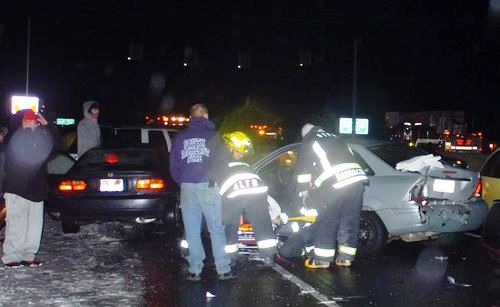
Emergency teams struggle to save young people in a nighttime accident involved.

By Paul A. Eisenstein, the Detroit Bureau
Motor vehicle crashes are the leading cause of death for U.S. teens, according to government statistics, but a new insurance industry report suggests that the numbers could sink, by restrictions on teen drivers tighten laws.

Car crashes for one of three people responsible reported among young people are for highway safety projects that could be saved through the use of more restrictive licenses annually at least 500 lives every year the Centers for disease control, but the new study of insurance. In some Member States, which IIHS said it expected the mortality rate among teen drivers of less than 50% fall.

The new study emphasised it best-practice guidelines adopted, called from various Member States, including driving a ban with Teen passengers, limited night rides and a request for the supervised.

Ford to offer 98,000 pensioners of buyouts

"Even the best States can do better", says Anne McCartt, senior Vice President for research at IIHS. "There is room for improvement in all areas, and States could see claims immediate reduction in fatal crashes and collision, once regulations are in place to strengthen."

States with the toughest constraints the sharpest decline in teen of fatalities compared to those with less restrictive policy signed the IIHS reported. The Institute isolated five specific policies which seem to help:

Later driving age, 17 in New Jersey;They allow later age 16 in district of Columbia, New York, Massachusetts, Delaware, and five other States;At least 65 hours of supervised driving in Pennsylvania;Night driving ban in Idaho, South Carolina; AndA ban teen passengers in 15 States and Washington, D.C.
The IIHS report indicates that all but nine States now have to allow so-called graduated driver's licenses or GDLs, the young people to build up experience and maturity behind the wheel. There are three levels: a period of supervised driving under a learner who allow, meanwhile licensing, certain restrictions, followed by a license that manages full permissions.

Chevrolet inks deal with Manchester United

Since the year 2000, the IIHS has been assessed the various countries according to the effectiveness of their teen driving regulations. Initially only six States and D.C. evaluation "Good". Today however is the up to 36 States and district. Another seven earn now "faire" reviews, with seven other rated "Marginal."

But the IIHS says that the steam run the transition to more stringent restrictions has and it move to state legislators to act a new strategy that moves the public get a sense of how many lives could, with stricter rules be saved. Click here , to the computer on the IIHS Web site access.

"States have to not the toughest laws in the nation Security realize profits." Strengthening pays off one or two components. To maximize all the benefits of tiered licensing but we encouraged legislators to consider, "McCartt says the strongest provisions."

Lenders loosen car loans

South Dakota, could for example see a full 63% drop in fatal crashes, the IIHS projects and a decline in the collision claims by 37%.

Even States which have adopted many of the proposed restrictions, could be better, says McCartt. By the further increase of his age minimum license, increasing driving hours monitored and drive a night add constraint, the insurance would trade group projects Connecticut of a 17% drop in fatal crashes and 13% reduction in claims see collision.

McCartt recognizes that while further restrictions it supports may be difficult is the evidence that legislators Act taking into account the proposals are always "politically popular."

Monday, November 7, 2011

October auto sales could be at an 8-month high

DETROIT — U.S. auto sales in October are expected to have hit the highest rate in at least eight months, helped by pent-up demand from consumers trading in aging vehicles and a wider selection of Honda and Toyota brand cars and trucks.


Forty-one economists polled by Reuters expect October's seasonally adjusted annualized rate to be around 13.2 million vehicles, up about 9 percent from the year earlier. In September, the sales rate was 13.1 million.


Analysts said October's likely stronger sales were also driven by the greater availability of vehicles made by Honda Motor Co. and Toyota Motor Co. , after the industry recovered from Japan's March earthquake which triggered a shortage of auto parts.


"We think there was some pent-up demand held over from Honda and Toyota die-hards who waited to buy those and in October there was growing inventory," Edmunds.com analyst Michelle Krebs said. Auto sales are an early indicator each month of U.S. consumer demand.


But Krebs added that Honda's rebound could be short-lived after severe flooding in Thailand triggered a shortage of crucial electronic parts.


The flooding will not hit October sales, but it may affect November and December U.S. auto sales, particularly at Honda, analysts said.


Honda withdrew its 2011 financial outlook and cut North American output by half from November 2 to November 10. Honda also pushed back the sales date for its 2012 CR-V crossover, the company's entry in the hot-selling compact SUV market.


"It does seem more severe than we initially thought," Jesse Toprak, Truecar.com analyst, said of the impact of the floods. "Honda has a lot riding on the CR-V and it's a potential constraint in Honda sales for the next several months."


Last week, Ford Motor Co. said it expected its production to fall by 30,000 vehicles due to supply shortages linked to the floods.


Still, overall U.S. sales over the remainder of the year will benefit from both rising used car prices and the increased need to replace aging vehicles, analysts said.


U.S. auto sales have been trending higher since June when the annualized sales rate dipped to 11.6 million vehicles. Better offerings from the likes of General Motors Co. , Chrysler Group LLC and Ford are also boosting sales.


The average vehicle on U.S. roads is almost 11 years old, two years older today than the average in 2007, and at some point those cars will break down and spur new car sales, analysts said.


Used car prices in September were also at their highest level in more than five years, according to a J.P. Morgan October 25 research note.


The fourth quarter of the year is also typically the strongest for pickup truck sales, because of purchases by businesses, Krebs said.


"Everyone's trying to extend the life (of their vehicles), but you can only extend it so far," said Mirko Mikelic, senior portfolio manager with Fifth Third Asset Management. "People are almost forced to swap in for a new vehicle."


Copyright 2011 Thomson Reuters.

Sunday, October 23, 2011

Volvo system could comic: road kill limit.

DETROIT - Volvo City safety bring a car to a complete halt to avoid an accident. A variation might be to avoid animals on the road and collisions.

It an unpleasant reality on the highway, but the folks at Volvo think they have a way, is to return to the seemingly omnipresent accident with some of the same high-tech systems, which the manufacturer to reduce the unintentional pedestrian collisions on public roads cut.


The new animal-friendly system is a way to the now Chinese-owned Volvo is hoping its traditional reputation as a leader in vehicle safety.

Has wild Wall St volatility you nervous? Follow this can give you a little comic relief. Cyber thieves create fake Kelley Blue book, the site that us says, that doesn't really go to Reebok toning shoes live $9 per hour? The game

Volvo won Kudos already for his latest active safety technologies, such as city security attached to the windscreen of an infrared laser sensor is used to monitor traffic on a vehicle. At speeds of up to 2 19 mph typical crowded cities, and in rush hour traffic - the system will recognize a possible collision. If the driver with the time not the two cars 18 meters away from each other to respond, it will jam automatically on the brakes.


Another version of the system can detect pedestrians and to take action to avoid impact. Such collisions are a significant part of some 35,000 Americans killed in road accidents per year.


Volvo engineers began then, question me, of animals that are killed each year impact in much larger numbers than the result of the vehicle. And groups such as PETA, people for the ethical treatment of animals, are not the only ones that disrupted by the toll.


According to a study by State farm there were 1.09 million deer of motor vehicles in the United States be taken while 12 months caused these events $3.5 billion in damage until 30 June. And such collisions routinely numerous dead and wounded. Such incidents are more dangerous in a country such as Sweden, Volvo home page, if the collision includes a moose.


The manufacturer is looking to introduce a modified version of city security, that can use cameras or other systems to expand their skills, and the new approach could show up in a few years on the manufacturer-SUV models, such as the XC90 notes a Bloomberg report.


It remains to be seen how well it works. It is difficult to forecast animal behaviour, in particular, when they suddenly by hide in a stand of trees at the roadside arising. But a recent study of insurance claims by the highway loss data Institute Volvo city secure system, in particular the number of the vehicle for damages as a result of vehicle to vehicle collisions by 27%, while insurance claims relating to personal injury decreased by 51% in vehicles with reduced the technology.


"This is our first real look at an advanced crash avoidance technology, and the results are encouraging," said Adrian Lund, President of the Institute data loss highway.


Various forms of the camera, radar or laser of clashes that have made LOB systems market and such insurance industry could especially when paired with discounts - promote even more.


General Motors just announced, a new low-cost system with a single camera.


But Volvo's first manufacturer, seems especially with a view to using this technology, to be kind to animals.


Copyright 2011 the Detroit Office. All rights reserved.

Monday, October 17, 2011

Ford’s union deal could help investors too

Signing bonuses, profit sharing checks and inflation protection aside, Ford is billing its tentative new contract with the United Auto Workers union as a significant step forward in its bid for competitiveness — and CEO Alan Mulally’s goal of rebuilding the carmaker’s credit rating.


In fact, Ford shareholders could benefit from the deal as much as Ford’s unionized workers, especially if the new settlement helps the automaker restore its once-lucrative dividend payments.


“We believe this agreement ... will enable us to increase our overall competitiveness in the United States,” said Ford’s labor and manufacturing chief John Fleming, something he underscored by noting that the four-year contract, if ratified, will “also permit us to in-source work from Mexico, China, Japan and other parts of the world.”

Wild Wall St. Has the market volatility got you nervous? These cartoons may give you a little comic relief.

Cyber-thieves create fake Kelley Blue Book site US says Reebok toning shoes don't really Can you live on $9 an hour? Play the game

The settlement at Ford, reached Tuesday morning, comes nearly three weeks after the UAW union came to terms with General Motors, and the proposed contract largely follows the GM pattern.


That means an improved profit-sharing program, a signing bonus and inflation protection. But Ford, considered the healthiest of the Detroit carmakers, bumps the up-front cash to $6,000, a full $1,000 more than at GM, while it will offer four $1,500 lump sum payments meant to compensate for inflation, double what its crosstown rival came up with. Significantly, Ford and GM both avoided any fixed increases in wages — a move that auto analyst Joe Phillippi sees as critical to the companies' long-term competitiveness.

Ford, UAW reach tentative contract pact

He isn’t alone. Standard & Poor’s has signaled that it might follow an upgrade in GM’s credit rating by also upgrading Ford’s rating. That would meet one of Mulally's top goals — something Ford highlights on its website.


An investment grade rating would deliver more than just bragging rights. It would also mean a significant savings on Ford’s hefty debt. The carmaker borrowed heavily going into the last recession to ensure it could survive. As a result Ford — unlike GM and Chrysler — was able to avoid bankruptcy and a bailout from the federal government.


An upgrade “is paramount in Alan’s mind,” said Phillippi, founder of AutoTrends Consulting. “It would not only help lower [Ford’s] debt costs, but also signal their willingness to reinstate the dividend. They could do that now, but the ratings agencies would probably respond better if they wait until the debt rating has been restored.”


While Ford — like the rest of the auto industry — has been slammed by Wall Street in recent months it is generally seen as best positioned to take advantage of an eventual economic recovery. Ford’s sales were up 9 percent in September, well ahead of some key import competitors, including Honda and Toyota.


Ford remains a leader in the pickup market, with its F-Series and other light truck segments. But with models like the new Fiesta subcompact and midsize Fusion the automaker also is  gaining traction in the passenger car segment where it was long an also-ran.


As a result of the new contract, Ford will expand production of the Fusion, now built in Mexico, by adding a line at its plant in Flat Rock, Mich. That factory, known as AutoAlliance, has been operating as a joint venture with longtime affiliate Mazda Motors. But Mazda plans to pull out of the plant, and there had been concerns the facility would close. Its future seems to be rosy as a result of the new UAW contract.


Indeed, Ford’s Fleming announced that the carmaker will add another 5,750 U.S. hourly jobs once the contract is ratified, bringing to 12,000 the number of jobs it has either added or saved. All the new jobs, however, will be classified Tier II, meaning those employees will make significantly less than veteran Ford line workers. To soften concern among the rank-and-file, Ford has agreed to boost Tier II wages by $3.78 an hour to $19.28, still significantly less than the top tier makes.


Ford also will offer buyouts to veteran workers to open up even more Tier II jobs and lower labor costs further.


The auto industry has traditionally had a strong impact on what happens in the rest of American manufacturing, and the settlements at GM and now Ford are being well received, with Jay Timmons, president of the National Association of Manufacturers, declaring that this week’s [Ford] announcement “will create jobs, will make the manufacturing sector stronger.”


For the UAW, it’s two down and one to go. The union still needs to work up a settlement with Chrysler, the smallest and weakest of Detroit’s makers. A settlement seemed close at hand as negotiations approached the Sept. 14 expiration of the old four-year contract. But an unexplained glitch led UAW President Bob King to walk away from Chrysler and focus on the GM settlement -- a move that triggered the rage of Chrysler’s CEO Sergio Marchionne.


The two have since tried to patch things up and negotiations are again moving ahead, though Chrysler is reportedly balking at the signing bonuses and Tier II wage hikes approved at GM and Ford. It insists that anything that increases its costs — which average $50 an hour — must be offset by cuts in other areas.


Observers expect both sides will bend. If not, they face unforeseen risks. Terms of Chrysler’s 2009 federal bailout prohibit both a strike and a company lockout. As a result, a deadlock would leave the final terms of a settlement up to binding arbitration.


© 2011 msnbc.com.  Reprints

Thursday, July 14, 2011

Lawsuit says that GM could not thousands of Impalas fix

DETROIT - A suit alleges that General treated the police Motors co. better as it citizens average if a faulty part in 2007 and 2008 Chevrolet Impala.

The suit alleges Impala from two years to have model broken spindle rods, the suspension on the rear wheels to connect. The error causes that misalign the wheels, allowing the tires wear out more quickly. The tyres was also unevenly worn increase the risk of a blowout.

GM firmly the part on police versions of the Impala three years ago but not the same problem in hundreds of thousands of other Impalas, according to the lawsuit filed last week in Detroit to correct.

Donna Trusky of Blakely, PA, purchased a new Impala with Goodyear tires in February 2008, claims that before reaching 6,000 miles, which was on their rear tire's tread so worn she had to replace. Typically, the tyres should be for 30,000 miles or more. Their lawyers are calling for the judge to its action as to confirm a class-action.

According to the lawsuit sent GM a bulletin to distributors in June 2008 told them the spindle replace bars and tires on police vehicles concerned. It entitles also dealers to police, who had purchased replacement tires as long the refund 31, 2009 was requested before July.

But supposedly not for owners of non-police offer the same remedy GM. The company sold a total 423,000 Impala from those model years. GM spokesman Alan Adler said 12,500 of this vehicles models was police.

Adler confirmed that GM a service bulletin for police cars from model years 2007 and 2008-on the basis of the rear suspension problems issued. But he said that the company would not comment on.

He said "We routinely not questions in litigation comment".

Trusky paid replace the tires of Chevrolet dealers and have the front end of your car realigned, but not to replace the spindle poles or mention the police bulletin. Trusky still the driving cars, however, the time they 24,000 km, two years later their rear taken tyres were worn out again. This time, she paid to replace $289.77. She says that this amount of guarantee has been covered should have.

At least 30 other riders have submitted complaints about the problem at the National Highway Traffic Safety Administration. Has reported during any accident or injury with respect to the problem, said several drivers, the back of the car tends to be, swing, especially when driving on snow or ice. NHTSA opens any investigation of Impala of suspension system, which typically is the first step in the process, which can lead to a security callback.

Copyright 2011 associated press. All rights reserved. This material may not be published, broadcast, rewritten or redistributed.

Monday, May 16, 2011

Why your 'check engine' light on could be

DETROIT drivers get lit light nervously on their dashboard from the "check engine". It can signal that all of a missing $3 gas cap to repairs costing thousands of dollars.

But the light as a way to mean keep problems and prolong the life of a car. Often says it is warning about problems, which can be avoided by you with regular maintenance, CarMD, a manufacturer of vehicle diagnostic devices.

While maintenance is expensive, it is crucial how are people to their cars longer. According to r.l. Polk, an automotive data company, is the average vehicle on the road now 10.6 years, up from 8.8 years a decade ago.

Here are the five most common reasons that your "check engine" light could come, and what you can expect for the repair work, including figures according to CarMD:

1. Faulty oxygen sensor
The sensor measures the unburnt oxygen in the exhaust gases and tells the car computer is how much fuel in the tank. If a faulty one not be repaired, the sensor was at the car gas mileage deleted, because incorrect information sends the car. It will cost to fix less than $200.

2. Losing or missing gas cap
Technicians are often free of charge to tighten the cap of gas, or replace you for a few dollars. If it is not replaced, gas will evaporate from the car and reduce your gas mileage.

3. Broken catalyst
This one is not good news, because it can be up to $2000 to replace costs. The catalyst used catalyst - in most cases a precious metal such as Platinum - harmful gases to less harmful emissions from combustion left convert. CarMD says, that catalysts in general fail will not if has some related, such as such as a spark plug, malfunctions, so it is wise to keep up with the maintenance schedule of the vehicle.

4. Error mass air flow sensor
This sensor measures the amount of air supplied to the engine that determines how much fuel should be delivered. If it malfunctions, it can a loss which makes the car run surges during acceleration and a decrease in fuel economy. It costs around $375 to fix.

5. Misfiring spark plugs
Spark plugs are small but absolutely necessary, because they drive the car you make with the lighting of the compressed fuel in an internal combustion engine. Amazing may interfere with spark plug engine power and efficiency and can damage the catalytic converter also. You can replace spark plugs for less than $10 or numbers $300 for a technician to do it.

CarMD says, that the entire average repair costs in the United States $305.56, $202.28 for parts and $103,27 for labor, including is.

The most expensive cars to repair? Hybrids. They are rarely trained enough that their parts are more expensive and less technicians, to fix them.

The report is based on data from 170,000 vehicle repairs between 1996 and 2010. The data were downloaded from vehicle owners and technicians, the information on CarMD.

Copyright 2011, the associated press. All rights reserved. This material may not be published, broadcast, rewritten or distributed.

Saturday, April 9, 2011

Marchionne says that Chrysler IPO could be delayed

TURIN, Italy Fiat and Chrysler CEO Sergio Marchionne Wednesday proposed that Chrysler of its initial public offering of the demand of the US automaker and the auto workers union Trust Fund cash can delay.

Marchionne has already indicated that an IPO could happen by the end of the year.

He said a decision on, if and when to Chrysler public how much the automaker would depend on itself and the United Auto workers healthcare trust, which pays health benefits for pensioners and need a 63.5% in Chrysler, liquidity market share.

"If these two needs are not present, then the IPO of Chrysler can or may be irrelevant," Marchionne told reporters after a Fiat shareholders meet.

But he added: "It is rational, perhaps useful, to expect that it will have an IPO." It can be done very quickly. We stored in the SEC, we are working even our way through the comments. We have, once again implemented a public company, and issue of securities takes time. "We should do it properly."

Fiat SpA, which took over management of Chrysler LCC 21 months, increased its stake in the once bankrupt automaker, Detroit number three to 25 percent this year. Marchionne confirmed that it expects that to increase it to 35 percent by the end of the year. At this point, it could go further and increase your participation on 51 percent majority stake if Chrysler pays loan to the U.S. and Canadian governments back. Marchionne is talking to banks about refinancing.

"Our goal remains to achieve a participation of more than 51 percent in the year," said Marchionne. Chrysler IPO could start at this point.

Marchionne Fiat had other options for its stake over 51 percent continue to increase, said the Treasury an additional 8 percent stake - including the possibility, he said to acquire. Treasury has 9.2 percent of Chrysler, while the Government of Canada holds a further 2.3%.

Marchionne also said that Chrysler production likely "created by the supply chain problems earlier this month by the tsunami and the earthquake in Japan will be loaded". Chrysler has already said it has to stop because a specialized pigment is produced in Japan not available, the orders for certain colors and Marchionne said, deployment of electronic components for Chrysler has slowed down.

"It likely negative effects on production, in particular in the United States", said Marchionne. He will not be models or appreciate otherwise possible production delays.

"It is an evolving scenario." ... What we want is a dislocation of anywhere one to three weeks, "Marchionne said."

Fiat European and Brazilian companies apparently not be affected, he said.

Katie Hepler, a spokeswoman Chrysler at the headquarters in Auburn Hills, Michigan, would not possible U.S. production cuts Wednesday comment.

Marchionne said shareholders earlier that could potentially generate the two automakers billions combined revenues of euro100 ($141 billion) up to 2014.

Copyright 2011, the associated press. All rights reserved. This material may not be published, broadcast, rewritten or distributed.

Sunday, April 3, 2011

Quake could cause large car price increases

There are some tentative signs that the Japanese automotive industry comes slowly back to life after the deadly earthquake and tsunami, which struck the country March 11. But American consumers should brace for the probability that they pay more for cars with Japanese nameplates in the coming months.

Mitsubishi and Nissan expect that at least some of their factories again, although industry officials warn that plans change quickly in the days and weeks ahead, could in operation this week continued uncertainty about factors such as basic communication and transport.

Japanese auto plants remained the most idle 10 days after the disaster, at least in part because of the crisis on the Fukushima Dai-Ichi makes nuclear complex and nationwide shortage has caused it.

The crisis has reached, automotive parts always in short supply across the Pacific with Japanese made. Several automakers, Toyota and Subaru, including have curbed production at their North American 'transplantation' assembly lines, while General Motors assembly plant in Shreveport, La., down for the week due to a lack of Japanese manufactured parts. GM is also production in the factory engine Tonawanda, in nearby Buffalo, containment and release of 59 of 623 workers.

"The impact of this [crisis] has yet to unfold," said Mark Reuss, President of GM's North American operations, adding that the ripple effects have Japanese auto suppliers close - or their delivery disturbed - "could be larger pipelines for everyone today white."

Deutsche Bank automotive analyst Rod pool said it is "still too early to estimate the impact of the supply chain, or how long energy conservation measures (such as the rolling blackouts felt across much of Japan) production could potentially limit."

But a report by IHS global insight makes claims, that all major auto manufacturers by the Japanese disaster and the subsequent lack of parts, probably by be affected are mid - to late April.

"It not a question of, but when," said Michael Robinet, Director of automotive forecast.

The effects of the disaster differently so far automobile manufacturers and suppliers. Nissan and Toyota have a range of facilities based in Northeast Japan, the region most hit by the disaster. On the other hand, said Suzuki's facilities based South of the nation "and not useful direct impact, suffering Kurt Sanger of Deutsche Bank."

But parts shortages and the situation electricity are wild cards, which threaten all Japanese automakers.

Sanger said Nissan has between four to six weeks of the imported parts for its North American plants, but he warned that that Honda trouble could face, how new 2012 launch civic is if at some point in the may re-opened the supply line is not ready.

Honda has delayed some U.S. merchants orders due to delays in the production.

For its part, Toyota has said "Every effort to long-term impact on the Prius availability to minimize makes." But the timing of the crisis is particularly bad for the world's top car manufacturers as it prepares to launch the Prius several additional hybrid models name as part of a new brand in a brand.

With a major engine plant may consider the Commission for a longer period of time, Nissan the possibility of shifting part of the production in a Powertrain plant in the United States it could filed shipping engines back to Japan as soon as home market assembly plants resume functioning.

American driver, which must have an eye on a new Japanese car, truck or crossover to stretch your budget a bit more than expected.

A number of online services that track of automotive pricing report, that Asian manufacturers and their dealers already begin to increase incentives, prices in the wake of the crisis still put an end to areas.

Story: Japan supply problem is spreading to cut output as a company

Shuster, the CarWoo.com, said Darren Toyota prices immediately after the earthquake increases.

Japanese automakers and dealers are also eliminate the discounts and other incentives, which were before the Japanese natural disaster, according to Jesse Toprak, Vice President of industry trends and insight in TrueCar.com. The impact, he warned could "weeks, if not months." Last

Nissan expected, launch a series of component plants on Monday and bring your to at least some assembly lines by mid of week. A high official Nissan car manufacturers said "The situation hour by hour, partly by part tracked."

The disaster at the nuclear power plant in Fukushima complicates an already serious crisis for the automotive industry.

Sweet! America's top 10 brands soda it was the biggest victory in the wars Cola since his first can Pepsi Michael j. Fox collected: Diet Coke last year passed Pepsi in the second place in the U.S. soft drink to move popularity. Medical pot counts as a blockbuster drug life Inc.: hate your work? You can be Chinese Liz Taylor fragrance sold, all other

The loss of the system of six atomic nuclear reactors causes headaches for the Japanese manufacturer of steel producers on silicon chip manufacturers who are faced with the nightmare of rolling blackouts.  Several automakers have reported suffering serious damage to equipment cool briefly during the blackouts in the molten metals.

Now, because the damaged reactors emitted radiation still, is there is growing concern not only about the impact on Japanese water and food, but were also on the country.

"We do not believe, is harmful radiation", Dave Reuter, Vice President of communications for Nissan North America said operations, but "should correspond to radioactive material our cars and trucks, the which will we all necessary precautionary measures take, to ensure that harmful material not in the country brought and to partners of carriage including customers."

The crisis is Japanese car manufacturers in a bad time for American drivers - such as automotive demand usually in the Spring Summit. Although the current crisis proves short-lived, can try the Japanese automaker, take advantage of the situation to push up prices, in the hope that the consequences of the increasingly strong yen.

Strong competitive pressure from United States, Korean and European automakers could force, to rethink this strategy Japan's automakers. But then again, the entire industry can see this as an opportunity to increase the prices, something that was difficult, during the recession, if the most lavish incentives car buyers could not showrooms again.

© 2011 msnbc.com.  Reprints

Wednesday, March 23, 2011

Japan crisis could squeeze car world production

While the immediate focus of Japan is to rescue the wounded, recovery of the dead and caring for survivors, slowly natural disaster comes the island nation with the impact of last week on their largest industry: automotive manufacturing.

The massive earthquake and the devastating tsunami that followed seem destroyed or washed, to sea, thousands of new cars have. The power of the natural disaster plants ground and left manufacturers large and small fight, the damage to.

Automatic production is held at least temporarily, and it remains to be seen how long it will take to production run again. The effects of the stoppage could be felt for months in Asia and around the world - from car manufacturers, workers, investors, and drivers, found, some of their favorite vehicles in short supply.

Connection problems your career: the PDAs, mobile phones and pagers, which are to make their lives easier are actually working moms out stressed.  Five houses for $300,000 or less ConsumerMan you can: financial abuse older billion life Inc. costs: financial books get super hero treatment

"The disaster will have an impact and not only in Japan,", said an auto analyst George Peterson automotive research and consulting firm AutoPacific.

So far, it appears that only a car industry worker was killed while at work while the quake - crushed a Honda employees, when the wall of the cafeteria tumbling the technical center in Tochigi carmaker fell.

But thousands of vehicles lost or damaged, including 1,300 Infiniti luxury cars of the tsunami disaster in a warehouse of the port of Hitachi were flooded. Nissan said at least a further 1,000 vehicles were damaged - one of the cities most severely damaged on the port of Miyagi by the disaster.

Nissan, Japan second-largest automaker, production at four plants has exposed through at least Wednesday, with two other assembly lines running through at least Thursday.

What that means in the production have lost not yet an estimate of the automaker, but expected Honda, which is at least shutter their works by Sunday, losing production of 16,600 cars and trucks and a further 2,000 motorcycle and scooter fair.

Toyota created a larger share of its products in the domestic market as the Nissan or Honda, has also locked production and expected lose a minimum 40,000 vehicles of production. A spokesman said the standstill costs about 6 billion yen, or $72 million in lost profits for every day, where the plants remain closed.

The timing could not been worse for Toyota, the world's largest automaker and Japan's largest companies.

Drive just a few days before the 8, 9-brightness of the automaker announced a plan to the worldwide earthquake sales to 10 million and profits sharply up. Industry analysts suggest in the long run, before the current setback may only little impact on the "global vision" of President Akio Toyoda announced, but that could depend, the depth of the damage to Toyota facilities and their suppliers.

Part of the problem is that each plant is auto a network of hundreds of parts manufacturers, and it is unclear how badly the subcontractors of the disaster are affected, Jim Hall said automotive analysis company 2953 analytics. But "some assembly plants soon could feel it," said Hall, and perceived the effect of Japan.

About half of all the Japanese brand vehicles in North America sold are in the United States built. But many of these farms are still on Japanese parts manufacturer for everything from engines and transmissions, the the smallest "widgets", notes analyst Peterson. If there is no additional source of such components, car could US power plants such as the Nissan plant in Canton, Miss., or the Honda factory in East liberty, Ohio, in trouble, he said.

Japanese factories leave traditionally on a "just in time" - on inventory manufacturing system delivered the factory supplier only in case of need for Assembly - but there is a long time may not be a felt supply chain from Japan, Peterson, the impact on the said 'Transplantation' assembly plants until early April.

The impact of the crisis probably varies from model to model, say analysts. Early signs point Honda could be especially hard hit. His Sayama plant is located in one of the regions of Japan beat most of the disaster is a key Assembly, produce models such as the Honda CR-V, accord and fit, some of them for export to the United States, as also Acura's RL and TSX-model. Honda said the work of Ogawa in earthquake-stricken Saitama, engines also produced.

For U.S. consumers the situation could, at least some of which lack of experienced repeat the product when "voluntary" restrictions on exports to the United States agreed to Japanese automakers to so-called two decades ago. Led to a sharp run-up in the price of Japanese cars.

Although he is hope is expressed that car dealers take advantage of the situation, Phillippi of car WebTrends warned long-time automotive analyst Joe consulting, that "there is always a cohort of the traders, who never go a good crisis to lose can be." She tries to use "by charging premiums when they feel worried that US customers for Japanese products are willing to pay."

On the other hand, some observers believe that this could be a good opportunity in Japan's market share food United States and Korean car manufacturers.

But American automakers rely also on Japanese suppliers, and while they are using several sources for components, some important parts from only one source could be. In some cases, the absence of individual part could bring a whole plant to a halt.

The supply of automotive semiconductors said a major concern, automotive analyst Rod pool of Deutsche Bank. These are the central components for digital automotive race components, whether in engine management systems, airbag controller or infotainment systems used.  Japan produces nearly a quarter of the world's automotive semiconductor and the parts are very sensitive to damage during the production process.

Japanese battery suppliers are also central production of American hybrid-electric vehicles, such as the Ford Fusion hybrid.

The crisis in Japan could so, large problems to Detroit automakers, as well as create. In fact, are two Japanese automakers already estimate of the production at North American factories, period earthquake and tsunami in Japan continue availability of parts after Friday.

Subaru of America has suspended production at the plant in Lafayette, Indiana. The work, Subaru of only North American factory, employs 3500 employees and 150,000 vehicles last year including the outback and Tribeca cars and legacy sedan built. A spokesman of do not know when production will continue.

Toyota is on Saturday at all of its North American plants assess overtime and production, to suspend the availability of car parts. Toyota is trying to save parts after the great earthquake and tsunami, which is to interfere with shipments from Japan in the United States

Japanese automakers Honda and Nissan said its North American plants are not affected.

The associated press contributed to this report.

Thursday, February 24, 2011

Future cars could decide if driver is drunk

WALTHAM, Massachusetts - an alcohol detection prototype which is automatic sensors used to immediately measure driver's fitness to be on the move has the potential to save thousands of lives but could be as long as a decade of daily use in cars, federal officials and researchers said Friday.

U.S. Transportation Secretary Ray LaHood visited QinetiQ North America, a Waltham, Massachusetts-based research and development facility for the first public demonstration of the systems that could measure whether a driver has a BAC at or above the legal limit of 08 and - if so - prevents the vehicle start.

Chrysler Motor City buzz create Sunday's Super Bowl game saw a powerful ad air for the U.S. automaker a company that had written many dead. Watch, rate the ads of Super Bowl XLV the worst celebrity of Super Bowl ad ConsumerMan moments: video late fees 'fraud' spreads

Purpose which is technology as unobtrusive systems often designated as opposed to current alcohol ignition interlock by judges for the convicted drunk driver. Those require operators in a breath-testing device to bubbles before the car can operate.

The driver alcohol detection systems for security, as the new approach is called, would use sensors that would measure blood alcohol content in two possible ways: analysis of driver's breath or through the skin with advanced touch based sensors strategically placed on steering and door locks, for example.

Methods eliminating the need for drivers additional steps both those who delay sober would get on the road, researchers said.

The technology is "another arrow in our quiver, automotive safety" said LaHood, stressed that the system was targeted as optional in the future cars and volunteers for automakers.

David Strickland, Director of the National Highway Traffic Safety Administration, also attended the demonstration and a year in the United States could prevent the technology more than 9,000 serious alcohol-related crashes, although he also acknowledged that it was still in its early stages test and maybe not on the market available for 8-10 years guessed.

The systems would not be used if you seamless, unobtrusive and unfailingly accurate", said Strickland.

Research program of the first $10 million joint NHTSA and the automotive Coalition for traffic safety, an industry group funded many of the automobile manufacturer in the world.

Critics, such as Sarah longwell of the American beverage Institute, a restaurant trade association, doubt, if the technology could be perfected always up to the point, that it would be completely reliable and not some completely sober people from drive stop.

"Even if the technology is reliable 99.9 percent, which is tens of thousands of cars not start every day" said longwell. Their group also questions whether a 0.08 limit actually high enough to all drunk driver, as blood alcohol content in people during a trip based on factors can increase such as how recently you drank and how much you ate to stop.

"It will eliminate the ability of people, a glass of wine with dinner or a beer to a ball something is game and then drive home, completely safe and currently legal in all 50 States to have", she said.

LaHood denied that the technology with moderate social drink would affect and said, the threshold in cars would never be placed below the legal limit.

Bud Zaouk, Director of transportation safety and security for QinetiQ said in Friday's demonstration, a MS in your 20s that weighing drank 120 pound two, in between to simulate 1 1/2 ounce glasses of vodka and orange juice 30 minutes apart, eat some cheese and crackers, a typical social setting.

Both use the touch and breath-based prototype, registered the woman one. 06 blood alcohol content, Zaouk said, so you would be able to start the car.

Laura Dean Mooney, President of mothers against drunk driving, the technology said "Cars could turn into healing."

While the alcohol detection system that ever by the Government is instructed not provided said Mooney, Ehemann caused by a drunk driver 19 years ago died in an accident, envision it someday so ubiquitous as airbags or antilock braking system in today's cars could you, especially if insurance companies for driver incentives, these systems use by discounting awards.

Copyright 2011 associated press. All rights reserved. This material may not be published, broadcast, rewritten or redistributed are.

Monday, February 14, 2011

Detroit's 3 bonuses could be a nation angry anger credit

11 February 2011-5: 01 pm ET RSS Feed Jamie LaReau covers Ford Motor Co. for automotive NewsFord motor company its hourly US workers over $5,000 each in profit sharing for 2010 pay. General Motors co. will tell out $750 to any hourly worker numbers approximately $3,200 and Chrysler Group shell media reports.

Workers received likely rewards of different quantities.

This is good news for Detroit and Michigan. It should be good news for the nation. U.S. automakers are good with more money stimulus.

But I worry that it is the entire nation are not well received.

Ford is one of the world's most profitable automaker. It achieved a profit of $6.56 billion last year. Plus, Ford declined to take government loans of the recession. Ford's profit-sharing is a continuation of the good news is.

But Ford's Detroit took counterparts Government bonds and for federal bankruptcy protection 2009 filed. Many people, the evil with tax dollars to GM and Chrysler afloat.

So how will the nation to respond, if hand the Detroit 3 bonuses if taxpayers own part of the company yet? Probably not so well despite loans in stages and with interest the fact, the numbers, the automakers.

It is a bold move by GM and Chrysler leaders to pay premiums.

But the folks at these automakers worked hard to turn losses into profits. While it with financial help from the taxpayer actions, you have still the work itself.

My view: Why should not you be rewarded?

Jamie Lareau reach at jlareau@crain.com.

Readers are solely responsible for the content of the comments here to post. Comments are subject to the website terms of use and do not necessarily reflect the views or the approval of the Automotive News. Readers who can whose comments violate the terms of service removes your comments or view all of your content by others locked users without notification.