Showing posts with label prices. Show all posts

Thursday, October 17, 2013

GM is increasing prices on new pickup trucks by 6 per cent

GM is increasing prices on new pickup trucks by 6 per cent
DETROIT, Oct 11 Reuters) - General Motors co increased the price of its 2014 Chevrolet Silverado and GMC Sierra of full-size pickups by $1,500 this month GM said on Friday.

The largest U.S. based automaker offers up to $1,500 cash-back on the new trucks until late October to temporarily the price increase, GM spokesman said offsetting Jim Cain.

The movement, which was announced to dealers on Monday amounted to a round 6 percent price increase on the redesigned pickup trucks. The truck-roll-out began in June and GM 2009 represents most important vehicle launch since its bankruptcy.

Analysts said that the Chevrolet Silverado and GMC Sierra, along with related SUVs, generate more than $12,000 per vehicle for profit and accounts for about 60 percent of the worldwide income of society.

Wednesday, June 19, 2013

GM slashes Chevy Volt prices to stimulate sales marking

GM slashes Chevy Volt prices to stimulate sales marking
Paul A. Eisenstein the Detroit Bureau
Volt electric car is a Chevy National Lab appear during a tour through the Argonne 15 March 2013 charged close to Chicago by President Barack Obama.

Signs that sales of its Chevrolet Volt battery car unplugged could be General offers motor potential buyers as much as $5,000 in incentives - so the latest manufacturer's to try in a bid to improve the sluggish demand for electric vehicles to price reductions.

Whether the move is works to be seen as GM already hybrid has trimmed the price on the Volt plug-in. But rival Nissan some clear success after cutting the price on its own battery-electric vehicle leaf or BEV, earlier this year.

Both vehicles were introduced nearly three years ago of high expectations, but they have so far consistently missed sales targets. Only a handful of battery-based vehicles came in close to expectations, the especially the Tesla model S.

That might be enough, a manufacturer, pull the plug on the vehicle like Volt to convince. But the manufacturers such as GM and Nissan under strong pressure, their electric vehicle programs a success - at almost any price - partly because pressure, they are all key decision makers are in the largest nation State of California, where regulators require a minimum number of so-called zero-emission vehicles are offered.

A California buyer can now buy a Chevrolet Volt for less than $28,495. The basic price for this plug - in but all buyer is $39,995 model and $5,000 off a 2012 Volt qualify for $4,000 starting in 2013. You can get an additional $1,000 if you are currently a GM vehicle leasing. Meanwhile, the Federal Government offers a tax credit of $7500, while the State in an another $1,500 kicks.

A number of other States now offer incentives for buyers of battery-powered vehicles, as well as qualified.

Chevrolet is also now reduce prices for the Volt to $269 per month for 36 months with a $2,399 leasing deposit.

Demand surpassed Volt rivals after the Chevrolet first nor 10,000 units of U.S. sales target in 2011, and a more ambitious target of some 45,000 missed last year.

For the first five months this year GM sold only 7.157 from what it prefers, an electric vehicle with extended-range call, or E-REV.-may sales, in particular dropped 4.3 percent to 1.607. In contrast, was the General U.S. automotive market by 8.2 percent for the month.

According to a report from the inside of EVs supplies Chevy dealers have more than 9,000 volt plug vehicles needed out delete, before the 2014 models start rolling.

The decline in demand presents other problems for GM. The manufacturer had high hopes for its electrification program and plans to use the underlying platform for other models. So far, only two have been identified publicly. The Opel Ampera, a near twin of the Volt, is already on sale in Europe, China and some other markets.

Meanwhile, GM, rolled out plans to a more complex - and considerably more expensive plug-in version next year, Cadillac ELR. There was an ongoing debate within General Motors on the original decision with a relatively mainstream battery car such as the Chevrolet Volt on the market to go, rather than focus on upscale customers with something like the ELR.

This is the strategy that has made Tesla with the model S, because the demand of the start up manufacturers in the first quarter surpassed, and the Volt is better that now sells as is. A well-equipped model S with a 300-mile battery pack can $100,000-brand has upwards, but Tesla as strong demand for its high-end version, it was the least expensive, 160-mile model recently found.

Established manufacturer price is clearly an object of resistance among potential buyers. The Honda prompted last month rent on his new fit EV by one-third, to reduce up to $259 per month. Nissan, now effectively the price cut of the blade by 18 percent, or $6,000, if there is a new, slimmed-down model at the beginning of the year in the life called.

Then 2012 sales, far short of goal, Nissan fell recognized CEO Carlos Ghosn, dubbed it "a disappointment for us."

Makers such as GM and Nissan have promised to reduce battery car prices as the cost of the underlying technology - especially their lithium-ion batteries - falls. GM officials have hinted that Volt could be "Thousands" fewer next-generation Chevy.

But despite the high price tags for current models, buyers are still a bargain. Industry analysts have actually GM cost as much as $75,000 builds each Volt or nearly twice the price estimated. While the manufacturer is to discuss not such details, has Fiat/Chrysler CEO Sergio Marchionne publicly confirmed that at least $10,000 for each Fiat 500e of electric vehicles lose the company, which recently introduced it.

Copyright © 2009-2013, the Detroit Bureau

Monday, May 20, 2013

Used Fisker Karma EVs are the 'new Delorean' as prices tumble

Used Fisker Karma EVs are the 'new Delorean' as prices tumble
Reporters gather around a Fisker Karma during the Los Angeles Auto show on November 29, 2012 in Los Angeles, California.
As used car deals go, this is one to make you think twice. Used Fisker Karmas, which sold for $103,000 just a year ago as new models, are now being sold for roughly half price. In some cases, those trying to sell the luxury extended-range electric car on eBay cannot even get bids above $50,000.

Just ask Bill Michlin, a dealer with the Fields Auto Group in the Chicago suburb of Glencoe. He just wrapped up an eBay auction for a 2012 EcoChic version of the Karma with a top bid of $45,100. "I had 2,000 look at that car on eBay," he said. "We didn't sell it because it didn't meet the minimum reserve bid, but it will eventually."

Used Fiskers selling for 50 cents on the dollar is the latest example of how far the electric car company has fallen over the last four years. A company once touted as an example of how start-up automakers were changing the auto industry now owes the federal government $192 million and is no longer building new models.

The New DeLorean?
Thirty years after the DeLorean came to symbolize a futuristic car that failed to take off in huge numbers, the Fisker Karma is now viewed in a similar light. Approximately 2,500 Karmas were built in 2011 and 2012. But the Karma never became more than a niche luxury model. The electric car was rated by the EPA to get the equivalent of 52 mpg and was panned by Consumer Reports after the Karma model it was testing actually broke down.

Despite numerous problems, and the fact that used Karmas are sold without any warranty, some people still want this car. "Anybody who wanted this car before because it was knock-down gorgeous, but couldn't afford it, well now they can afford it," said Michlin. In fact, this weekend, Michlin sold a different Karma at his dealership for $59,700.

"The car is a pleasure to drive, it has horsepower beyond belief for an electric vehicle and it's so fun and so gorgeous. And now it's available," he said.

Equity Investors Selling Karmas
So who owned Karmas before they eventually wound up on eBay and in the back of dealerships where used cars are often held? In some cases, they were owned by early investors in Fisker: wealthy individuals who not only put millions of dollars to help get the company off the ground, but also bought some of the first Karma models.

Michlin says he bought used Karma models from early supporters of Fisker who no longer wanted the electric car because it symbolized a big bet that went bad. "It did cost them a hell of a lot of money," he said.

And when those people sold their Karmas for half of what they initially spent to buy it new just a year ago, were they upset? "I think they are upset initially when they find out what the market is," said Michlin. "They know why it is and where it is, but they didn't realize it would be so low for the car."

Limited Used Karma Market?
It's unclear how much longer the used Fisker market will offer so many cars. Like the DeLorean, the Fisker will always have a unique appeal. From a style perspective, the Karma is a hit. The issue is the technology and whether these cars will hold up over time.

Then there's the question of whether Fisker Automotive will survive. After laying off a sizable portion of its staff in April, the company will need a major capital infusion if it's going to survive. How does it feel seeing used Karmas selling for half of what they sold for a year ago?

We reached out to the crisis management firm that now represents Fisker Automotive to see if the automaker or its executives had a comment, but so far we've had no official response.

Meanwhile, Michlin is looking out for that next used Karma he can turn around and sell. "It is the most drop-dead gorgeous car that there is and people want that car because of the looks you get with it," he said. "There is no other car like it."

© 2013 CNBC LLC. All Rights Reserved

Wednesday, May 8, 2013

Driving with pets crash prices increases, says study

Driving with pets crash prices increases, says study
Michael strong, the Detroit Bureau - 3 days

As head of the U.S. Department of transportation declared repeatedly his goal distracted driving Ray LaHood, such as while driving talk. A new study adds another to his list of driving No. nos: pets, particularly for senior drivers.

To say, researchers at the University of Alabama at Birmingham that both overall and at fault crash rates for drivers 70 years or older higher which were their pet often rode with them.

"This is the first study to assess the presence of pets in a vehicle as a possible internal distraction for older drivers," said Gerald McGwin, co-author of the study and a professor in the Department of epidemiology.

The crash risk for drivers, who drove with their pets was the double of drivers who never drove with an animal. Crash rates for those who occasionally or rarely drove with pets were tariffs for non-pet owner.

LaHood has good reason, distracted driving be worried: it makes more than 10 percent of all U.S. highway deaths, according to the National Highway Traffic Safety Administration. The Government recently policies around the eyes of the driver, mobile phones, and on the road and discouraging car manufacturers prevent troublesome dashboard devices make.

The guidelines are to limit how long drivers look from the street. After Highway Safety Administration, drivers should their eyes off the road for longer than two seconds do not ingest. A playful pet, especially one on the front seats could require too much attention.

More than half of pet owners said, took their pet with them in the car at least temporarily usually riding in the front seat or the back seat.

"The increased crash rate for older drivers who drive always with pets is important in connection with the awareness of drivers of potentially dangerous driving habits."

The problem with pets in the car not have, that they are likely to physically interfere in the operation of the vehicle, but that they are disturbing. Hawaii is the only State that currently the driver before a pet in driver lap prohibits. Arizona, Connecticut and Maine have broader laws restrict conduct or activities which could potentially distract a driver such laws can apply to pets in a vehicle.

The authors suggest that older drivers slower cognitive performance and response time than younger riders displayed when dealing with "a higher cognitive or physical workload while driving."

"Another disturbing element, especially an active, potentially moving animal, provides more options for an older driver to cope with a condition in a satisfactory way less than add", McGwin said.

In the study, researchers noted, that 83 percent of respondents agreed it was unsafe, pets, to allow travel unrestrained in a vehicle but only 16 percent is trying to use any kind of pet safety restraint in your vehicle.

The study employs 2,000 community living - people who do not live in assisted living or nursing homes - licensed drivers aged 70 and over. There were 691 participants had pets.

Copyright © 2009-2013, the Detroit Bureau

Monday, April 15, 2013

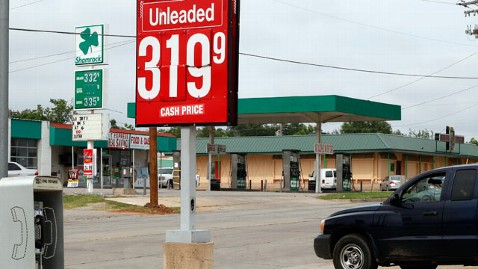
Gas prices fall to $ per gallon in some markets

Gas prices fall to $ per gallon in some markets
Paul A. Eisenstein, the Detroit Bureau - 5 days

If the wallet is still injured from the painfully high fuel prices is experiencing much of the country over the winter there is also good news the next time you head to the pump.

The average price for a gallon of unleaded gasoline regular has only $3.58, a three cent jump since late last week, dipped 15 cents from a month ago, and 36 cents from what the typical American motorists spent this time in 2012.

This is a sharp turnaround from February saw gas increase as some States too close or all-time records, especially along the West Coast.

Buyer to pay even an average $4,359 in Hawaii and $4,027 in Washington, D.C., but California is $4 $3,998, again under the brand, according to GasBuddy.com, a tracking service fuel price. And it is up to $3,286 in Montana - where motorists only $3,261 in Billings figures.

Some reports point out that the price is below the $3-brand in a few rocky mountain communities in the vicinity of large refineries declined. And GasBuddy is still "other markets" are you under this breakpoint diving in the coming days.

While crude oil prices some gains early Monday, trading, crude oil futures in decline for several weeks been in. An important reason, reports the Federal Energy Information Administration, that the country's reserves are now at a 22-year peak.

The United States were ramping up oil production for several years, quickly and should become actually a larger producer than Saudi Arabia and other OPEC suppliers by mid decade. You do not necessarily reflected in lower prices, as crude oil as a global commodity is traded. Despite concerns over Mideast instability--in particular the decline in production in the war-torn Syria - it seems but a good deal, if no oversupply of black gold will be available now worldwide.

According to Tom Kloza, Chief Analyst at the oil price information service, a sharp increase of fuel prices around the world would provoke probably only a large "disturbance in the Mideast".

This means that analysts warn that Americans do not become complacent. Further, try traders to push up the price of crude oil. And as US motorists were seeing regional tips are becoming more common. Follow the changeover from summer to winter can mixtures to reduce the regional air pollution problems fuel pump. Result can also be maintenance and other issues, such as those that large swaths of the Midwest and Pacific Coast last year affected.

Even in areas where prices are today top, the national hit parade numbers significantly down from last year's level - at the California at $4.28 per gallon, for example was.

Meanwhile, the sudden drop in gas prices can a shift in the U.S. market for new cars, fueling. Sales of pickups, in particular increased in March and car sold light trucks move overall, despite of the recent trends in the opposite direction.

Copyright © 2009-2013, the Detroit Bureau

Monday, October 15, 2012

Used Car Prices Keep Sliding, but for How Long?

Used Car Prices Keep Sliding, but for How Long?

A salesman helps a customer shop for a used car at Novato Ford in Novato, California.The great run-up in used car prices we’ve seen over the last years is over.

It has been for some time.

The latest numbers on wholesale prices the dealers are paying shows not only how far prices have dropped, but also raises the questions of how much further they could slide.

Few are predicting a major drop off from here, but if you’re holding out hope that used car prices will continue pulling back that trend is working in your favor.

According to the wholesale auto auction firm Adesa, here are the average prices for September and how much they have dropped in the last year.

The change in wholesale prices may not seem like a lot, but they reflect a steady decline.

One that many believe will continue as the pent up demand in the market continues to drive owners of seven, nine, even 10 year old cars and trucks to upgrade with a new vehicle instead of a used one. The gap in pricing between new and used remains small enough that many buyers looking for an upgrade are deciding to buy new instead of going with a three or four year old used model. And as financing has expanded to include more buyers with subprime and deep subprime buyers, many who used to be boxed out of the new car market are now finding more options.


Saturday, September 15, 2012

Isaac pushes gas prices higher for holiday

NBC's Tom Costello reports on the recent spike in prices at the pump as travelers hit the road for the Labor Day weekend.

By Richard Satran, NBC News contributor
Updated at 2:57 p.m. EDT: Gas prices jumped again Thursday in the wake of Hurricane Isaac, leaving drivers facing the prospect of costly fillups as they take to the highway for a final summer spin over Labor Day weekend.

Prices climbed two cents a gallon to $3.82 nationally to a record for this time of year and are likely to edge higher still in coming days, the American Automobile Association said. The gains came on top of a five-cent surge Wednesday when Isaac pounded the oil-rich Gulf Coast region. The price has risen steadily from the summer low of $3.33 on July 2.

Consumers are likely to get a price break soon as oil and gas companies gradually restart their Gulf operations, but AAA said drivers should expect to pay a few more pennies by the end of the holiday weekend.

Isaac spared heavily populated New Orleans from the devastation wreaked by Hurricane Katrina seven years ago. But this week’s storm caused widespread damage and dumped more water in the region than its sister storm seven years ago, according to the National Weather Service. Thousands remain stranded and power outages have been widespread.

Up to 50,000 people in Louisiana were ordered to evacuate Thursday as a dam seemed ready to give way across the state line in Mississippi.

Drivers caught a break, though, as the storm appears to have spared the region's many refineries and oil rigs, unlike the devastation that affected the industry for months after Katrina in 2005. As a result, AAA analysts expect pump prices to decline quickly after the holiday.

“We would expect prices to be going back down by mid-September,” said Michael Green, AAA public relations manager. “We can’t estimate exactly how much. “

Isaac’s slow journey through the Gulf and Louisiana’s energy-refining heartland is still driving prices higher across the land, but from initial assessments the storm appears to have had no lasting damage on energy infrastructure, he said. Refineries and rigs shut down as a precautionary measure.

One refinery in Belle Chasse, La., was flooded, according to wire reports.

“It’s a little early to say for certain but it appears they were relatively unharmed,” said Green. “It’s still to be seen when there are deeper assessments, but so far there are no reports of anything significant. That’s good news for the oil refiners.”

As the storm headed north, Illinois Attorney General Lisa Madigan warned gas stations owner against price gouging after complaints against some Southern outlets in the storm’s path.

“I’m putting (gasoline station) retailers on notice that these circumstances are not an excuse to gouge customers at the pump,” said Madigan. “My office will be closely monitoring gas prices to ensure gas station owners are operating legally.”

Despite the storm and the higher gasoline costs, nearly 33 million Americans still plan to travel for Labor Day, said AAA. That would be a 3 percent rise in traffic from a year ago. Americans have been driving more on major holidays this year than they did during the depths of the recent recession, the association reports.

Amid higher fuel demand and low gasoline inventory, prices have been pushing higher, although consumers will get a break soon due to a recent jump in refinery output, said Green. Refiners have had a relatively trouble-free season and were able to boost supplies to move to gas stations ahead of the storm season.

With the end of summer, there will be fewer drivers are on the roads, as well, further reducing fuel demand. The change of season also means stations can sell less expensive gasoline than the ozone-friendly mix they are required to pump in summer months.

Another storm could tip the scales once again. The official end of the hurricane season is Oct. 31.

“There is still a chance of more storms but Labor Day is generally considered the peak,” said Green.

For gasoline prices, it looks like high time is this weekend.

(This story has been corrected from a previous version.)

Wednesday, August 15, 2012

Car prices rise as incentives disappear

Car prices rise as incentives disappear

Shi TOU / Reuters file

The prices of new cars are back on the rise.

By Paul A. Eisenstein, the Detroit Bureau
Yes, will probably pay more for the new car, truck or crossover, which looked at you have been, have. With U.S. sales rising and factories often stretched to the limit were manufacturer incentives curb and pushed prices higher, according to industry analysts.

The good news is that everything you buy your next new vehicle expected to be clearly equipped as the product that it replaced, reports, J.D. power and associates.

Who could just the Olympic Games the impression this is a good time to buy, at least if a lower price tag the target. Chevrolet, in particular heavily promotes his program "total confidence pricing", which means that all buyers get a particularly low number. Other automakers have low-interest loans and other Givebacks shopper in showrooms were to pitching.

But the deals are not as good as she might first appear, according to Jesse Toprak, senior analyst at TrueCar.com. "Also if automakers the impression that they are incentives, the issues..." Are ramps can give (them) increasingly of the financial incentives and pushing financing and leasing programs move, "he said."

The market research company underlines the trend data. Only a handful of manufacturers - including Honda, Nissan and Volkswagen - incentives are greater than a year ago. VW Givebacks rose by 38.1 percent in July compared with the year before, Nissan 22.4 percent and Honda 12.8 percent. Most car manufacturers severely restricted Givebacks - Toyota to whopping 22.5% on the previous year. The industry fell overall incentive spending by 3.7 percent.


It is not surprising when you consider that the US car market has seen a strong recovery in recent months. Despite the overall has malaise of the American economy, most analysts and automakers have their full year 2012 forecasts revised upward to as much as 14.50 million, the best numbers of the industry since well before the car market recession led collapse seen.

In turn the most car manufacturers - for all of the Detroit big three - rations capacity during the economic downturn, close a number of plants such as decision makers to fight to ensure that the remaining facilities were operating at maximum capacity. Now however they demand fight as sales faster than originally expected to revive. And that means that it is more of a seller's market than in previous years.

Hyundai - has the lowest incentives in the market at $1.181 per vehicle - market share warning in this year it will likely lose, because it cannot keep with Coupe and Veloster Turbo with the demand for new products such as the Azera, Genesis.


The average Giveback in July for all automakers was $2.480, with Nissan leading the way at $3.205 - before the normal Giveback from General Motors, leader at $3.015 and Chrysler, $3.132.

But incentives tell only part of the story. Automakers are also higher prices - part on the cost of new content is steadily increasing, but also to the urge to raise prices during the recession held back have catching up to do.

Higher prices and lower incentives in customers pay more for the typical vehicle translate - although exactly how much prices up are a question of the interpretation is.

"There is still a lot of affordability in the market," said Bill Fay, the new Toyota division general manager, although he admitted that wind customers can pay up for "a lot of innovation, which is to bring the industry to the market."

JD Power and associates found from 2008 to 2011 average sales prices jumped from $25.505 for the typical U.S. vehicle to $28.337. TrueCar, meanwhile said its agents tracking data give the average vehicle price went up to $30.369 in July, a 1.6 percent increase compared to the same month last year. Due to different as the figures calculated are reported there is a gap between the numbers of the two companies - and power shows a slightly lower surge in prices in 2012 - but most observers believe the trend to higher selling prices is clear.

Other reasons for rising prices include a general rise in vehicle equipment and technology "in the House", according to David Sargent, automotive operations at j.d. power. This is at a time when buyers in large numbers "Downsizing" are significant. On the positive side, he said, "is the average supermini today as well as the medium-sized car that could now be a person in the trade." But the smaller car price might be closer to what was paid in the past for the larger vehicle.


Industry planners still recognize that there is a classical link between prices and demand, said Jim Hall, an automotive consultant with located Analytics.But they have demand no other choice than to more. There are not only the higher levels but the reality that even everyday objects, such as steel and rubber, sharp price in the last few years have seen increases.

"It is inevitable," which costs, are passed, Hall said. The question is whether this will result in lower sales of new vehicles. To a lesser extent, increases effect of the market, he added, "but there are other issues," including the broader State of the economy. "Job fears are more likely, buyers of the new car market as a 1.6 percent jump in average purchase price of the vehicle."

There is also the reality that today's cars are more sustainable. Several new reports show the typical car new customer can wait now as long as 10 years before the trade in - and most are between 125,000 and 150,000 miles on the speedometer until then, according to a study by the black book vehicle pricing guide speed.

Need to wait with buyers expected to be longer, the trade even more reason, some observers think with car manufacturers, want to maximize profits on each sale.

Sunday, April 29, 2012

Sticker shock: New car prices hit record high

By Paul A. Eisenstein, The Detroit BureauRemember “sticker shock”?  After several years of heavily discounting their products in a desperate bid to keep assembly lines rolling, automakers are finding themselves back in the driver’s seat again – pushing prices to record levels.

And it’s “not a blip,” warns one senior analyst, who expects the trend to continue for several years. The good news for shoppers is that trade-ins are also yielding better prices – and while that new car, truck or crossover may command more money than ever before it’s also likely to include significantly more features and markedly better fuel economy than the vehicle it replaces.

How much do you expect to spend on your next new car?

The average new vehicle sold in the U.S. in March cost $30,748, according to data tracking service TrueCar.com.  That was up 6.9 percent from $28,771 a year earlier and marks an all-time record.

“It’s not a blip. It’s a trend we’ve been seeing for months,” said Jesse Toprak, TrueCar’s chief automotive analyst.  That’s despite the fact, he says, that “this might seem counterintuitive at a time you might expect to see people buying cheaper cars because fuel costs are rising so fast.”

But there have been a number of counterintuitive trends in the industry in recent months. One is the surge in overall car sales, which have been rebounding faster than the U.S. economy – despite the fuel price spike that, in decades past, might have been expected to result in a sharp downturn in demand.

There are a number of reasons why new car prices are spiking.  A key reason is “There’s a better equilibrium between supply and demand,” noted Toprak, “which means discounting isn’t needed as much.”


Dodge Dart Gets First Factory Wireless Charging System

While March saw vehicle sales surge to an annualized rate of around 14.5 million, that’s a long way from the decade-old industry peak of around 17.1 million.  In years past, makers would’ve been tacking on massive rebates and other incentives to boost sales. But in a significant move during the recent recession, many makers slashed production capacity, especially Detroit’s Big Three.

And so, with the remaining plants operating at, near and sometimes above their rated capacity, carmakers don’t need to be so generous. March incentives, according to TrueCar, slipped 1.8 percent, year-over-year, to an average $2,440 per vehicle.

There’s another reason why the run-up in pricing might seem unlikely. There’s been a significant upturn in the small car market with motorists trading big SUVs for compact crossovers and full-size sedans for subcompacts.  Nearly one in four vehicles sold in March fell into the small car category, up from barely one in six as recently as December, according to industry data.


Ford, Nissan Abandon Key Hybrid Programs

But don’t think of them as the classic “econoboxes” that proved so popular – briefly – in the wake of the twin oil shocks of the 1970s. Products like the 2012 Ford Focus and the latest-generation Hyundai Accent are far more stylish and well-equipped.

Consumers, meanwhile, “are upgrading the vehicles they’re buying,” no matter what class they fall into, noted Art Spinella, lead researcher at CNW Marketing.

In the decades that CNW has tracked automotive buying patterns, the typical vehicle will fall into the 50th percentile — almost exactly halfway between the base price of a specific nameplate and the most heavily loaded version. In other words, if the entry model was $20,000 and a fully loaded version was $40,000, the typical buyer would spend $30,000.

But now, said Spinella, the average vehicle is falling into the 82nd percentile.  Using the same example, the typical shopper now drives off in a vehicle costing $36,400.


U.S. Fuel Economy Tops 24 MPG for 1st Time

“People are trying to stuff all the bells and whistles they can in a car” in part, Spinella explained, because “they plan to keep it longer.”  Prior to the Great Recession, buyers told CNW they plan to hold onto a new vehicle, on average, about 42 months. That’s now up to 57 months.

The good news is that buyers aren’t necessarily spending a lot more out-of-pocket. That’s because used car prices have also surged over the last several years.  During the first quarter of 2012, the price of the average previously owned vehicle sold through a franchised new car dealer rose 12.5 percent, or about $1,400.  For the consumer, that meant a bigger trade-in allowance to apply to a new vehicle.

The upward trend in pricing is almost certain to continue, at least barring a sharp setback to the economy, industry analysts agree.

“The long-term trend is gradual price increases continuing for several more years as sales recover to 15 million and even 16 million,” forecast TrueCar’s Toprak.  “But the pace (of the increase) we’ve seen over the last several years isn’t sustainable.”

He anticipates prices will start to level off as they reach an average $31,000.

Tuesday, July 12, 2011

Gas prices hit sweet spot for U.S. automakers

DETROIT - gas prices have hit a sweet spot for automobile. Please have stay enough, yet so high to spur Wheelback pickup truck sales, that newer small cars sell so well.

However, this is not the case for Honda and Toyota. She ran short of small cars due to production problems, an ally of the March earthquake in Japan.

Industry analysts 13.5 percent from last June, to approximately 1.1 million passenger cars and truck expect U.S. sales rise as a whole. Automakers were sales in the course of the day June on Friday reporting.

Tired? Here is, sleep such as in the work life Inc.: Lifehacker offers up some tips how you dodge the head and some Shuteye on the company can get dime. Battle of the fuel economy standards life Inc. brewery: bonuses can a comeback (for some) make life Inc.: gifts for the happy (gay or lesbian), pair your career: in short pants at work

General Motors co. and Ford Motor Co. said that its sales rose by 10 percent. Chrysler Group sales rose by 30 percent. But Honda Motor Co. and Toyota Motor Corp., saw more than 21 percent each sales drop.

Despite the Honda and Toyota figures interpret the results, that the US auto industry slow recovery from the recession is again on the track after a short slump in May.

GM said that cheaper gas lured more pickup truck buyers in showrooms. Chevrolet Silverado sales increased by 5 percent and GMC Sierra sales by 8 percent compared to the previous year. Ford F-series trucks sales rose 7 percent, while Chrysler a 35-percent sales growth RAM truck reported.

Each bounce in pickup sales will help the Detroit car manufacturers who sell more than five times as many trucks as a foreign-based brands. But Nissan Motor Co., also benefited, small pickup rose 51 percent as sales of the border.

However, were GM sales increased from smaller, more fuel-efficient models powered. Sale of the new Chevrolet Cruze compact more than the double of the car that they replaced, the cobalt. Gas prices average $3.68 per gallon in June, hardly cost effective but cheaper than in May.

"There is a certain part of consumers, the gas prices almost every day to respond to, and choose what you buy based on these prices," said Jesse Toprak, Vice President, industry trends and insights for car prices website TrueCar.com.

Honda and Toyota ran behind the best-selling models as rising demand was for their small, fuel efficient vehicles. Sales of Honda's two top-selling models, the accord medium-sized car and civic each compact, were from about 35 percent. Toyota sales of the Camry were medium-sized cars from 25 per cent and the compact Corolla fell by 14 per cent.

Both companies begin North American factories to return to normal production. The earthquake and the tsunami in March plants and electricity damaged Japanese parts cut off.

Some concerns about the strength of the recovery is recovering well in sales. Don Johnson, GM Vice President of U.S. sales, said that he now total industry sales at the low a range of 13 to 13.5 million vehicles are expected. J.d. power and Associates lowered its full-year revenue forecast by 13 million vehicles to 12.9 million.

Johnson blamed stubbornly high unemployment. Slow setting may have been to the this month sales fall, which broke a string of two-digit monthly increases. Meteorologists say the jobs picture improved only slightly in June.

Johnson says that the industrial recovery along motor cycles. He said that with about 9 percent unemployment, 91 percent of the country still works. And many older vehicles.

"There are still people out there looking for a vehicle and, in many cases their vehicles have to replace it,", Johnson said.

The average car on the road is old now 10.6 years, according to the research firm Polk.

Sales were expected to be around 5 percent from may, if deficiency, $4 per gallon gas and lack of services caused a slump parts.

But the pace of sales earlier this year has slowed down.

Bottlenecks are car prices that keep high. This continued expected until September, j.d. power. In the meantime setting has slowed down and income are flat. The confidence of consumers - an important measure of whether cars be - sell slipped on a seven-month low in June.

"Things not quite as healthy in the current environment", said Jeff Schuster, j.d power Executive Director of global forecast as expected this year.

A problem for automakers is the lack of small, fuel-efficient cars. Japanese automakers expect earthquakes associated with lack of popular products such as the Toyota Prius and Honda Civic for several months and Detroit automakers can not only meet the demand for small cars.

The industry began June with a 30-day supply of compact and subcompact cars and inventory has only a closer since Ford's will, then get up U.S. sales analyst George Pipas said. That compared with a 51-day supply of all cars and trucks.

Pipas said that instead of moving in mid-size cars, small car shoppers just wait. Honda Motor Co. and Toyota Motor Corp have said they expect their North American production to be at near-normal levels until late summer and more cars will soon get to dealers.

Other automakers reporting Friday:

Volkswagen AG said its U.S. sales rose by 35 percent in June on strong demand for its Jetta midsize sedan and other models. Nissan said sales increased by 11.4 percent on strong demand for smaller vehicles. Sentra compact car sales rose nearly 31 percent. Hyundai Motor Company sales increased by 15.6 percent, led by the Elantra compact car. The Korean automaker 59,209 vehicles sold in June of 51,205 a year earlier. Kia Motors co. its best June ever with sales by 41 percent at 45,044 reported. The hottest seller was the new Optima mid-sized sedan to 7,099. This is almost six times more Optimas when were sold a year earlier.

© 2011 The associated press. All rights reserved. This material may not be published, broadcast, rewritten or redistributed.

Friday, June 24, 2011

Prices rise on the used car lot

When Debra Neel went to check out used Jeeps recently in Indianapolis, she left with a bad case of sticker shock.


"We were looking around $4,000 or $5,000 for a good used car for a teenager," but "you can't find them anymore," Neel said. That was readily confirmed by Bob Falcone, president of Falcone Volkswagen, Subaru & Saab in downtown Indianapolis.


Falcone said that a couple of years ago, Neel might have been able to get the 12-year-old Jeep she was considering at her $4,000 to $5,000 price point. The 2000 model on the lot, after all,  has almost 90,000 miles on it and gets only 16 miles to the gallon.


Its price tag today: $13,900.


"It's unbelievable," Falcone acknowledged. He said the used car market is the strongest it has ever been in his 34 years in business.


Prices to soar 30 percent year over year
Dealers and automotive analysts say it's the same across the country. A variety of factors, including the nation's weak economic recovery, high gasoline prices and the March 11 earthquake and tsunami in Japan, have converged in recent weeks to send demand for used vehicles skyrocketing and supply plummeting, said Jeremy Anwyl, chief executive of Edmunds.com, which tracks new and used car prices.


"And that really shot up prices," Anwyl said.


Michael Todd, a sales manager at Fredericktowne Motors in Frederick, Md., said that when dealers go to mass auctions to buy used vehicles, prices are already "in excess of Kelley Blue Book excellent" — the highest "book price" recommended for vehicles in tiptop, almost new condition.

Big retailers like Wal-Mart are thinking small The nation’s most prominent retail giants, Target and Wal-Mart, are testing out smaller versions of their familiar mega-stores.

Life Inc.: Do you love your family enough to work longer? In tough times, many see night shift in new light Life Inc.: Dads also have work-life issues Renters are next victims of housing market

By the time those autos are marked up for retail sale on the lot, they can cost far more than what buyers are expecting because "basically, we've thrown the books away," Falcone said.


While that's bad news for used car buyers, it's great news for anyone looking to trade in their old rides.


"This is my 37th year doing this, and I've never seen it like this," said Gerry McCann, sales manager of Duncan Automotive in Blacksburg, Va., who said he and other local dealers were generally paying about 25 percent above book value.


That's in line with the rest of the country, according to the National Automobile Dealers Association, which projected that average June trade-in values for used cars would be up by 18 percent since December and by a full 30 percent over June of last year.


"It's kind of a perfect storm going on right now for consumers," said Bob Penkhus, owner of Bob Penkhus Motor Co. in Colorado Springs, Colo. "We have had more trade-ins in the last 30 days than ever before in our history."


Used sales triple new sales for first time
The spike in demand for used cars started during the recession that began in December 2007, which discouraged would-be purchasers from buying new vehicles. Many of them chose simply to hold on to their current cars, but others switched their focus to something used, dealers and analysts said.


That would explain why, while all passenger vehicle sales and leases — new and used — fell from 2007 to 2009 (when the recession ended), new car transactions dropped by 36 percent, compared to just 14 percent for used cars. (The federal Bureau of Transportation Statistics hasn't yet released final figures for 2010.)


Here's another way to look at those numbers: Sales and leases of new vehicles crashed out at 10.6 million in 2009, while used car transactions leveled off at 35 million. That's a ratio of 3.3-to-1, and it's the first time used car sales have tripled new car sales since the bureau began reporting comparable statistics 21 years ago.


With gas prices remaining high, buyers' overwhelming preference has been fuel-efficient smaller cars — "the economy cars, anywhere from an '01, '02, '03, '04, '05 and '06," Penkhus said.

Suspects charged in alleged Joss Stone plot South Korea shoots at passenger jet by mistake Updated 91 minutes ago 6/18/2011 8:59:03 AM +00:00 Computer glitch grounds United Airlines fliers Joss Stone ‘absolutely fine’ after murder plot Sizzling celebs! Hottest bods of the year

But those cars "are very hard to get a hold of," said Falcone, the Indianapolis dealer. "On those, you're bidding against everyone across the country" because sellers are so reluctant to part with them.


Several other factors have squeezed supply. For example, the federally funded Cash for Clunkers program, which paid drivers to turn in their inefficient older used vehicles, "took a lot of older cars off the market," McCann said.


(Specifically, it removed nearly 700,000 used cars and trucks from the marketplace in the single month it was in effect in summer 2009, the Transportation Department reported.)


Rental car companies, meanwhile, cut back drastically on their fleets when the recession hit. Rental companies typically sell of hundreds of thousands of vehicles on the market after two to three years' use; it's the single biggest component of the late-model used car market.


But industry figures compiled by Automotive Fleet magazine show that rental fleets fell from 1.6 million in 2007 to 1.175 million last year — eliminating more than 400,000 available used cars.


Japanese quake damage industry worldwide
And then came the March earthquake in Japan, which devastated production of popular fuel-efficient new Toyotas, Hondas, Nissans and Mazdas, further increasing demand for late-model used versions of those cars, and of parts needed to repair those used models for resale.


"Those companies have been hit by the power outages, the tsunami and even the nuclear issues that are currently going on over there," Penkhus said. "They're affecting everything that comes out of Japan."


Ali Kargaran, general sales manager of Bakersfield Mazda in Bakersfield, Calif., said he's "actually running out of cars," especially the most economical four-cylinder models.


"They basically shut down the factory," Kargaran said. "We can't even order the cars for the next couple months."


Japanese cars aren't the only ones affected. Any car that comes with an antilock brake system or cruise control, even an American-made one, uses computer microchips made in Japan. Parts shortages through the summer will "affect a wide variety of vehicles," said John Pitre, general manager of Motor City Auto Center in Bakersfield.


"It won't be just cars or just trucks or just Nissans or Fords," he said. "It will be a pretty wide range."


In a report last month, automotive analyst R.J. Polk and Co. substantiated that assessment, projecting that "interruptions in the supply of critical parts" would damage "vehicle production in numerous global markets."

J.R. Polk analysis of Japanese auto industry after the quake (.pdf)

The report was optimistic that the industry would eventually recover, but at least for the rest of this year, it said, the impact of the quake would affect "the entire value chain."


And here's the kicker: It's not likely to get much better soon.


If you want to know how the supply of used cars is going to go, you have to look at current sales of new cars, because it "all starts with new cars being fed into the market," said Brad McAreavy, president of the Rochester Auto Dealers Association in Rochester, N.Y. This week, Edmunds.com projected that new car sales would slowly recover but that they were unlikely to get back to pre-recession 2007 numbers until at least 2016.

US auto sales cooled in May

"Ultimately," McAreavy said, "it's going to lead to fewer used cars in the market."


© 2011 msnbc.com Reprints

Monday, May 30, 2011

High used car prices make it ideal time to sell

DETROIT - it's the best time in years, to sell your car.

People are held on cars and trucks for about a year longer than even before the recession, which has created a tight supply of used vehicles. So few are in the market, the prices have risen to their highest in at least 16 years.


Dealers pay an average of $11,660 for a used car or truck, to almost 30 percent since December 2008.

The 'Black Mancession' your career: the great recession black men has been also known as the "Mancession" because men have been hit so hard, but worse. Life Inc.: The doc Bill is here life Inc.: another way the rich richer what home buyers can get for $ 200,000

"You will not find a situation like this often," says Jonathan banks, executive car analyst for the National Automobile Dealers Association used car pricing guides.


In the run-up to the prices for used cars was so dramatic that it almost makes sense, they buy more, says David Whiston, an auto analyst for Morningstar. This is probably a good indication of the prices are at or near a peak.


He says "For only a little more I a new car to buy,". "A point there." "I think we are very close to see always."


Take the Honda accord to keep known reliability and its value. A dealer would sell one 2008 cylinder LX accord sedan in good condition with about 45,000 miles on you for $16,175.


With no deposit and a loan at 5 percent interest it costs you $373 per month to pay off the agreement in four years. But Honda offers a three year lease on a new accord 2011 for only $250 per month. The company will make the first payment. You have still, for every mile of 12,000 annually take $600 front and pay 15 cents.


In Greensboro, n.c., Jeremy Barnes and his wife expected their first child so they decided to replace a white accord 2007 with a bigger, new vehicle. He was not sure what could get them for the accord, if he checks prices on the website Kelley Blue book.


"I was pleasantly surprised," says Barnes, 30, a heating and air conditioning equipment seller.


He calls $15,200 for the car, which is in good shape and 47,000 miles on it. While waiting for a buyer, find the pair on vehicles such as the Jeep Grand Cherokee.


Used car price increases is a by-product of the recession. The average car on the road is old now 10.6 years, into the Polk research firm. Which is taken up by 9.8 years a few months before the recession in the middle of 2007, and began to rethink big purchases.


Another source for used cars was smothered, if during the 2008 financial crisis, and car companies cut back new credit tightened on leasing. Company sell cars rented as possible, when leases expire.


Japan's earthquake and tsunami drive the price of some used cars. New models of some small cars like the Toyota Prius and Honda fit, will be said is expected shortly. Traders are used, buy to sell on their behalf. That won't last, though.


Manheim, a large auction house, where dealers buy used cars, says that prices are the highest this year, since 1995, the company began to collect data. Tom Webb, Chief Economist predicts, that used car prices will rise to two more months and then away. You can will end in 2012 and beyond, as more cars used on the market.


There are already signs, used car prices are falling. Leasing was 21 percent of U.S. sales in February, which was 11 percent in 2009, according to Experian Automotive. As a three-year leases end should, more used cars on the market bring.


Banks and car have relaxed company financial arms for people with poor credit rating and credit, which means more buyers get a loan for a new car.


© 2011 The associated press. All rights reserved. This material may not be published, broadcast, rewritten or distributed.

Wednesday, April 27, 2011

Why gas prices are rising faster than they fall

You might have heard over the weekend that skyrocketing gas prices have finally "plateaued." If gas prices were like gravity, you would anticipate they would?start plummeting soon.? Raise your hand if you expect that.


Me neither.? While the words "skyrocketing" and "gas prices" often end up in the same sentence, "plummeting" and ?gas prices? rarely occupy even the same paragraph. In a perfect free market, prices should float up and down with equal speed. But in our market, what goes up doesn't seem to come down, at least not at once.? What gives?


We've been told for months that instability in the Middle East spooked the traders who set gas prices, which are almost $1 per gallon more at the pump than a year ago. Prices jumped 30 cents from mid-March to mid-April alone, to an average $3.88 a gallon.? What are odds, do you think, that average prices will return to $3.58 by mid-May?


The quick rise/slow fall phenomenon will feel familiar to most consumers, who often explain it with this conventional wisdom -- greedy retailers take advantage of temporarily high prices as long as they can to sock away a little extra profit. ?


Economists tend to scoff at conventional consumer wisdom, but basic economic theory holds no explanation for the sharp rise/slow fall price pattern. Twelve years ago, economist Sam Peltzman -- a free market advocate not known for consumer-friendly research -- conducted a vast study of price "shocks," which could have dispelled these complaints as yet another whiny consumer myth. Instead, it fueled the fire. His review of 77 consumer goods that had been subject to abrupt price increases ? including gas -- led Peltzman to write a paper called simply "Prices rise faster than they fall."


?"The title summarizes the main result: the person in the street is right and we are wrong," Peltzman wrote.(PDF) In fact, the results were so vexing he called it ?a serious gap in a fundamental area of economic theory."


Consumers might call it price gouging; economists like Peltzman have settled on a?more neutral term: "asymmetric price adjustment." And while economists have conceded this time that whiny consumers happened to be right, they aren't yet ready to sign up for their conspiracy theories.


For economists interested in the more general problem of pricing, gas prices are a fantastic real-world laboratory.? Nearly all consumers need gas.? Prices fluctuate often, and there is (theoretically) widespread competition, making gas stations a nearly ideal marketplace to study.? And nowadays, thanks to services like GasBuddy.com, it's relatively easy to gather price data across wide geographic regions.


The first research into what some called gas price ?stickiness? was published in 1997 by a research team headed by Severin Borenstein, who found that gas prices fall about twice as slowly as they rise after a price shock. For example, if prices rise 50 cents in four weeks, and the cause of the increase is eliminated, it?ll take about eight weeks for the prices to return to pre-shock levels.


Matt Lewis, an economist at Ohio State University, has been studying gas prices for more than a decade. He's considered some of the usual allegations, like pricing fixing and collusion among stations. He doesn't entirely discount those, but he thinks he's found a better explanation for the fast rise/slow fall phenomenon.? Here's his theory in a nutshell: When prices fall, consumers are so relieved that they stop shopping around for the best price. That eliminates the normal downward pressure on gas prices and allows stations to squeeze out a few more cents of profit while prices slowly fall.


Matt Lewis


One chart from Lewis' research, showing the inexact relationship between wholesale and retail gas prices during 2003-2005 in the Los Angeles market. Notice the soft, rounded peaks on retail prices, as opposed to the sharp peaks on wholesale prices, showing that prices don't go down as quickly as they could. Also notice that stations' profit margins often shrink as prices rise.


"Consumers shop around more intensely when prices are going up. When they are falling, they don't shop around as much," Lewis said.?


A key element of his theory is something economists call a "reference price."? Your local car salesman might know it as "framing." Once consumers get a number in their head -- $10,000 for that car, $3.70 for that gallon of gas -- all subsequent choices are impacted by a new price's relation to that reference price.? When the car dealer says, "OK, $9,500," you think you have a good deal. When the nearest gas station drops the price to $3.63, the average consumer impulsively stops searching.


"If prices are falling, you pull into a station and think 'I have a good deal,'" Lewis said.


The last big gas price shock -- the speculation price bubble of 2008 -- created a perfect opportunity for Lewis to test his theory.? Consumers can use GasBuddy.com to search for the lowest gas price in their area.? As prices soared in the first half of 2008, Lewis charted a similar spike in GasBuddy.com traffic.? When prices fell that fall, GasBuddy.com Web traffic fell, too -- showing gas shoppers became less interested in shopping around while gas prices waned.


Lewis' more recent research has added another nuance to his theory that might make consumer conspiracy theorists feel a bit better. Lewis has, for years, observed several Midwestern retail gas markets that don't behave like other U.S. markets. Intense competition in some small towns near his Columbus, Ohio, home has led to regular cyclical price wars. Stations undercut each other on a daily basis, engaging in short-term price wars that might drop prices from $2.50 to $2.38, for example. But after a few weeks, one station will bite the bullet and raise prices back to $2.50.? Other stations follow suit.? Then, the cycle begins again.


In these areas of cyclical price wars, Lewis has found that the fast rise/slow fall phenomenon doesn't apply.? In other words, stations facing intense competition can't get away with what consumers might call "gouging" and economists call asymmetric price adjustment.?


Lewis isn't ready to generalize those observations just yet, but conventional wisdom will tell you there's not enough real competition in gas prices. Twelve years ago, Pelzman predicted imperfect competition would be blamed for the sharp rise/slow ?fall price pattern. He dismissed that explanation as "unlikely to be rewarding."


But Lee Branstetter, an economist at Carnegie Mellon University, said that local monopolistic behavior is probably the fundamental cause of ?downward price rigidity.? When prices go up, retailers who don?t react immediately lose money.? Failing to raise prices in lockstep with higher wholesale prices leads to an obvious, quantifiable loss. But when wholesale prices go down, many gas station owners play the game every retailer does ? ?How much extra can I get away with charging before I lose consumers?? ?And even with competitor?s prices so obviously posted, station owners face little risk in trying to grab a few extra pennies per gallon from drivers?


?Retail gas sellers in the same neighborhood can function as a kind of local oligopoly,? Branstetter said -- a small group of businesses that collectively operate with monopoly power. And consumers are often loath to change their buying habits.? ?If you are lagging behind a little bit -- ?all your consumers aren't going to desert you immediately. ? (Consumers) are willing to be abused a little bit in the short run.?


Any study of retail gas prices risks ignoring complex factors in a market that is anything but pure: The spot price is controlled by speculators making bets on the whims of the oil producing nations? cartel, the threat posed by government-subsidized energy alternatives and the likelihood of another environmental disaster, to name a few.? A mysterious wholesaling and distribution system adds to the cost in difficult-to-measure ways.?? Also, gas stations often make very thin margins on retail gas sales ? many use gas as a loss leader for chips and soda sales.? As prices go up, their razor-thin margins shrink toward zero, Lewis said ? and station owners naturally try to recover some of those lost profits as prices head back down.


Making the issue even murkier, behavioral economists will tell you, is the fact that gas shoppers are anything but rational agents who constantly seek out the best price. Instead, many are pesky realists for whom the nearest station will do.? On the other hand, some consumers overestimate the true value of a cheaper gallon of gas, because they underestimate the cost of driving to get that cheaper gas (what economists call "search costs?).?


In "The Cheapest Gas in Your Area Can Cost More," Loyola College Professor Joseph Ganem makes the argument succinctly.


"If you drive five miles out-of-the-way to purchase gas in a car that gets 25 miles per gallon, that 10-mile round trip burned 0.4 gallons. If you drove that distance to pay $2.95 per gallon to fill a 12-gallon tank, instead of paying $3.00 at your local pump, you actually spent almost a nickel more per gallon for your tank of gas," writes Ganem, author of ?The Two-Headed Quarter: How to See Through Deceptive Numbers and Save Money."? He has a nifty "Is it worth it" calculator on his Web site.


It should also be noted that while retail gas prices ? in fact, all commodity prices -- remain artificially high temporarily, retailers can?t get away with exorbitant overcharges for long. Gas price history bears this out.


?While it takes much longer for price of retail products to adjust downward, eventually you do observe adjustments,? Lee said. ?The forces of competition do eventually assert themselves.?


Still, Lewis' theory has implications far beyond the gas market. If there is a general lack of price sensitivity when prices fall, basic supply and demand just took another body blow, and comparison shopping just isn't what we thought it was.? The lesson for consumers is clear: As gas prices fall during the next few months, don't abandon the good price shopping habits you've acquired. While consumers tend to be hyper-vigilant while the price of gas is soaring, the real rip-offs will occur when it?s declining ?? ?when you?re likely to have stopped paying attention.