Showing posts with label Americas. Show all posts

Saturday, April 27, 2013

America's top green car markets

America's top green car markets
Michael Strong , The Detroit Bureau – 3 days

One might associate green with lima beans, not Lima, Ohio, yet a new study finds that the small, Midwestern town ranks right up there with places like San Francisco, Portland and Washington, D.C. when it comes to shopping for cars.

A new study conducted by Cars.com lists Lima as eighth among the top 10 U.S. cities with the most environmentally conscious car shoppers. Less surprising is that San Francisco tops the chart, while eight of the 10 communities are out West.

The list, in order, includes:

San Francisco-Oakland-San Jose, Calif.Monterey-Salinas, Calif.San Diego, Calif.Portland, Ore.Eureka, Calif.Washington D.C.Honolulu, HawaiiLima, OhioMedford-Klamath Falls, Ore.Sacramento-Stockton-Modesto, Calif.

“It is not surprising that California and other West Coast cities top the list with some of the greenest car shoppers. That part of the country has long led the charge in the green movement,” said Joe Wiesenfelder, executive editor, Cars.com. “With abundant charging stations, special perks for eco-friendly drivers in some western cities and robust infrastructure, the West Coast is well equipped to cater to the needs of eco-conscious drivers.”

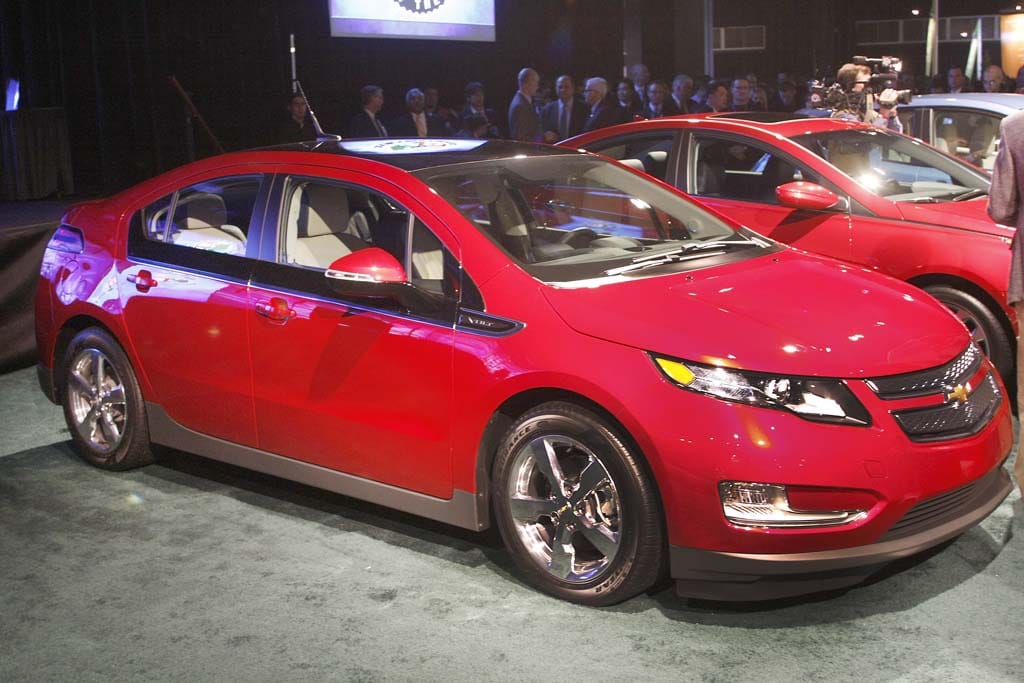
However, Lima, a city of about 38,000 people situated between Toledo and Dayton, making the list may not be as surprising as one might think, if one digs a little deeper. Joe Shaw, general sales manager at Lima Auto Mall, a General Motors dealership told the Toledo Blade that it sells a lot of Chevy Volts.

“We do a lot of Volts, both pre-owned and new, ” he said. “We’re awaiting the Cadillac ELR, and that’s going to be a great car. It’s gorgeous. It’s absolutely gorgeous.”

Shaw told the newspaper that many of the Volt sales are to out-of-towners through their certified pre-owned program. The town is located on I-75, which makes traveling to the city easy. He also noted there are plenty of local residents interested in hybrid and green technology, including the Chevy Malibu Eco a “mild hybrid” using a 15-horsepower electric motor to assist the traditional gas engine.

“We have a lot of people asking about it. You’ve got a strong educational community, you’ve got a strong engineering community here,” Shaw said. “They’re concerned about green initiatives. You’ve got Rhodes State, OSU-Lima, University of Northwestern Ohio.”

The University of Northwestern Ohio boasts an alternate fuels technology curriculum. The school is one of the original six founding members of the National Alternate Fuels Training Consortium. The program focuses on hands-on training in M85 and E85, electric, propane, compressed natural gas, ethanol, biodiesel and hydrogen vehicles.

Copyright © 2009-2013, The Detroit Bureau

Thursday, October 18, 2012

Colors for 2012 are America's favorite car...

Colors for 2012 are America's favorite car...

BMW

This white BMW is very popular among car buyers the color this year sporting.

By Dee-Ann Durbin associated press
If you this year a new vehicle bought, chances are high it was white or silver.

Twenty percent of cars and trucks that have built for the model year 2012 white color, making it the most popular color worldwide. Silver is close behind, at 20 percent, followed by black at 19 percent. Grey and Red follow to five round the top.

The most popular color for the second consecutive year is white to silver in 2011 to overtake. The annual rankings are body supplier PPG Industries Inc., compiled a company headquartered in Pittsburgh, allows the colors to General Motors co., Ford Motor Co., BMW AG, among others.

The rankings are skewed somewhat by the large number of pickup trucks on the market. TRUCKS accounted for 55 percent of North American production in the first eight months of this year after the automobile Ward, compiled data. Every fourth cartridge produced is white, because entrepreneurs often use as a work truck and paint logos on it. In contrast, 19 percent of midsize cars in North America are made white.

White, which was popular in the 1980s a comeback as a modern, tech color thanks partially Apple Inc. all white stores and shiny white gadgets, make, said Jane Harrington, PPG Manager color styling for car companies. Manufacturers make more varieties of white, from the flat, bright Pearl White white on many vans to the cream of the luxury SUVs.

Silver rose in popularity as high-tech color starting in the 2000s. Popular remains, because it underlines every angle of a car, said Harrington.

"Silver great looks on each design," said Harrington.

Grey and black - rental got increasingly popular as buyers during the downturn stopped and bought vehicles, who expected to hold them for a long time, Michelle white and other "Web-safe" colors - silver, Killen said GM lead designer for outer coatings colors. They were some more daring colors on the market, like the one on the Ford Fiesta or bright orange on the Scion iQ magenta suspicious towards.

"Buyers want to buy a color, the one you will not tired grow over a longer period," said Killen.

Color settings are dependent on geography. Here you will find other Red vehicles in North America. Overtake silver in popularity in Europe, black and grey. Driver in Asia such as tan and gold, but not green. Only about 7 percent of the cars in each region are blue.

PPG, developed for mobile phones, laptops, airplanes and houses also colors, based his automotive coatings on trends that it looks in fashion, interior design, and other areas. Harrington saw color in Paris to show, for example, many purple at a recent home so that she helped to develop a violet grey colour for cars. PPG launches result colors to automakers three or four years before publication of the model and automakers two sit down on colors or three years earlier a model goes on sale.

Harrington predicts that customers more Brown and orange watch in the next two years, particularly on luxury cars. Brown - reminds people of leather or a rich Cup of coffee - reminiscent of luxury around the world. Earthy colors are also attractive for drivers worried about the environment.

As in model years 2015 and 2016 the PPG shows 64 future color options on automakers this week. Among those are al fresco, a Silver metallic with a green tint; Glacier, an icy gray with a violet blue tone; Elixir, a metallic mixture of silver and magenta.

Friday, June 29, 2012

The search is for America's ugliest car

The search is for America's ugliest car

The Detroit Bureau

Is this America's "sweetest lemon"?

By Paul A. Eisenstein the Detroit BureauWe, all have seen rusted out, dinged up lemons, paint, peeling, bumpers are missing and hang bumpers with a bungee cord. But which of them is really America's ugliest car? That is what the people of Hagerty insurance - want to find out and the winner among the losers might be for a sweet surprise in the context of the second annual "quest for America's cutest lemons."

The main prize is an all expenses paid trip to the year's most exclusive automotive event, Monterey classic car week in California Thorsten Pebble Beach.

The winning car for the ride, occur along with rarities like a Bugatti Royale, and some equally rare gems celebrated. Accordingly, the winner of contest cutest lemons serve as Grand Marshal of the Concours d ' LeMons, now Hagerty renamed tour of lemons.


The event is a model that requires participants to come with the cheapest, rudest and crudest Junkers, who can find them. Simply to survive the race with the cars in General is considered a measure of victory.

"We believe all cars are beautiful and deserves celebrated are," said McKeel Hagerty, CEO of Hagerty. "This is an opportunity, this eccentric, quirky and strange vehicles." "Many cars that were displayed once as hopeless now enjoy an enthusiastic, cult following."


Whether the winners their own cult - complete with auto groupies or not - will develop remains to be seen, but there is a growing counterculture for really horrible cars, as shown by the increasing success of today's tour of lemons.

The great race just a few kilometres take place away from the Lodge at Pebble Beach, where the 2012 Concours d'Elegance is scheduled. It is generally the most exclusive vintage car event in the world and attracts routinely to some of the rarest cars in the world compete - some only after restoration efforts, the $10 million, considerably more than the entire field on the tour of lemon to the top can.


Who risk going against America's other large lemon wants can send a photo of their car and a short description why it deserves baptized "Americas cutest lemon." Contributions can be sent from Sunday, July 8 at SweetestLemon@Hagerty.com . Top 10 candidates become public voting from July 11-20 on the Hagerty Web site published.

Tuesday, December 27, 2011

The dirtiest cars roaming America's roadways

Nobody wants to be known as the dirtiest, at least not when it comes to air pollution.


The good news is that since 1975, overall new passenger car emissions of greenhouse gases have decreased, and fuel efficiency has increased. The trends seem likely to continue, based partly on technological innovation, partly on more stringent government regulation, and partly on consumer interest and demand.


Electrics, hybrids and alternative fuel vehicles have received a lot of attention this year, and promise to remain in the spotlight during 2012. But the overwhelming majority of new light-duty vehicles to be sold next year are likely to be powered by traditional gasoline internal combustion engines. As promising as new technologies look, manufacturers and regulators must continue to focus on improving the efficiency and cleanliness of gas engines in order to have a significant impact on air quality.


The National Highway Traffic Safety Administration (NHTSA) has issued new Corporate Average Fuel Economy (CAFE) standards for model year 2012–2016 passenger cars and light trucks, in coordination with the Environmental Protection Agency (EPA), which has issued national greenhouse gas emissions standards. NHTSA states that “the environmental need to improve fuel economy is manifest. The U.S. transportation sector is one of the largest contributors to total U.S. and global anthropogenic emissions of greenhouse gases. Concentrations of greenhouse gases are at unprecedented levels compared to the recent and distant past, which means that fuel economy improvements to reduce those emissions are crucial to addressing the risks of global climate change.”


According to the U.S. Government’s Research and Innovative Technology Administration’s Bureau of Transportation Statistics, in 2009 (the most recent year for which figures are available), 234,467,679 light duty vehicles were registered for on-road use in the U.S. Market information company J.D. Power and Associates projects that 13.8 million new vehicles will be sold in 2012 (including fleet sales), up from 12.6 million for 2011.


A 2009 study by Thomas A. Becker, Ikhlaq Sidhu and Burghardt Tenderich for the University of California Berkeley’s Center for Entrepreneurship & Technology predicted that “in the baseline forecast electric cars account for 64 percent of U.S. light-vehicle sales by 2030 and comprise 24 percent of the U.S. light-vehicle fleet.” The increase in the adoption of electric vehicles would result in a significant reduction in greenhouse gas emissions. “When powered by non-polluting sources of electricity, electric vehicle deployment results in a 20-69 percent decline in 2030 greenhouse gas emissions from U.S. light-vehicles over 2005 levels. Emissions are 8-47 percent lower when electric vehicles are charged using the current electricity grid,” the study concluded.


For now, gasoline remains the dominant fuel for light-duty vehicles. The government, the oil industry and the auto industry have attacked the issue of air quality from two fronts: the chemical composition of the fuel itself; and improved efficiency and emissions controls in gasoline engines and exhaust systems.


The most targeted tailpipe emission for light-duty vehicles is carbon dioxide, and for good reason: “CO2 emissions represent 95–99 percent of the total greenhouse gas emissions from a passenger vehicle. CH4 (methane), N2O (nitrous oxide) and HFC (air-conditioning refrigerant) emissions represent roughly 1–5 percent of the total greenhouse gas emissions from passenger vehicles, after accounting for the global warming potential of each greenhouse gas,” according to an EPA publication.


To determine our list of America’s Dirtiest Vehicles of 2012, we relied on NHTSA’s database of fuel economy ratings and the EPA’s Green Vehicle Guide, two publicly available resources. We also used the Carbon Footprint calculator, which helps to translate the information from the EPA into a measurement of metric tons of CO2 emissions.


As in the past, we have excluded heavy-duty vehicles (which are not currently subject to federal fuel-economy regulations) and vehicles which we consider “exotics,” like the Bugatti Veyron. Nearly every exotic vehicle would rank as the dirtiest vehicle in its class, by virtue of a concentration on performance over fuel economy concerns. Because of their low sales volume and small distances driven annually, exotics don’t have the environmental impact of popular production vehicles, and environmental concerns are rarely part of the buying decision for an exotic.


EPA and NHTSA estimates are based on the assumption that vehicles will be driven 15,000 miles annually, and that 55 percent of those miles will be city miles, with the rest classified as highway miles. Using the Carbon Footprint tool, we calculated metric tons of CO2 emissions based on the same 15,000-mile annual estimate. We used the EPA’s Air Pollution Score, which accounts for “vehicle tailpipe emissions that contribute to local and regional air pollution.” Emissions standards are for carbon-containing compounds (including hydrocarbons); oxides of nitrogen; particulate matter; carbon monoxide; and formaldehyde. Results are reported as a whole number score from 1-10, with “1? representing a minimum passing score and “10? representing a perfect score, with no tailpipe emissions at all. We used the California standards, which are the most stringent in the U.S. for 2012.


The EPA numbers were the first hurdle. Vehicles with the lowest (worst) scores were then compared based on their CO2 emissions. The vehicle with the most emissions was then determined to be Dirtiest in Class.


© 2011 Forbes.com