Showing posts with label women. Show all posts

Tuesday, June 4, 2013

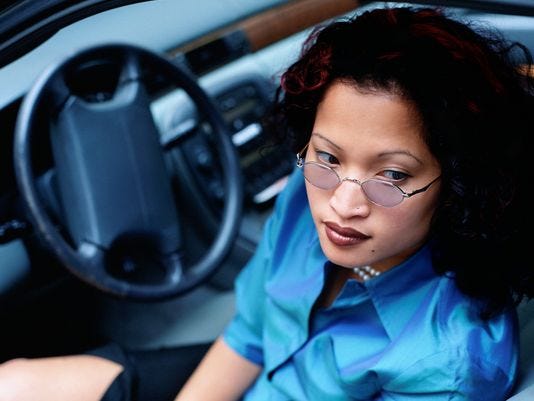
Young women are more likely to die in traffic accidents than men

Young women are more likely to die in traffic accidents than men
Paul A. Eisenstein the Detroit Office 30 may 2013 to 1:00 PM ET

Young women are more likely die in a car crash as a man her age, because they are much more fragile according to a report this month by Federal safety regulators. That changed when both age, but when men reach less robust and less likely to survive a crash.

The study, authored by the National Highway Traffic Safety Administration, was not intended, to determine, what sex is more like text or speed - risky behaviours that lead to crashes, even though research has found that young men more likely to accelerate. Instead, NHTSA is trying, compare how men and women fare, if otherwise similar crashes occur.

Total women were the most vulnerable, 17 percent more likely to be killed.

Between 21 and 30 years, female drivers are 25.9 percent more are killed, based on a study of 50 years to US women who are passengers 29.2 percent even more likely rather die in a plane crash than male individuals - crashes.

349 Pages study it, that young men tend to be brawnier and their bodies are more likely to forces of a potentially fatal accident. The study also says that younger women, to wear seat belts, rather be thrown out of a car, one of the biggest causes of serious injuries.

35 Are women and men even more in terms of the probability of dying in a car accident. Female drivers have retired to a better chance of surviving than men aged 65 to 74 years.

Older female passengers are however still 11.2 percent more likely than men, killed the NHTSA found.

This is not to say that older women of less likely that die in a crash than younger women are: youth has its advantages for both sexes.

Each year by a person life, male or female, 21 years increases the risk of death about 3 percent. Other studies have found that an elderly woman died four times more likely in a crash as a 21-year-old woman.

For men, the increase is even more extreme, that could explain why the gap between men and women later in life. A 70-year-old male driver risk of death increases five-fold.

Proposed federal agency, perhaps simply reflects the fact, that "healthier seniors pursue further, while less healthy senior citizens only as passengers can ride."

The increased risk for older people has caused, auto manufacturers and regulators are looking for solutions. There were proposals for the creation of a separate crash-system of of rating to indicate how seniors in individual vehicles tariff.

Ford Motor Co. has expanded the use of a new system, combines the airbags and seat belts in a unit. The device is now offered on various Ford models including the Flex "People mover". There is an option for the middle row of the seven car, where older passengers are more likely to sit, the company says.

Tesla plans to repay fed loans a decade early

Regardless of age, deaths have fallen car dramatically in the last fifty years. Dipped after NHTSA highway deaths to 32.367 during 2011. This was minus 1.9 per cent compared with the previous year and was the lowest number since 1949 there was a slight upturn in the last year, although why remains unclear. Experts suspect that SMS might reasons during driving and mild weather.

Copyright © 2009-2013, the Detroit Bureau

Wednesday, November 21, 2012

More US women than men have driving license

Paul A. Eisenstein, the Detroit Bureau
As this has clearly shown month presidential elections, there is a significant demographic change in America - and you need to check that voter roles, to confirm that not. Just looking around you on the highway.

More women than men's study now a driver's license have a new Transportation Research Institute at the University of Michigan or UMTRI, the gender trends in driving licences between 1995 and 2010 looked at.

The gap will show expected to continue widening the study, that the number of Americans with a driver's license has to shrink over the past 15 years was. The decline in men 25 to 29 years already twice as large as females.

"The demographic gender require large impact on the size and type of vehicle energy consumption and road safety", said Michael Sivak, co-author of the study.

While the right to vote in most of the country by the time that won, rolled Henry Ford his first model T, efforts to the women of the street little momentum during the early 20.Jahrhundert still had earned women not saying Margaret Walsh, author of "Sex and the car in the United States."

"they were outnumbered in the minority," writes Walsh "and your driving style often mocked men." However, it added, "could see women as men, the benefits of a freer movement."

In the 1950s the driving test - had given millions of women, although only half reach driving age in the Eisenhower era, when women to stay at home and were expected to raise a family, had received a license yet.

But when the idea of women's Liberation began to bite, the trend in gear shifted. In 1995, the number of women with a license was only slightly behind 87.4 million to 89.2 million men. And vice versa, even the gap up to the year 2010 with 105.7 million licensed 104.3 million American women compared to men.

The UMTRI study finds that the gap varies according to age. There was a remarkable decline in recent years the number of teenagers who get their licenses. Almost every fourth, which didn't bother 19 year old, as of 2008, the Michigan research group in a study published discovered last summer compared to one in eight back in the 1970s.

Meanwhile, the new report UMTRI, that while the share of men aged between 25 and 29 licenses receive has fallen 10.6 per cent in the last 15 years, it has fallen only 4.7 per cent among women shows.

Men are still dominated by older drivers. This probably reflects the fact that it slightly more men by a ratio of 105 to 100 in the United States than women born. But the ladies after 70 years catch up because men are less likely to live so long - with a life expectancy of 75 years, compared to 80 years for women. The UMTRI study shows older women hang their licenses longer.

Margaret Dunning landed in the headlines after 102 this year - and driving is still 82 years had 740 Roadster the Packard. Describes himself as "just a farm girl", they have learned how go at 8 and was officially licensed by 12, after the death of her father.

As to why fewer men their license get, experts show on a variety of factors, including the economy: vehicles are specially designed for insurance companies in recent years much more expensive become.

Sampson suggests that the rise of the Internet and the increased use of Smartphone technology in the game can be. "Virtual Contact", he said, "reduces the need of actual contact."

On the other side can see women getting a license and a car as a sign of liberation.

But who is really more the better driver? Different studies come up with contradictory results.

Would suggest a 2011 UMTRI study published in the journal traffic injury prevention found that female driver run far more into each other much higher rise than are likely to be pure coincidence. Crashes with two women were "over-represented" according to Sampson.

Then again, one found 2011 MetLife Auto & home safety American pulse survey that women receive fewer cards for reckless driving and accident about 50 percent less often than men die.

Bad driver jokes aside, it seems that most women detect who is doing a better job on the road. According to the new study by MetLife 51 percent of women believe they're better drivers with only 25 per cent men; the rest are undecided. Show in men, which included the streets, only 39 percent say they govern in the survey with 26 percent on their female counterparts.

Saturday, October 27, 2012

Honda introduces car designed just for women

The TODAY anchors, along with Billy Bush and Kit Hoover of "Access Hollywood Live," talk about the new Honda Fit She's, a car designed specifically for women that will feature a windshield to help prevent wrinkles and will come in the color pink.

By Paul A. Eisenstein, The Detroit Bureau
The auto industry has traditionally been male-dominated but Honda has rolled out a new model it claims to have specifically designed with women in mind.

The new Honda Fit She’s is a pretty-in-pink version of the maker’s familiar subcompact that offers a few niceties the maker believes will specifically appeal to distaff buyers, such as a windshield designed to block skin-wrinkling ultraviolet rays.

But will women actually care? While the new Honda subcompact may be the only car currently on the road specifically targeting women there’s a good reason. Previous feminine offerings, such as the old Dodge LaFemme, met with little more than indifference and, in some cases, outright hostility.

Priced at $17,500 – at current exchange rates – the Honda Fit She’s is currently available only in the Japanese market and it’s unclear whether the maker will roll it out in other parts of the world.

Like those vehicles handed out as prizes by Mary Kay Cosmetics, the dominant shade is pink, starting with the exterior paint and including the interior pink stitching and tutti-frutti-hued chrome bezels. If that doesn’t get the message across, Honda uses a pretty little heart to replace the apostrophe in “She’s.”

To Honda’s credit, the maker also has plans to offer the special model in an alternate hue that might best be called “eyeliner brown.”

The Fit She’s also delivers some other features women might appreciate. That includes the special UV-blocking window glass. Recent studies have underscored concerns that extended exposure to the sun while driving can be nearly as bad for the skin as spending too much time on the beach.

The Honda Fit She’s also features a “Plasmacluster” climate control system the maker claims can improve skin quality.

The decision to offer the car in the Japanese market isn’t all that much of a surprise considering the country’s more traditional sex-defined roles. As much as half of all Japanese women stay out of the workforce and still more tend to shift to homemakers after getting married. But even for those women who do join the workforce, there is more of a divide in tastes than one might find in Western countries.

That has stifled efforts by European and U.S. manufacturers who previously tried to target products directly to women. Chrysler, for one, thought it had a winner with the 1955 LaFemme. The sedan featured special storage places for hat and purse – and the driver’s seat swiveled to allow a woman wearing a skirt to enter or exit the vehicle with appropriate modesty. Nonetheless, like the few other offerings openly aimed at American women over the years, LaFemme proved LaFlop.

One might think that the U.S. auto industry would be inspired by the Honda Fit She’s. After all, women now directly purchase over a third of the vehicles sold in the States, while data from J.D. Power and Associates suggests they “influence” as much as 60% of all vehicle purchases.

Yet, just the hint of being a “woman’s car” can prove the kiss of death. Despite their tremendous flexibility and functionality, minivans lost much of their cache, noted Nissan marketing executive Tom Smith, when they become known as “soccer-mom vehicles.” Chrysler tried to counter that image when it released its latest version of the Dodge Durango by dubbing it the “man van,” but with little success.

Volkswagen blames the fall off in sales of the so-called “New Beetle” to the fact that the vehicle became known as a “chick car.” Jonathon Browning, head of Volkswagen Group of America, says the maker specifically wanted to make the latest version of the Beetle, introduced a year ago, “look more masculine.”

That doesn’t mean makers are ignoring the needs of women. Both Ford and General Motors, among many makers, have established groups of women designers and engineers who specifically consider the features and attributes of new products looking for ways to appeal to feminine needs – and avoid problems that might not be apparent to their male colleagues.

That might include door handles that can snap off long fingernails. And a number of new vehicles now feature larger center storage bins able to handle a pocketbook – while men get the added benefit of being able to tuck away their iPads and other electronic goodies.

Some makers have also introduced new colors that they believe will have bigger appeal to women buyers – though whatever their sex, studies by paint suppliers like DuPont Automotive show that silver, black and white continue to dominate.

So, while automakers clearly want to win over women shoppers, few are likely to follow Honda’s lead, especially outside of Japan. In most of the rest of the world, women car buyers just wanted to be treated as one of the guys.

Tuesday, May 8, 2012

Men go for flashy cars, women want small imports


PRNewsFoto/Porsche Cars North Am

The Porsche 911 is the ultimate macho machine, or so says a new study.

By Paul A. Eisenstein, The Detroit Bureau
While we’re often warned to steer clear of stereotypes, the fact is that they’re often accurate and useful. And nowhere, it seems, is that more true than when it comes to identifying the type of cars men and women choose.

Guys, a new study reveals, like cars that are flashy, big and brawny. They love the smell of petrol and the sound of a big V-8. Women, on the other hand, like smaller imports powered by fuel-efficient I-4s. That said, the survey by TrueCar.com also suggests that the traditional automotive gender gap is narrowing.

“While gender preferences amongst the buyers of various automotive brands still exist, the gap is narrowing,” said TrueCar’s Jesse Toprak, Vice President of Market Intelligence. “The SUV and truck-heavy mix of the domestic automakers continue to generate a disproportionate number of male customers, while the exotic brands remain to be the best medicine for a midlife crisis.”

Mustang Gets World’s Most Powerful Production V-8

The data-mining service based its study on over 8 million retail automotive purchases made during 2011 – about 60% of the U.S. total last year. It reveals that some brands are distinctly male-oriented, while others seem to have a distaff touch. It also found that it’s possible to turn things around.

Take the third-generation Volkswagen Beetle introduced last year. The previous generation was often referred to as a “chick” car, men making up only a little more than a third of its customers. VW officials consciously decided to create a more masculine model with the 2011 remake and the data suggest they pulled it off, with men accounting for nearly half the buyers of the new Beetle.

The brands with the highest percentage of male buyers are exotic imports, such as Bentley, Maserati and Porsche. Ferrari had the absolutely lowest percentage of women purchasers last year – just 7.5% — but it was the only marque where women constituted less than 10%. In TrueCar’s 2010 study, the percentage of women was less than 10% for six brands.

Luxury Buyers Like the Idea of Autonomous Driving

Mini had the highest percentage of women buyers, at 46.2%, according to the third annual demographic study, followed by Nissan, Kia, Honda and Mitsubishi. Of the top 20 brands appealing to women, 16 were imports – 17 if you include Fiat. Only three luxury brands, notably Lexus, made that group.

Of the Detroit brands, Chrysler has the highest percentage of women buyers, at a modest 37.8%. GMC had the least, with men making up 73.5% of its customers.

“Female car buyers really gravitated toward smaller, more fuel-efficient cars,” said Kristen Andersson, Senior Analyst at TrueCar.com. “It was the complete opposite for male buyers, who preferred either a fast, sporty vehicle or more heavy-duty vehicle, like a large truck or SUV.

A Tasty Rolls-Royce?

Indeed, the most masculine was the Porsche 911, men accounting for 88.2% of its customers, followed by the GMC Sierra, the Ford F-Series, the Chevrolet Corvette and the Chevrolet Silverado.

The Volvo S40 was the most popular offering among women in 2011, at 57.9%. The Swedish compact was followed by the Nissan Rogue, Volkswagen Eos, the VW Beetle and the Hyundai Tucson.

Tuesday, May 1, 2012

Unintended acceleration study blames older women

A new study from the National Highway Traffic Safety Administration found nearly two-thirds of drivers involved in unintended acceleration accidents were female. NBC's Brian Williams reports.

By Paul A. Eisenstein, The Detroit Bureau

When the National Academy of Sciences earlier this year ruled out the likelihood of unknown electronic gremlins causing so-called unintended acceleration problems with Toyota vehicles, researchers instead suggested that driver error was largely to blame.


A new study echoes the likelihood that drivers may hit the throttle when intending to reach for the brake – while also saying the majority of such accidents involve older women and occur primarily in parking lots.  But the report by the National Highway Traffic Safety Administration also points the finger at drivers under 20.


Particularly striking is the finding that nearly two-thirds of the drivers involved in accidents involving the misuse of the gas pedal are female. In all motor vehicles crashes, nearly two in three drivers are male, NHTSA reports.


“The most consistent finding across data sources was the striking overrepresentation of females in pedal misapplication crashes, relative to their involvement in all types of crashes,” the study’s authors declared in an executive summary.  “Females were the drivers in nearly two-thirds of the pedal misapplication crashes” included in the study.


NHTSA Calls for Brake-Throttle Override Systems


 The federal agency is now proposing new regulations that would require automakers to install brake-throttle override systems.  These would automatically cut power to the engine in the event a motorist inadvertently depressed both the brake and throttle at the same time.  A number of manufacturers have begun installing such systems voluntarily, including Toyota which recalled millions of vehicles in 2009 and 2010 due to unintended acceleration problems.


“We learned as part of the comprehensive NASA and NHTSA studies of high-speed unintended acceleration that brake override systems could help drivers avoid crashes,” said NHTSA Administrator David Strickland.


Not all unintended acceleration issues are the result of driver error. The first Toyota recall was related to what was dubbed “carpet entrapment,” where loose floor mats could inadvertently jam the throttle open. The second was the result of a potentially sticky throttle linkage. But a series of subsequent studies ruled out electronic malfunctions and evidence in a number of reported unintended acceleration incidents supported the idea of driver error.  In one New York crash authorities found the driver had pressed so hard on the accelerator, thinking it was the brake, its metal linkage was bent.


Why do women in particular have such a high incident of brake misapplication incidents?


The authors noted, “Possible explanations might include greater exposure by women where these crashes occur most often (parking lots); a poorer “fit” in their cars due to shorter stature, which may increase the likelihood of a pedal application error; or a disproportionately high rate of one or more functional deficits that contribute to pedal errors, such as neuropathy.”


The new NHTSA study reveals that the misapplication of pedals leading to a crash occurs most frequently among drivers over 76 years of age, with those under 20 the second most likely age group to experience the problem.  And researchers suggest that may be the result of problems in the area of the brain that handle executive functioning – which are responsible for tasks like choosing which pedal to depress.


Just 21 of 98 Vehicles Pass Child Safety Seats Test


Other studies have found that the areas of the brain responsible for such decisions don’t fully form until around age 25 – while those regions also show declining functionality in the elderly.


The new NHTSA study was based on several sources including analysis of 2,400 gas pedal incidents in North Carolina – as well as an analysis of 900 news reports of unintended acceleration crashes.  In the North Carolina state database 57% of such crashes occurred in driveways, parking structures or parking lots.  That jumped to 77% in the news reports.


The study, conducted by the University of North Carolina’s Highway Safety Research Center, and TransAnalytics, an independent research firm in Pennsylvania, suggested drivers have more time to correct pedal mistakes made on the open road.

Tuesday, May 17, 2011

10 Cars, which are falling in love with women Treiber

Automakers have long known that cars are not only a man game. Be more than two-thirds of the annual sold new cars purchased by women; 8 out of 10 purchasing decisions are influenced strongly and directly by the women.

But while this influence is old news that react to you way automakers in flux.


"The factors, the men and women buyers parts really together are grown", says Margaret Brooks, a Chevrolet marketing manager. "If I went back 10 years ago, you would see more much of a difference in the reasons for the selection of a vehicle between men and women." "Today, they are really very similar to the right choice for them."


What do women want? In particular, a car that they can trust.


"It is a vehicle, they can rely, - has that they want to make the kind of style statement and is very important is to buy affordable, affordable to operate," Brooks says. "There must be something that represents great value."


Vehicles such as the Acura TL and Volvo C70 are not marketed to women, of course, but they join the other vehicles on this list, their design, performance, and to align marketing may exactly with the priorities of many female buyers.


The worst cars on the road


We have our list of cars that will love women, based on an input of automakers about what their vehicles sales strongest in the female market. We asked for the nomination of Christine Overstreet, the Managing Director of heels and wheels, a group that promotes the interests of women in the auto market.


Some of our top will be featured on a heels 10, such as the Hyundai Tucson and the GMC Acadia, and event in California next month test wheels only for women.


Our list is diverse, including everything from the $18,425 Chevrolet Cruze eco, the $38,525 Saab 9-5. One seemingly disparate group, but they all have features that appeal to women buyers.


The 10 fastest cars under $ 30,000


Jesse Toprak, Vice President of industry trends and insights into TrueCar.com, puts it succinctly: women car buyers more cost-conscious and fuel-efficient vehicles "are to buy."


Sales data seems to support this idea. According to the Truecar research the top 10 models with more than 50 percent of retail sales to women and at least 1000 retail sales in 2010 include the VW new beetle, Kia spectra, Nissan Rogue, VW EOS, Hyundai Entourage, Volvo S40Jeep compass, Honda CR-V, Nissan Sentra and Hyundai Tucson.


By contrast, were the cars with the largest percentage of the male buyers of Porsche 911, GMC Sierra, Chevrolet Corvette, Chevrolet Silverado, Ford F-series, BMW M3, Ford Ranger, Toyota Tundra, Dodge Ram and Audi S5.


Lexus, a brand with predominantly male fans, has a car that tends towards women: Lexus RX crossover, whose Kaufer were 60 percent women.


"" If I my medium-sized SUVs, I think, "Oh that's kind of Nice", but then I think 'Oh, I would like to more than 20 miles per gallon!' "Overstreet says.""And that's where the CUVs are good."


Overstreet says their work putting them in contact with two types of women: singles need children and mothers, which is somewhat large, small, efficient cars. But she says members of both groups that same things are drawn.


"Everyone is still looking for style and everyone is on the lookout for security," she says. "There are many times when women are so outside interested on the inside of the vehicle over, and I don't think before that was the case."


For example the ability to pair a phone with an iPod into something like the Kia Optima hybrid lot is to the younger set win, she said.


Car manufacturers have a number of cars try to design specifically for women made. In the 1950s, Dodge made a pink and lavender Coupe called La Femme. Under other girlish accessories came with a pink leather handbag and matching Compact with rain Cape and beach umbrella.


the most fuel-efficient car in each category


The truth is that la femme was mostly for show - Dodge produced only 3,000 units over two years. Women and their husbands would see showrooms at close range but then buy something more practical visit.


In recent years Volvo made in 2004, a concept called the YCC (your concept car), which was developed by a team of women for women.


It featured Auto opening doors, easy to clean paint, run-flat tires, an exterior washer fluid filling point, parking computer-aided support, automatic diagnosis and notification of service requested, "Among other amenities stereotype based driver".


It was never made.


© 2011 Forbes.com