Showing posts with label safety. Show all posts

Monday, October 7, 2013

Car shut down could callbacks, impact auto safety delay.

Car shut down could callbacks, impact auto safety delay.
The closure of the four-day-old Federal Government already be felt by the automotive industry and the impact could force manufacturers to delay the introduction of some of its newest vehicles among others.

The highly politicized budget impasse is forcing some 800,000 federal workers on leave, put a stop to areas many services described as "unimportant". But that could be subject to a discussion in the automotive industry.

Under these services currently on ice they are Protection Agency (EPA) programs for determining the mileage ratings of new vehicles environmental and area crash tests by the national highway traffic safety test administration (NHTSA).

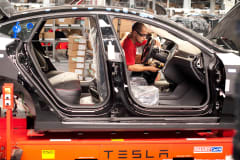
That could cause headaches, as the investigation into exactly why car battery Tesla model S earlier this week in a suburb of Seattle fire started. Normally, NHTSA researchers would work besides Tesla investigators determine you what provisionally debris 85-kilowatt-hour battery pack has been blamed puncturing part of the sedan on the road.

In turn the Government, a serious flaw in the model S design, were to discover, which could lead to a recall or other service promotion.

Other government crash test, the programs also should be moved, but it is unclear whether the development or the introduction of new products due to would be coming in the near future on the market.

But the NHTSA has been forced to a stop reminiscent of the vehicle. That probably could, a life-threatening matter if it that all critical means vehicle safety issues - such as faulty brakes, faulty airbags or some other serious flaws - for a long time were consensus.

Uncertainty depends on using the EPA fuel-economy program. An EPA rating is required, on the so-called Munroney "complete window sticker found on every new car in the United States sold and often, the tests required for these stickers just before a vehicle will start selling.

Due to the number of new products the EPA will do every year now expected, the rest only tests between 10 and 15 percent of all new vehicles with manufacturer introduced, but the Government still checked the test results before a car manufacturer approval, the resulting numbers are used.

Without that initial, can be unclear whether the 2014-news, yet certification get sold. She could be forced, sitting in showrooms indefinitely, if federal shutdown, with traders who draws not capable of these products on sale to put.

Sunday, June 16, 2013

Honda airbags are studied by highway for aviation safety

Honda airbags are studied by highway for aviation safety
Paul A. Eisenstein of the Detroit Bureau
Honda's 2003 / 04 Odyssey will be investigated by NHTSA for defective airbags.

Honda received only a further warning that it has not escaped the problem of defective airbags. The National Highway Traffic Safety Administration opened Honda minivan to an investigation into 320,000 to determine whether she should for airbags are reminded that spontaneously provide.

The Agency said that it owner, 2003 / 04 Odyssey, received six complaints of which three injuries, due to airbags, deployed suddenly reported that, while the vehicles were, but not involved in collisions.

NHTSA received an additional 41 consumer complaints, which claims that the vehicle airbag indicator light illuminates. Airbag problems the Japanese manufacturers have in the past two years is forcing more than 1 million vehicles called back at any time be plagued.

Honda is not the only manufacturer to deal with airbag problems. Several car manufacturers, Toyota, Nissan, Mazda, Chrysler, General Motors and BMW, including not only Honda but were involved in a recall this year, involved more than 3 million vehicles. Was linked to earlier recall by a common denominator: TAKATA Corp., a large air bag supplier.

The Japanese manufacturer of airbag gas generators provided components for all companies. Trust the automakers on a single source is a double-edged sword: they benefit from lower prices through economies of scale, but if there is a problem, they all have the same problem and the problems, which is to come, the massive recalls, with him in this case.

While affected multiple decision makers, Honda has the largest exhibition. However, the current investigation shows how tied together the industry, when it comes, this problem.

In the year 2011, NHTSA examined accidental air bag deployments for Chrysler vehicles, when it turned out that the Odyssey uses the same application specific integrated circuit component within the airbag control unit. As a result of the first investigations Chrysler Group 3.660 recalls 2003 / 04 Viper cars to fix airbags that could provide without warning.

In October, Chrysler, more than 920,000 vehicles recalled worldwide over the question of 215 reports of false airbag deployments and 93 injuries - and almost 750,000 in the United States. Remember the legacy included the 2002 / 03 Jeep Liberty SUV and 2002-04 Jeep Grand Cherokee. Other manufacturers had a positive impact.

Toyota agreed almost 900,000 vehicles recall Corolla/matrix and Pontiac Vibe - 2003 - 2004 cars - for similar airbag problems in January "and similar remedy of the Chrysler consisting of its airbag harness an inline noise filters add to use", NHTSA said.

While Honda has been for several months about the same topic in discussions with NHTSA, the manufacturer believes that the electronic circuits in its airbags are faring better than the others.

"Since no accident or damage to property, caused deployment of the frontal airbags airbag driver was reported, and the occurrence is extremely low, continue to treat these claims on a case by case Honda pro," said Honda NHTSA a letter December last year.

Honda said found 126 airbag deployments in non-crash situations for frontal, side-impact and/or side curtain airbag deployments four cross-disciplinary model and 800,000 vehicles, NHTSA said, but no more than 25 of which are frontal airbags.

Airbag problems are a serious embarrassment for Honda - made more difficult the fact that the manufacturer is already on record last as one of the highest recall sums by any manufacturer in the United States in the years worked.

The last Honda involved recall, about 426,000 subcompact civic models sold during model years 2001 to 2003 43,000 CR-V crossover in 2002 and 2003, offered and another 92,000 of Odyssey minivans in 2002 model year.

In addition, the Japanese manufacturer ordered the recall of 748.000 pilot crossover and Odyssey minivans in January due to missing rivets, which incorrectly deploy airbags in a crash could cause. Has experienced reminded a number of earlier for other airbag problems, which have now added up to millions of vehicles.

Name seems most honda's airbag investigations while callbacks are tied, the manufacturer is not alone. Earlier this month GM began 400,000 additional vehicles for faulty airbags.

Agency investigators are already determine if GM went far, that small enough at the exhibition of two callbacks for airbag problems in October 2012 and January 2013 through a defect in the electrical connectors for the driver's front pocket air in particular 2012 Chevrolet Cruze, Sonic, and Camaro models as well as Buick Verano vehicles, that the airbags deploy in a crash can prevent.

GM recalled about 7,000 cars, but now NHTSA investigates whether 400,000 2012 should be included Chevrolet Camaros, Buick Veranos, Cruzes and Sonics.

The Detroit-based automaker was initially powered by a service in August, the airbag error in 2012 Cruze and Verano vehicles to attract the 2012 built prior to June 21. After talks with NHTSA decided to GM, the issue as a security callback cover about 3,000 2012 Cruze, Verano and Sonic vehicles from 2 April 2012 to 29 June 2012 built.

After further analysis and discussion with NHTSA, GM led the second callback cover about 3,900 2012 Camaro, Cruze, Verano and Sonic vehicles from December 16, 2011 to February 2012 built.

Copyright © 2009-2013, the Detroit Bureau

Wednesday, May 15, 2013

US safety watchdog probes Chevy Corvette headlight problem

US safety watchdog probes Chevy Corvette headlight problem
U.S. auto safety regulators are investigating complaints that the low-beam headlights can go dark without warning on some Chevrolet Corvettes.

The probe by the National Highway Traffic Safety Administration covers more than 103,000 Corvettes from the 2005 through 2007 model years.

The agency says it has gotten 30 complaints from owners about low-beam headlight failure. No crashes or injuries have been reported. But in one case a driver ran over a discarded tire while trying to pull off the road.

The high-beam headlights and fog lights keep working even if the low beams fail. But the agency says driving with the high beams all the time can harm vision of oncoming drivers.

Investigators will check into how often the problem happens and decide if a recall is needed.

Tuesday, October 16, 2012

Fake airbags may not inflate, safety says watchdog

The Obama Administration has issued a public warning that millions of vehicles that have undergone repairs after a serious crash could pose severe safety risks due to the use of counterfeit replacement airbags.

The government estimates that “tens of thousands of counterfeit air bags” are now unknowingly in use in American automobiles.

“We want consumers to be immediately aware of this problem and to review our safety information to see if their vehicle could be in need of inspection,” said a statement by Transportation Secretary Ray LaHood issued ahead of today’s formal announcement.

Counterfeit components have been a plague on the auto industry for decades and the list of affected parts is a large one, covering just about everything one might find in an automobile, from sheet metal to lug nuts. But some fake parts can prove particularly dangerous – such as airbags that either won’t deploy or might improperly inflate during a crash.

“Air bags in particular play a central role in keeping drivers and passengers safe in the event of a crash,” said Administrator David Strickland of the National Highway Traffic Safety Administration.

Each of a vehicle’s airbags is designed to operate in a specific way and may inflate to varying degrees depending on the severity of a crash. The fakes that the government is warning about likely will not function properly if they work at all.

Recent tests of 11 fakes found that the majority either failed to work or inflated improperly and some actually threw shrapnel as they inflated.


NHTSA says that it believes the vast majority of replacement parts are genuine and that “this issue affects less than 0.1 percent of the U.S. vehicle fleet.”

The challenge will be to find the affected vehicles. The government’s automotive safety agency has released a list of 100 models most at risk, a mix of Detroit, Japanese and European models including such mainstays as the Ford Focus, Toyota Camry and Volkswagen Jetta.

The counterfeit airbag issue reportedly only involves vehicles that have been repaired within the last three years, and does not involve either original factory equipment nor repairs made by certified new car dealership repair shops.

Those who have had their vehicles repaired by independent service shops may be at risk. And the government is warning that consumers who might have tried to purchase replacement airbags through the Internet may be at particular risk.

Vendors have been known to offer counterfeit bags for as little as $50 while factory originals may cost as much as $1,000.

The government has been investigating the problem for a number of years and intercepted a shipment of 68 counterfeit bags heading to an address in Chattanooga, Tenn., in September 2008. They were identified as replacements for Audi, BMW, Lexus and Toyota vehicles.

Last February, Chinese businessman Dai Zhensong pleaded guilty in federal court and was sentenced to 37 months in jail in connection with that scam. He was one of three owners of Guangzhou Global Auto Parts International Group, based in Guangzhou, China, which the government claimed in a court filing “specializes in the production of counterfeit air bags.”

Another 1,163 fakes were intercepted during an August raid in North Carolina conducted by the Immigration and Customs Enforcement agency.

Automakers, trade groups and insurance organizations have been increasingly vigilant in trying to stamp out the problem of fake auto parts. Actions by General Motors alone resulted in the seizure of $250 million in counterfeits since 1985. Meanwhile, the Motor & Equipment Manufacturers Association estimates as much as $45 billion in business could be lost to counterfeits worldwide.

In some instances, the problem may just result in cosmetic issues – a fender that doesn’t quite meet factory spec shape, for example. But fake oil filters can cause engine failures. And the government is warning counterfeit airbags could lead to injuries or death.

The government will warn owners of vehicles on the list who have had airbags replaced after a crash to go to a certified dealer to have the devices checked. Such inspections, the government says, could cost as much as $100 as they would not be considered part of a vehicle’s warranty.

NHTSA warns that the initial list of vehicles could “evolve over time,” as it learns more about the problem. And the number of fakes in use on U.S. roads could prove higher than initially reported.

The initial “At Risk” list includes:

Acura
2009-11 TSX

Audi
2006-09 A3, A4, A6, A8, Q5, Q7

BMW
2007-11 X5, E70, E60, E61
2008-10 5-series, 528i, 535i
2004-07 5-Series, 525i, 530, 535, E60, E61
2007-11 E90, E91
E92, E93 (unspecified years)
2007-11 X5, E70
2004-07 525i, 530, 535
2011-12 X3

Buick
2010-11 Lacrosse

Chevrolet
2011-12 Cruze
2006-10 Aveo
2011-12 Volt
2012 Camaro

Ford
2012 Focus
2005-09 Mustang

Honda
2003-12 Accord
2006-11 Civic
2002-11 CRV
2007-11 Fit
2009-11 Pilot
2009-11 Insight
2009-11 Crosstour
2011 Odyssey

Hyundai
2007-11 Elantra
Genesis (unspecified years)
Sonata (unspecified years)

Infiniti
2007-11 G35, EX35

Kia
2010-11 Soul/Forte
2004-09 Spectra

Land Rover
2012 Range Rover Evoque

Lexus
2006-11IS250, IS350, IS-F
2003-08 GX470
2007-09 RX350
ES350 (unspecified years)

Mazda
2004 Mazda 3
2010-12 Mazda 3

Mercedes
2009-11 C, GLK
2010-11 E350, E550
2007-08 S550
2006-09 ML
2009-10 GL, ML

Mitsubishi
Outlander (unspecified years)

Nissan
1992-2002 Quest
2010-11 Quest
2009-11 Cube
2007-11 Versa
2009-10 Murano
Altima (unspecified years)

Subaru
2008-09 Forester
2008-09 Impreza
2008-09 Outback
2010-11 Legacy

Suzuki
2007-10 SX4

Toyota
2002-06 Camry
2012 Camry
2009-11 Corolla, Matrix
2007-11 Yaris
2004-11 Highlander
2004-11 Sienna
2004-11 Tacoma
2010-12 Prius
2003-11 Tundra
2003-06 Sequoia
2003-10 Land Cruiser
2004-10 Highlander
2004-09 4Runner
2007-09 Solara
2005-11 RAV4

Volkswagen
2006-10 Jetta

Volvo
XC60, XC70 (unspecified years)
V70, S60, S80 (unspecified years)

Wednesday, July 25, 2012

Senator questions results of Toyota safety probe

Senator questions results of Toyota safety probe

J. Scott Applewhite / AP

"Key questions about the cause of the unintended acceleration remain unanswered" Senator Charles Grassley, R-Iowa, wrote in a letter to NHTSA Director David Strickland.

By Paul A. Eisenstein, the Detroit Bureau
Get Toyota too easily you after they are largely looking problems with so-called unintended acceleration by a couple of studies of the manufacturer was deleted?

This is a way of Senator Chuck Grassley, an Iowa Republican, who one letter to the National Highway Traffic Safety Administration, or NHTSA, questioning the results of the two studies, which has sent for the agencies is raised, in particular may no one done by NASA, signs of electronic gremlins, that established Toyota vehicles, out of control to drive.

"Important issues about the cause of the unintended acceleration remain unanswered," wrote the veteran lawmaker in a letter to NHTSA Director David Strickland.

These questions were supported internal documents from a raft in the hands of the TheDetroitBureau.com suggest, that Toyota may be in fact even worried that yet still unknown problems with some it its products.

The NASA study and a second by the national academies of science failure to substantiate claims of Toyota critics, that the manufacturer of electronic engine controls may be the result of unintended acceleration - also known as sudden acceleration - where a vehicle out of control advised increase could lead possibly to a collision, injury or even death.

Toyota has been embroiled in a safety scandal when in October 2009 a California Highway Patrol officer and three family members were killed when a Lexus they were borrowing out of control, drove slipped a freeway, crashed and burned.

The manufacturer called back episode 8 million vehicles in a pair of reminds, mats a targeted so-called "carpet entrapment,", loose to where could the metal jam, and another related to potentially label accelerator of assemblies.

Lexus RX350 remember Toyota end carpet entrapment last month expanded to almost 134,000 additional vehicles, 2010 and include RX450h crossovers.

Despite the many parties involved in these two product recall - that its just some Toyota main assembly plants shut down while waiting for the necessary spare parts forced - critics of the manufacturer was vehicles that it had addressed not the big problem. But experts, including some NASA Panel also warned that it could prove almost impossible, electronic gremlins to follow, which could occur only sporadically and then without a trace disappear.

Some pointed to a phenomenon known as "tin whiskers," in which Nano size issues known to grow at central connecting points on electronic circuit boards. This possibility was raised repeatedly report NASA in the 177.

"This is a serious problem," Grassley wrote Strickland, questions in his letter to the NHTSA, how often and to what extent it was pursued.

Traditionally known for its apparent bullet-proof reliability, Toyota had some unexpected shots as a result of the economic crisis 2009-10 — the most important executives saw, which including CEO Akio Toyoda grilled by Congress and led to fines for the sticky Accelerator problem in a timely manner, prescribed by law respond to record.

The Agency has some penalty for themselves, as a result of the Toyota scandal. Internal documents showed that NHTSA on Toyota simply went by the fact that there is a previous callback to avoid, that the automaker millions of dollars saved. That one major reason Strickland agreed was to two independent studies Toyota's unintended acceleration problems to empower.

At the end of attributed to NASA and linked events - those not unique entrapment or sticky accelerators - to driver error carpet geratenen NAS the vast majority of the reported out of control car. In many cases, by evidence before, that in one case was secured a driver accidentally pressed so hard on the brake, the bent, instead of the accelerator.

But the studies a light window, suggesting that it could be left open Toyota unknown beating yet electronics.

A NHTSA spokesman said the Agency of the Senator has received the letter and "will to check it carefully and respond appropriately."

In the meantime continue to the various legal measures, Toyota of alleged victims working unintended acceleration before their way through the courts.

Saturday, November 19, 2011

U.S. probes battery safety after Chevy Volt fire

WASHINGTON — A Chevrolet Volt that caught fire three weeks after its lithium-ion battery was damaged in a government crash test has regulators taking a harder look at the safety of electric car batteries, federal officials said Friday.


Based on testing so far, however, regulators believe the batteries are safe and do not pose a greater fire risk than gasoline-powered engines, a National Highway Traffic Safety Administration official told The Associated Press. The official requested anonymity in order to speak freely.


The car that caught fire was tested May 12 by an agency contractor at a Wisconsin facility using a relatively new side-impact test intended to replicate crashing into a pole or a tree, the official said. Three weeks later, while the car was parked at the test facility, it caught fire and set several nearby vehicles on fire. A NHTSA investigation concluded the crash test damaged the battery, which later led to the fire.


Lithium-ion batteries, which are used in a vast array of consumer electronics, have a history of sometimes catching fire when damaged.


General Motors spokesman Greg Martin said the test did not follow procedures developed by GM engineers for handling the Volt after a crash. The engineers tested the Volt's battery pack for more than 300,000 hours to come up with the procedures, which include discharge and disposal of the battery pack, he said.


"Had those protocols been followed after this test, this incident would not have occurred," he said.


The company had not told the government of its protocols at the time of the test, another GM spokesman said.


Martin said the Volt is safe.


After the Volt fire, NHTSA and GM each replicated the crash test and waited three weeks, but in neither case did the cars catch fire, officials said. Nor were the cars' batteries damaged in those tests, officials said.


The NHTSA official said the agency has been unable to explain why the Volt's battery was damaged in one test but not in two others conducted in exactly the same manner. NHTSA, along with the Department of Energy, plans to conduct more tests next week on Volt batteries and is continuing to monitor cars already in use. Government and GM officials said they are unaware of any similar fires among the 5,000 Volts now on the road.


Nissan Motor Co., which has more than 8,000 all-electric Leaf models on U.S. roads, and Tesla Motors Inc., with 2,000 cars sold worldwide, said their cars are extensively tested and have not started any fires after crashes.


NHTSA also is asking manufacturers who currently have electric cars on the market, or who plan to introduce electric vehicles in the near future, for more detailed information on their battery testing as well as what procedures they have established for discharging and handling batteries, including recommendations for reducing fire risks.


"NHTSA is focused on identifying the best ways to ensure that consumers and emergency responders are aware of any risks they may encounter in electric vehicles in post-crash situations," the agency said in a statement.


"Ultimately, we hope the information we gather will lay the groundwork for detailed guidance for first-responders and tow truck operators for use in their work responding to incidents involving these vehicles," the agency said.


After the crash test, NHTSA found a coolant leak and moved the damaged Volt to a back lot, where it was exposed to the elements, said Rob Peterson, a GM spokesman who specializes in electric cars. Exposure to the weather caused the coolant to crystalize, and that, combined with the remaining charge in the battery, were factors, he said.


NHTSA did not drain the battery of energy as recommended by GM's crash procedures. At the time, GM had not told the agency of its protocols, Peterson said. NHTSA normally drains fuel from gasoline-powered cars after crash tests, he said.


In a real-world crash, GM would be notified through its OnStar safety communications system and would send a team out to remove the battery for research purposes, he said.


The safety of the Volt, which earned a top five-star crash safety rating from NHTSA, "really isn't being questioned," Peterson said. "What they're investigating is how do you handle the vehicles longer-term; tow truck drivers, salvage yards, body shops, things like that."


In the event of a crash, NHTSA's advice to consumers is to do the same thing they would do in a gasoline-powered car: get out of the vehicle and move a safe distance away. The agency also recommends against storing a severely damaged electric car in a garage or near other vehicles.


Lithium-ion batteries have been the subject of several recalls of consumer electronics. Millions of laptop batteries made by Sony Corp. for Apple Inc., Dell Inc., Lenovo Group Ltd. and other PC makers were recalled in 2006 and 2007 after it was discovered that they could overheat and ignite.


Copyright 2011 The Associated Press. All rights reserved. This material may not be published, broadcast, rewritten or redistributed.

Thursday, May 5, 2011

Sheet, Volt earn top safety ratings in crash tests

DETROIT - the Chevrolet Volt and Nissan leaf got top safety ratings in some of the first electric an insurer-funded research group tests.

Both cars earned top scores for front, side and rear impact crashes and rollover crash protection, according to the results Tuesday from the Insurance Institute for highway safety released.

While the leaf and Volt as small cars are classified, said the Institute, their heavy batteries their weight put closer to large sedans. The Volt, weighs for example, 3760, which is close to the weight of the Chevrolet Impala. The sheet weighs a Nissan Altima ultimately, similar to mid-sized car. This additional mass protects its occupants as heavier vehicles in a crash are pushed, are less likely.

The tide is running only on battery power and has a range of about 100 miles. The Volt can go around 40 miles on an electric charge, before a small gas engine.

Story: Nissan new US orders for electric leaf takes

The Institute said it was the first time it has tested shape plug-in cars. Two golf cart-like electric vehicles, the gem e2 and Wheego whip, were tested for research purposes, but bad in carried out side-impact tests, said the group. But these vehicles at very low speeds run and are not required to meet federal safety standards.

The Federal Government has released not yet crash-test results for the Volt and the leaf.

"What powers of the wheels is different, but the level of safety for the Volt and the leaf is our other top crash test cast, as high as all", said Joe Nolan, chief administrative officer of the Institute.

The Institute, which is financed by insurance companies, will buy the cars that it tests directly from the dealer.

Copyright 2011, the associated press. All rights reserved. This material may not be published, broadcast, rewritten or distributed.