Showing posts with label claims. Show all posts

Saturday, December 29, 2012

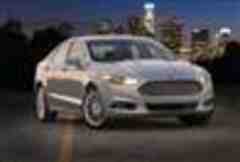
Ford faces lawsuit alleging false mileage claims

Ford faces lawsuit alleging false mileage claims

Paul A. Eisenstein , The Detroit Bureau

Ford Motor Co. is facing a class-action lawsuit alleging the maker’s mileage claims for two new hybrid models are “false and misleading.”

The maker has made fuel economy a major part of its advertising pitch for new products, notably including the 2013 C-Max Hybrid and Fusion Hybrid models. But its official ratings have come in for criticism, notably from such influential sources as Consumer Reports magazine.

But Ford is by no means alone. Korean siblings Kia and Hyundai recently had to roll back their own mileage numbers by as much as 6 mpg after conceding they fudged the official government testing process.

“In its advertising and marketing campaign for the vehicles, Ford claimed that the C-Max Hybrid and Fusion Hybrid achieved a class leading 47 Miles Per Gallon,” reads part of the lawsuit filed by California-based law firm McCuneWright. “These materials helped Ford achieve record sales for the first two months of C-MAX Hybrid sales, outselling its rival, hybrid sales leader Toyota, but there was a problem. These ads were false.”

McCuneWright filed its lawsuit on behalf of Richard Pitkin of Roseville, Calif., who claims he is getting just 37 mpg from the C-Max Hybrid he purchased in October. According to the mileage numbers approved by the Environmental Protection Agency – which regulates fuel economy testing – the C-Max and Fusion Hybrid models both get 47 mpg in city and highway, as well as combined, cycles.

The lawsuit follows a report by Consumer Reports that also found the C-Max averaging just 37 mpg overall, while the Fusion Hybrid averaged 39 mpg.

In a blog post, the magazine said, “These two vehicles have the largest discrepancy between our overall-mpg results and the estimates published by the EPA that we’ve seen among any current models.”

Ford has defended its mileage numbers and notes that the vehicles can be driven more aggressively in Sport mode, which will yield lower mileage.

“Early C-MAX Hybrid and Fusion Hybrid customers praise the vehicles and report a range of fuel economy figures, including some reports above 47 mpg,” Ford’s global marketing chief Jim Farley said earlier this month. “This reinforces the fact that driving styles, driving conditions, and other factors can cause mileage to vary.”

The EPA reportedly is investigating Ford’s testing procedures to ensure they comply with federal standards. A routine audit revealed that Hyundai and Kia had knowingly made procedural mistakes that resulted in a significant increase in reported mileage.

The Korean carmakers have had to reduce their rating by anywhere from one to six miles per gallon. They have also agreed to provide debit cards to owners of the affected vehicles to cover increased fuel costs. Both are also facing numerous lawsuits stemming from the mileage flap.

A number of other makers have also faced backlash over allegedly excessive mileage claims – especially with hybrid models. Consumer Reports says tests of two Toyota Prius models fell an average six to seven mpg short of EPA ratings.

Fuel economy can vary widely depending upon factors such as driver behavior, climate and even fuel quality. And hybrids are “going to be far more variable than a conventional vehicle,” according to Linc Wehrly, director of the EPA compliance division’s test center in Ann Arbor, Mich.

Part of the problem is the way the EPA test is conducted. It has a maximum speed of just 60 mph, far less than most motorists now drive on U.S. highways.

Both Toyota and Ford hybrids can operate in electric-only mode only up to 62 mph, so at speeds above that mileage may drop sharply even if vehicles like the C-Max or Prius provide accurate numbers under EPA guidelines.

The EPA has revised its testing procedures several times over the years, most recently in 2009. It plans to expand the audit that nabbed Hyundai and Kia but has not indicated whether a further revision of mileage testing procedures may be needed to give a better reflection of what consumers can expect in the real world.

Wednesday, December 12, 2012

Ford speedometer claims for review by EPA face


Paul A. Eisenstein, the Detroit Bureau
The reinforced environmental protection agency mileage claims for two of the Ford Motor Co. two latest hybrid models to review.

The move was a report by consumer reports magazine, the Ford Fusion hybrid and Ford C-Max delivered raised extensively promoted hybrid significantly lower fuel consumption than the manufacturer in its advertising. The Federal Agency is particularly sensitive to the issue after the discovery that the South Korean Automakers Kia and Hyundai the fuel-economy figures for 13 of their own products become fake.

According to consumer reports, after 2,000 miles to go were the two Ford hybrids drive less than 35 miles per gallon in the city, lower than Ford claims, while the two models just fell on the highway and combined driving cycle, as well as 12 mpg. The gas-electric models C-Max and fusion are rated at 47/47/47 mpg.

Ford responded to the influential not-for-profit magazine it was, that can vary and insist that owners have often reported mileage higher than the EPA pay approved. For his part, LINC Wehrly, Director of EPA compliance testing center in Ann Arbor, Michigan, carefully echoed this position of the Detroit News, tells "" A hybrid vehicle will be widely variable than a conventional vehicle,"when it comes to fuel mileage observed."

However, the EPA is mode apparently in crackdown after the discovery during the test by Hyundai and Kia mileage claims that the two Korean companies overstated their fuel consumption by up to 6 mpg to 13 separate models. You were forced to the numbers - an embarrassment for companies that had advertised a number of products, the more than 40 mpg - and issue credit to owner previously rolled back.

The Agency had indicated, that it to see if it the fuel economy regulations properly complied with and that evaluation will take Ford now under the microscope would be looking at other manufacturers.

Ford global marketing Chief Jim Farley said, the manufacturer is not abusing the provisions are recorded and released a statement, claiming the company "early C-MAX hybrid and fusion hybrid, customers praise the vehicles and a range of fuel economy figures, including to sign some reports about 47 mpg." This reinforced the fact that driving conditions, and other factors driving style can help lead, that mileage will vary." The EPA was commissioned by the Congress with both the corporate average fuel economy or CAFE, standards, monitoring and ensuring the industry mileage claims. But the Agency relies on the vendors who treat actual exam and analysis and some fear, with fuel consumption now as the top priority of most American motorists, increases the pressure to turn the data.

The C-Max and fusion hybrids can be up to 62 km/h electric, a clear advantage in the EPA test process the tests run only up to 60 km/h in vehicles. Even at low speed, the two Ford vehicles will fire when the battery is low or if a motorist driving aggressively and, significantly, which can reduce fuel consumption, the manufacturer confirms their gas engines.

The Detroit Bureau: White House wants black boxes in all future CarsLike Hyundai, there were a number of reports and reviews, which claims the C-Max and fusion hybrids, providing less than the mileage found. But critics note that this is far unique. Variations of less than 20% are common, especially on battery-based products. The EPA revised its process physical and chemical investigation in 2008 largely to hybrid vehicle results in sync with the real drive make.

It is unclear, how long, the EPA review takes the Ford hybrids.

The Agency could fit the numbers but Ford will find rules in compliance with the current test. The manufacturer clearly the procedures were injured have, but it would be subject to significant fines and possibly steps similar to Hyundai and Kia, to meet owner.

These two Maker are still the threat of a lawsuit. Several owners have filed against already claims the Korean brands

Tuesday, November 13, 2012

Auto mileage claims getting greater scrutiny

Paul A. Eisenstein, The Detroit Bureau

Watch TV for more than an hour in prime time; pick up a newspaper or magazine; or check the ads that pop up while you’re searching the Web. Odds are you’re bombarded with ads pitching the latest fuel economy numbers from one manufacturer or another.

“Mileage has become the number one concern of American motorists,” Ford Chief Operating Officer Mark Fields noted earlier this year.

But are those numbers valid? That’s the question motorists – and regulators – are left wondering in the wake of the revelation, last week, that Korean makers Hyundai and Kia had inflated their own mileage figures by as much as 6 mpg on 13 separate models. The Environmental Protection Agency is apparently getting ready to review other makers’ mileage claims. Meanwhile, even numbers that meet government scrutiny are coming under question because of the way the industry is promoting mileage in advertising.

The EPA, which oversees fuel economy testing and sets rules for how the results may be listed by manufacturers, underscored the significance of the Korean mileage scandal by noting only two other products have been found to use false mileage claims since the beginning of the millennium.

But has the industry generally lived up to the rules – or have regulators simply been lax in enforcement of guidelines that allow automakers to influence the final figures shown on their so-called Munroney window stickers and used in prime time advertising?

That’s apparently a question the EPA is now asking itself. The agency noted that the audit that snared Hyundai and Kia is part of “an ongoing investigation,” hinting that the figures used by other makers will now face close scrutiny.


“This is the first time where a large number of vehicles from the same manufacturer have deviated so significantly,” announced the EPA in reference to the problem at Hyundai and Kia – which will now see the makers forced to restate mileage for 900,000 vehicles sold in the U.S. since 2010.

The Koreans have also promised to reimburse owners for their extra fuel costs in the form of debit cards that will be issued once a year. Meanwhile, several officials at Hyundai and Kia confirmed the likelihood that the revised mileage numbers, ranging from 1 to 6 mpg, may result in lower residuals and trade-in values. That, in turn, could lead to lawsuits by owners seeking reimbursement for likely losses.

The two makers responded quickly to the EPA announcement last week, issuing mea culpas and promising to stand behind consumers who purchased the affected vehicles.

In a teleconference with journalists, officials tried to explain what happened once Hyundai revised its own mileage testing approach in 2010. “There are hundreds of different parameters that can affect” the results, said Sung-Hwan Cho, president of the research and development operation shared by the two automakers. To make it more efficient and consistent, he added, “We (added a) few more steps and (processes), which is different from what EPA has generally recommended, so that’s where this errors – procedure errors happened.”

Hyundai’s problems were not entirely unexpected. The automaker’s fuel economy claims have been questioned by a number of automotive reviewers. And the numbers were often criticized by a group called Consumer Watchdog – which Hyundai until now had dismissed as inaccurate.

But the manufacturer isn’t alone. At a time when fuel economy figures seem to be climbing rapidly, even as makers also claim sharp gains in horsepower and performance, there are growing concerns about the accuracy of such assertions.

Part of the problem is that, “We do a lot to ensure we get the best numbers possible out of the EPA tests,” said a senior industry engineer asking not to be identified by name or company since he spoke without permission.

The EPA uses a rigid testing procedure that requires specific stops and starts. The rate of acceleration from a stop is clearly defined, as is the amount of time used to simulate city and highway driving. Makers can readily duplicate those procedures and, with the power trains in today’s cars all controlled by microcomputers, a maker can program the system to maximize mileage when driven in the manner used for EPA testing.

Ford has come under fire for problems with the PowerShift transmission in small cars like the Focus and Fiesta, in part, it admits, because it tuned the gearbox to deliver maximum mileage while sacrificing driving comfort.

Such actions are usually acceptable to the EPA. What would get an automaker in trouble is testing vehicles that have been tweaked differently than the production version of the same cars or trucks – or supplying the EPA with false data, as happened with Hyundai and Kia.

Even if federal investigators determine the Koreans were unique, and that other automakers have played by the rules, the debate over fuel economy will likely continue. For one thing, critics contend the EPA test itself isn’t necessarily a valid reflection of the real world. Indeed, the agency occasionally tweaks the process to make sure it reflects what motorists will actually get. That happened just a few years ago when it became apparent that hybrids were routinely getting excessively high EPA ratings.

The other issue that critics cite is the way manufacturers advertise mileage. It’s become common to hear numbers of more than 40 mpg for compact sedans, and even midsize models are nudging up to the 38 mpg mark, figures reserved for hybrids just a few years ago.

But makers typically only promote highway mileage ratings while ignoring the city number. For most motorists, the combined figure would more accurately reflect what to expect in daily use.

“We have to be competitive,” and that means advertising the biggest number, Hyundai Motor America CEO John Krafcik told TheDetroitBureau.com prior to last week’s revelations. But he’s not alone. While most industry officials admit that the figures they advertise overstate real world expectations, they say they can’t switch unilaterally. Without the government stepping in, the optimistic highway numbers will continue to be the ones used in the headlines.

Tuesday, June 26, 2012

Shaky battery manufacturer claims a breakthrough

DETROIT - during a visit by President Obama Gelobt a centerpiece of his Administration should be used assist with the production of sophisticated electrical batteries in the United States A123 systems for $2 billion in government subsidies.

Instead, the company, which has the lithium-ion batteries for electric cars, along with the rest of which the nascent industry stumbled and now threatens more ammunition to critics of the President heavy spending on new energy technologies to.

A123 had to workers at the new factory in Livonia, Michigan, partially recall a grant of 249 million, after get the battery for a new electric vehicle ground to a halt, and one expensive action financed with the promise needed cut. Completion of the factory has been delayed. The company is running short of cash and warned that if it raises more money from private investors, it is not in a position to remain in business could.

Still so much how is A123 representing technology risks of the Government programme battery also it promises. On Tuesday, a new battery technology, which the company claims is a breakthrough in the industry reveals A123 systems.

The advance is a new chemistry, providing a simpler, lighter, long-life battery, that is not necessary, could allow a system to cool or heat it used you.

The success or failure of the new technology can determine the fate of the A123. It renders promote also an early ruling about Mr. Obama of broader push to electric cars and build a domestic industry to develop and manufacture advanced batteries to run it.

Honda fit EV, review receives best-ever 118 MPGe
The president's prediction of a million electric cars on the road by 2015 seems to be given unattainable, the tepid demand, the first models on the market. So far in this year a total combined sales of the Chevrolet Volt plug-in hybrid and electric cars Nissan leaf less than 10,000 vehicles. Slow sales which have become the already an election issue, and the failure of the Solyndra solar panel company has also intense criticism of the Government clean energy subsidies drawn.

In response to the Solyndra bankruptcy cost the taxpayer around half a billion US-dollars, the Department of energy has tightened controls on technology loan, in connection with electric cars and other fuel-saving. In the case of Fisker Automotive, get the faulty A123 Batteries, the Government of its lending froze when the company missed production schedules.

Executives of A123, based in Waltham, Massachusetts, say that the company has received, a slower start than expected as the market for electric cars could grow. The company recorded a loss of $125 million in the first quarter of this year as sales fell 40 percent over the previous year.

"It is softer than what we and everyone else expected," said David Vieau, Chief Executive of A123.

'Green'-models are not the money value, study shows
Still remain the big automakers has so far committed electric vehicles, and g.m A123 provides contract batteries for the Chevrolet spark, a fully electric mini car available next year.

Recently, the Government, for its part, A123 admitted an additional two years meet production targets Michigan built and earn the full $ 249 million is the financial aid that is disbursed in tranches. So far, only about half of the money to the company was given.

In addition to the factory grant A123 Department of energy received money about $ 14 million for research and development.

The Government may have funded the company, since "these guys have some new chemistry, some new ideas, rather than the ability to market the product", said Professor Prashant N. Kumta, a materials science expert at the University of Pittsburgh, started on lithium-ion batteries in the 1990s years.

He said that A123 has been "a bit disappointing" because it had been not much product on the market.

The Energy Department said it would comment on the viability of individual companies.

But a spokeswoman, Jen Stutsman, said: "the market for electrified vehicles is expected to 2017 tripled - there are new types of hybrid and electric vehicles and racing car manufacturer in every part of the world to introduce."

Alternative-fuel vehicles gain favor with driver
"The investment will help today to ensure that the jobs that support this fast growing industry here are created in the United States," she said.

Proponents of the energy programs say, it is unrealistic to expect, every Government supported company immediately thrive.

"We are ready, some of the risks for the new energy economy, to accept should be even if not, some these startups" said representative Diana DeGette Colorado, the ranking Democrat on the House energy and Commerce Subcommittee, the Solyndra investigated.

But Mitt Romney, who has attacked suspected Republican nominee for President and former Governor of Massachusetts, subsidies for energy companies as a waste of tax dollars. "If Mitt Romney is President, Government stops interfering in the market," said a spokesperson for Romney, Andrea Saul on the campaign website.

A prime example is A123 systems as one can promising venture in the harsh realities which bog automotive marketplace. Founded in 2001, the company first and foremost has manufactured focuses specifically engine spark, a minicar of General on the lithium-ion battery packs for cars like the Fisker karma and a forthcoming full electric version of Chevrolet.

But the company stumbled upon, as it might be defective batteries planned for use in the vehicle Fisker had to remember. And with the future market for electric cars in question, A123 may not survive solely on batteries for these models.

Instead A123 hopes now that the new technology which is there Tuesday, called EXT Nano phosphates revelation it helps open up new markets. The company says that eliminates the new electrolyte chemistry for heating and cooling in extreme temperatures. That would avoid the addition of expensive and heavy temperature management devices and extended battery life.

The technology could be used to produce batteries for telecommunications equipment, military vehicles, and hybrid gas electric cars, using start stop engine systems. It could provide even batteries that could be used to replace the millions of traditional lead acid batteries in cars on the road at the time.

"It's a hedge against the market for electric vehicles," said Mr. Vieau.

The company hopes that the promise of new technology helps investors, a $50 million convertible bonds offering of the company back to convince.

A battery expert said that the new technology could have immediate impact on the luxury car market extended service life.

"The car companies can advertise that this lithium-ion battery to last the lifetime of the vehicle, without replacement comes," said Ahmad A. Pesaran, engineer at the Government of the national renewable energy laboratory in Golden, Colorado

Potential customers from the automotive industry can samples testing, 2013 is to start this year with production in the first half.

This story, "Wackeligen battery maker claims a breakthrough" times originally appeared in the New York.

Copyright © 2012 of the New York Times

Thursday, January 12, 2012

Honda sued over mileage in small claims court

TORRANCE, Calif. — A woman who expected her 2006 Honda Civic Hybrid to be her dream car wants Honda to pay for not delivering the high mileage it promised. But rather than joining other owners in a class-action lawsuit, she is going solo in small claims court, an unusual move that could offer a bigger payout if it doesn't backfire.


A trial is set for Tuesday afternoon in Torrance, where American Honda Motor Co. has its West Coast headquarters.


Heather Peters says her car never came close to getting the promised 50 miles per gallon, and as its battery deteriorated, it was getting only 30 mpg. She wants Honda to pay for her trouble and the extra money she spent on gas.


Peters, a former lawyer who long ago gave up her bar card, has devised a unique legal vehicle to drive Honda into court — a small claims suit that could cost the company up to $10,000 in her case and every other individual case filed in the same manner.


If other claimants follow her lead, she estimates Honda could be forced to pay $2 billion in damages. No high-priced lawyers are involved and the process is streamlined.


"I would not be surprised if she won," said Richard Cupp Jr., who teaches product liability law at Pepperdine University. "The judge will have a lot of discretion and the evidentiary standards are relaxed in small claims court."


A win for Peters could encourage others to take this simplified route, he said.


"There's an old saying among lawyers," Cupp said. "If you want real justice, go to small claims court."


But he questioned whether her move, supported by publicity on the Internet and elsewhere, would start a groundswell of such suits. He suggested that few people would want to expend the time and energy that Peters has put into her suit when the potential payoff is as little as a few thousand dollars.


Peters opted out of a series of class-action lawsuits filed on behalf of similar Honda hybrid owners when she saw a proposed settlement would give owners no more than $200 cash and a rebate of $500 or $1,000 to purchase a new Honda.


The settlement would give trial lawyers $8.5 million, Peters said.


"I was shocked," she said. "I wrote to Honda and said I would take $7,500, which was then the limit on small claims in California. It is going up to $10,000 in 2012."


She said she also offered to trade her hybrid for a comparable car with a manual transmission, the only thing she trusted at that point.


'I filed the suit'
"I wrote the letter and I said, 'If you don't respond, I will file a suit in small claims court.' I gave them my phone number," she said. "They never called, and I filed the suit."


She said she also sent emails to top executives at Honda with no response.


Aaron Jacoby, a Los Angeles attorney who heads the automotive industry group at the Arent Fox law firm, said Peters' strategy, while intriguing, is unlikely to change the course of class-action litigation.


"In the class-action, the potential claimants don't have to do anything," Jacoby said. "It's designed to be an efficient way for a court to handle multiple claims of the same type."


He also questioned her criticism of class-action lawyers for the fees they receive. Jacoby, who handles such cases, said lawyers who take on the multiple clients involved do extensive work — sometimes spanning years — and are not in it just for money.


"They're representing the underdog and they believe they are performing a public duty," he said. "Many of these people could not get lawyers to represent them individually."


American Honda's offices were closed for the holidays and no one could be reached for comment. Peters said the company has tried five times to delay the trial but each effort was rebuffed.


The upside of Peters' unusual move, she says, is that litigants are not allowed to have lawyers argue in small claims court in California. This means any award will not be diluted by attorney's fees. Honda would have to appoint a non-lawyer employee to argue its side in court.


"If I prevail and get $10,000, they have 200,000 of these cars out there. That's a potential payout of $2 billion," she said.


While she doubts that all other owners will take the same route, she suggests the penalty could be substantial for the company if a large percentage of the owners file individually.


A judge in San Diego County is due to rule in March on whether to approve Honda's latest class action settlement offer. Members of the class have until Feb. 11 to accept or decline the settlement.


Peters has launched a website, DontSettleWithHonda.org, urging others to take the small claims route.


Copyright 2012 The Associated Press. All rights reserved. This material may not be published, broadcast, rewritten or redistributed.