Tuesday, July 31, 2012

Honda recalls 172,000 crossovers, luxury car

Honda recalls 172,000 crossovers, luxury car

The Detroit Bureau

The CR-V is the 2012 target of Honda's latest recall, together with the new Acura ILX.

By Paul A. Eisenstein, the Detroit Bureau
Honda is recalling 172,000 crossovers and luxury sedans because of a problem with the vehicle door locks to the door open can come while driving.

The recall has affect two latest models of the manufacturer, which redesigned 2012 CR-V crossover utility vehicle and the all-new Acura ILX entry-luxury sedan. It is the latest in a series of problems, to deal with the Honda in the last few months, after the manufacturer had led the list to individual callbacks 2011.

According to a statement from the company "simultaneous operation the driver or passenger side inner door handle and either manual or power door lock the inner door handle release cable can always partially switched lead." If this happens, the door does not lock and the door can lock when closed and close but then open, if the door locks can be operated "The affected doors can unexpectedly lead both."

This could happen, not only, if the vehicle is still but also, when it is in motion.

The recall extends 166,000 2012 model year CR-vs. The crossover is one of the mainstays of the Honda line up and last year was completely revised. Also affected 6,200 Acura ILXs, the entry-level sedan of the manufacturers for 2013 are added.

Honda says that still reported but federal law quick action, requires when a security issue of a manufacturer is detected, even if not it reported particular problems of owners were no accidents or injuries.

It may be that a key factor in what some analysts describe as a significant time in the number of callbacks in the last few months. Federal authorities once allowed manufacturers to decide whether some safety issues could easily justify repairs if reported by the owner of Toyota during the great security scandal crack in 2009 and 2010 have been down.

Both producers, traditionally known have seen since a rise in the recalls for bullet-proof quality and reliability. By some activities last minute suggested to just Honda, Toyota, which is reminiscent of dubious honor of production than any other car manufacturer 2011. She has announced more than half a dozen additional recalls problems in 2012 for matters of headlights until problems with the Struts hold the rear hatches and leaking gas tank.

The manufacturer plans to inform owners of the latest door lock problem in the coming weeks. Repairs are provided free of charge.

Monday, July 30, 2012

Mercedes to replace BMW as a top luxury brand

Mercedes to replace BMW as a top luxury brand

Alex Domanski / Reuters

Daimler AG of CEO Dieter Zetsche enters a new Mercedes a-Klasse car at the Mercedes plant in Rastatt, Germany.

By Paul A. Eisenstein, NBCNews-Le
It is one of the most bitter battles on the American automobile market, and it pits two of Germany's luxury automakers in a grab for the brass ring. But in this Jahr Mercedes-Benz is betting that it can topple rival BMW to the best selling automotive luxury brand in the world's largest end market.

But Mercedes volume alone is not the measure of success, said top American Executive. The producer is looking for a significant increase in which she hopes in the future it also as leader on the gross margins will position.

And key to the growth, Mercedes-Benz said U.S. Chief Executive Steve Cannon, a wave of new products, which cover not only is existing market segments, but also some "white space" ranges, where the luxury manufacturers currently do not take part.

"The breadth and depth our positioning one of our strategic advantage", said cannon.

The Executive has much of the week in Santa Fe, spent where their first drive in the second generation GL sport utility vehicle will be Mercedes automotive journalists. He joins an array new updated models such as the larger G cars, smaller GLK and the brand best selling truck, the ML.

If the latter model was introduced a little more than ten years, skeptics scoffed. But it was not the first time Mercedes conventional wisdom had set boundaries, entering a new segment. It took several years of debate before it launched the compact c-class in the 1980s in the life. This model is now one of the strongest offerings of the German manufacturer.

Meanwhile, the U.S. sales of Mercedes is now almost 45 percent the ML, GL and the rest of the SUV lineup. And sales Alabama, United States even higher, Cannon claimed there would be no capacity bottlenecks in the Assembly plant of in nearby Tuscaloosa by the automaker, would be. The industry average of 60 to 65 days a 26-day supply of the ml dealers currently have on the one hand – less than half.

Dieter Zetsche, Leiter Mercedes-Benz cars, explains whether Mercedes US production will increase. It also checks how Europe its debt crisis is management.

Some people surprised, might the strong demand for Mercedes crossover/SUV models because in the run-up of in fuel prices this year. As the numbers on the pump over $4 per gallon in some markets forecasts would put - with some analysts the numbers eventually nudge $5 and even $6 - total light truck sales shortly fulled. However, since prices in early April reached, demand has largely.

This is not to say that Mercedes ignored the possible disruption may have a different oil tip. Still the hard they can the impact of new emissions and mileage standards will be adopted to discard in major markets such as the United States, Europe, Japan and China.

"they need smaller cars," says Cannon, a West point graduate and former artillery officer.

The automaker recently has a hint of what the store at the lower end of the market is, where he completely updated its smallest model, the a-class. And, significantly, at least a version - the coupelike CLA sedan - provided for the first time of one of the a-class models in the United States come to the US market

Such models are not supposed to just to satisfy the demands of the authorities but meets the needs of a new generation of buyers, the smaller search - and decidedly high-tech products. Mercedes has traditionally positioned leader in technology as, and it invested billions to the brand image to get. The new GL, leads, for example, features such as collision avoidance and crosswind stabilisation. The former can a driver, to a potential crash of the latter, the great crossover in his eyes even in the harshest storm helps keep warn.

But what can appeal more Gen-X and millennial luxury first-time buyers is the mBrace2-Infotainment system, the couple can use Smartphone apps with a driver such as Pandora through the car sound system to play - and even voice commands for SMS.

While new products and technologies for Mercedes growth plans of crucial importance will be Cannon conceded that the manufacturer of the way treated, must improve in customers the Bay of showroom and service. "When we look in the mirror and to be honest we have to admit that we do not do well enough," he said.

The manufacturer has a series of meetings with dealers the country staging were to improve the sales processing. Traders who have in turn approximately 1.50 billion $ to more than 90 percent of U.S. showrooms to update. The results seem paid be.

"Mercedes is setting standards," said Fran O' Hagan, the Pied Piper bypass prospective study used to measure thousands of so-called "mystery shoppers", such as manufacturers of the sales and service of process. Mercedes released its brave competitors such as BMW, Lexus and Audi in results this month.

And that has apparently helped to win it a leg up on BMW. It held a 2,000-unit ahead of the Bavarian automaker in the first half of 2012 after almost losing the U.S. luxury sales Crown 2011. Anything can happen especially when rival BMW or Lexus ramp up incentives to admit issues, Mercedes officials. But it is clear that they are ready, pull the big guns, the ring this time access.

Ironically, Cannon given to this being no 1 probably "no longer a car for the brand sell" Although Americans like to assign winners. All the more important, the Executive said, is to ensure maximum margins, by to protect the image of the vaunted Mercedes Tri-Star badge.

"Profitability is more important in any case," agreed analyst Aaron land Bragman, IHS consulting, even though he thinks Mercedes 'probable' hilltop luxury this year.

And the key to maintain, he said, is to ensure that new products such as CLA - and updated offers such as the next-generation S-class and updated E-class next year are available - to beat expectations of customers.

CNBC's Phil LeBeau has the story on two luxury auto brands racing for the number one spot this year.

Sunday, July 29, 2012

Is this safe? Fiat offers to go a jolt of Joe

Is this safe? Fiat offers to go a jolt of Joe

The Detroit Bureau

It should be no surprise, that Fiat would provide the option taking into Italy intensive attention to a bitter shot espresso.

By Paul A. Eisenstein, the Detroit Bureau
These days, almost every car on the road is likely to offer a few Cup holder. But this means that you still brew your own batch of Java or stop the local coffee shop on your way to work. Not so when the new Fiat 500 L hits the road in October.

The European version is at least what is billing the Italian automaker "the first standard production car in the world." offer a true coffee Espresso machine '

It should probably be no surprise that Fiat would provide the possibility, given Italy intensive attention to a bitter shot espresso. No word whether it cappuccino, as well, but will make.

The manufacturer "integrated perfectly in the center console", which explains the automaker and was developed for the 500 L of Italy's largest coffee chain, Lavazza. Single-shot cartridges, which minimize the effort and the risk of dumping used coffee grounds all over the car.

Several other manufacturers such as Mercedes-Benz and Ford, have developed alarm systems before recently drivers, seems to be sleepy a motorist to signal. You use a coffee cup icon to warn that it is time, pull over. With the Fiat 500 L, a driver would need not apparently looking for a coffee shop.

The Fiat 500 L will join the next model of the manufacturer's American line-up. It seems that there are no plans, the espresso machine to the transatlantic journey, along nevertheless.

The introduction of a full espresso machine in the new 4-door model is a sharp switch in direction for Fiat. European manufacturers long disdained the American demand for Cup holders, you it only if it turned out, that they were losing to American and Japanese brands company Add.

But motorists have looking after more than just a place to store their drinks. A number of new models contain now cooled glove box, where you can cool off a non-alcoholic drink. And the latest version of the 300 C sedan, produced by Fiat's US partner Chrysler, Cup holders that are set to relax or to heat your beverage.

Meanwhile provides for with the resources new Rolls Royce Phantom II rear seat refrigerator to store a bottle of your favorite champagne, as well as a cut Crystal decanters for those that prefer a nice single-malt Scottish. There are matching glasses, as well as you could expect.

Saturday, July 28, 2012

Drivers can now benefit from the application of OnStar

By Robert E. Calem, TechNewsDaily
OnStar subscribers have long to look with the technology of the company from a distance, to lock or unlock and start or stop their vehicles. As of Tuesday, you can also use to make a profit.

The partnership between GM OnStar and RelayRides, a peer-to-peer car sharing service, is now possible thanks to an exclusive new technology exchange people their car for any period from one hour up to a week to others rent, to find it online or through a Smartphone app.

RelayRides can now find tenant members, unlock and lock OnStar-equipped vehicles, they have paid to rent, direct access to the vehicle within the service app or through a text message reply. And owners OnStar-equipped vehicles can now safely hide your car keys inside their vehicles and tenants personally go with their other activities, instead of car keys passed - as owner not OnStar equipped vehicles have to do still.

Could owner members earn much money from their rental vehicle through the service and the risks are low, because RelayRides offers liability, collision and comprehensive insurance for the rental period. Owners are subject to a $1 million policy, tenants will receive a $300,000-normal car insurance is not involved in politics and users.

A current search the RelayRides marketplace for cars available in the Hoboken, n.j., turned a number of vehicles, which ranged in price from $6 to $50 per hour or $45 to almost $1,000 per day. ("Ravi included the Honda," a 2007 civic, which rents for $6 per hour or $45 per day and "Logan's BMW," a 2008 3 convertible, which for $50 per hour or $250 per day rented.)

RelayRides cars are available at locations in the United States, but in some of these areas, it is not the only peer-to-peer car sharing service. Competitive operations Getaround (in San Francisco, San Diego, Austin, Texas and Portland, Oregon/United States) include, Wheelz (serves the communities for four universities in California: Stanford, UC Berkeley, UCLA and USC). Getaround, in particular offers a technology option enabled, by the Alliance of similar to OnStar RelayRides: the Getaround car kit brings in each vehicle and combines GPS, Wi-Fi and Keyless remote technology.

Copyright 2012 TechNewsDaily, a TechMediaNetwork company. All rights reserved. This material cannot be published, sent, rewritten or redistributed.

Friday, July 27, 2012

Not again! New callbacks announce Ford, Volvo

By Paul A. Eisenstein, the Detroit Bureau
Are that the car manufacturers order more reminiscent of this year? While it will probably end of 2012 before this question can be answered there seems to certainly like more than call a couple of days without an other headline some leading security problem or another a new back - or two, not go through as is the case on Monday.

The latest reminds of come from Ford Motor Co., which out pulls the carpet from under his new escape crossover, so to speak, and seems S80 sedan be course slides by Volvo.

The Ford that will make probably the most headlines memory as it the brand new 2013 a hot escape, sold version of the decision makers long lasting impact sport all-terrain vehicle.

Escape models must be brought to the dealer, Ford said the National Highway Traffic Safety Administration, as padding on the left side of the center console carpet out of place and push could make it difficult, use the brake and gas pedal.

While this is not displayed the potential to the throttle open, as was the problem with some Toyota products, can jam, however, extend the vehicle braking distances have warned Ford.

(Earlier this month, Toyota announced it would almost 150,000 late model Lexus RX models by so-called "Holmes 'Catch up'.") This problem has been blamed for an extensive previous callback after the death of a California Highway patrol of officer, was killed, along with three other family members, when he rode the throttle of a Lexus that was dammed by loose floor mats.

Total 8.266 2013-model Ford escapes by the new callback charged were in the United States, the rest goes to Canada and Mexico sold. It is unclear how the news otherwise affect highly acclaimed cross-over the.

How at Volvo, its dismissal works only 1.469 S80 models from the model years from 2011 to 2013. The manufacturer says that faulty software can be the automatic transmissions in vehicles prevent switching algorithm from the fifth to the fourth course. In turn, could the the vehicle to the stall and may result in an accident after the NHTSA.

The version of 2012 was called back by the S80 recently for faulty wiring.

Both manufacturers plan to inform owners in the coming weeks. Traders will make all necessary repairs at no cost to the owner.

The sudden rush of reminds can just a coincidence but industry observers suggest that they see a pattern, the Toyota can be the result of the scandal security 2009-2010. The manufacturer crowed famous over how it had said NHTSA, from a potentially expensive recall throwing a tongue lashing for both from Capitol Hill lawmakers.

The Federal Agency has treated since less indulgent of defects, the makers traditionally may use fewer steps banner-anchoring, such as secret warranty programs to address problems only if a customer complained is at a dealer.

These problems seem now generate full callbacks.

Thursday, July 26, 2012

Audi dominate race to luxury market hits speed bump

Audi dominate race to luxury market hits speed bump

Audi

Audi S5 Coupe is crucial for the automaker of the ambitious growth plans.

By Paul A. Eisenstein, msnbc.com of users logged on
The smell of smoke is easily recognizable, but it takes a second to realize that S5 is from nearby forest fires and not from the tires of the new Audi, because it goes through a close screeching, winding Colorado mountain pass.

Seven seater the chance of its latest products, was recently a handful of American journalists including the S5 Coupe and smaller S4 sedan and the new all-wheel drive crossover, decisive test for the ambitious growth plans Audi vehicles. But as solidly planted the two sporting products may be, there are a few clear bumps in the road ahead for Audi.

In an unexpected announcement Audi AG said CEO Rupert Stadler this week, that again by a full five years is their goal the world's largest premium car manufacturer pushing the automakers. He told the German publication Suddeutsche Zeitung, which should not happen until the year 2020.

"The way is getting bumpier," Stadler said, while stressed, that the automaker of the target "to take and to secure the top position."

As Stadler his plans a few years ago announced, it came as little surprise for Europeans who win the Volkswagen AG subsidiary steadily ground have seen before recently overtaking rivals such as BMW and Mercedes-Benz in some key markets.

But it is a shock to many Americans because the brand long in the shadow of rivals and is overshadowed by Lexus, used Toyota-mark, was until last year consistently leading in the United States luxury sales.

"In Europe, Audi strong for years", said brand marketing manager Loren Angelo during the recent Colorado product preview. "But here in the United States, it was a totally different situation."

Audi was a rapid rise in upstart back in the mid-1980's, break out from the sober and sophisticated mainstream with distinctively designed products such as the 5000 sedan. But the manufacturer has been catching up problems much like before recently plagues Toyota and Lexus products have suffered in a security-related scandal, which all but destroyed the brand if the 5000 has been claimed, to unintended acceleration.

In the course with Toyota, a federal investigation after all Audi - put most of the blame on driver error - but the German import had almost their dynamics, and 1992 sales fell more than 80 percent, leading parent VW Audi out of the American market is seriously considering.

At the end of the company decided it hard out, but it would be almost two decades before Audi regained lost momentum. Ask questions of survival again in the middle of the last decade as Audi of America joined Angelo what described as the "Period of stagnation".

VW more autonomy it pushed things back in the corridor by the German engineering resources, as well as many works now as an almost independent company - although there are still some to share underlying components with Volkswagen and other VW Group brands.

The strategy paid off. A flood of new products, including the supercar R8 clicked with consumers and Audi sales started in such a way that it since the early days of the old 5000 sedan had not. Ironically, it was one of the more resilient luxury brands during the recent recession.

It ended with a U.S. record sales of 117.561 2011 and has set new records since then every month. Last year, the brand reached a 10-percent share of the US luxury market. Is the goal to reach 11 percent for 2012 after Angelo, and for the moment, the US subsidiary is still targeting a near doubling of sales to at least 200,000 per year, by 2018.

To get there, Audi recently announced that it finally open a North American assembly line with long-debated plans driven. The plant, which opened in Mexico by 2016, the exchange rate helps offset now faces in the euro area produced products import penalty Audi. The new plant will be a large number of markets, but another serious challenge for Audi broader global growth plans are addressing.

"I was not surprised" to hear CEO Stadler delay Audi plan are you no. 1 in the, said analyst Dave Sullivan, Inc. "a lot to do, which has with capacity," he said luxury segment AutoPacific, "the biggest thing that holds it back."

In fact, dealers in the United States and some other markets routinely about the long waiting times for some Audi of popular products to complain about such as such as the A5.

But there are other challenges. In the United States not Audi or the level of brand recognition that it needs to 200,000 annual sales, company officials admit to generate. You are quickly up to speed with figures to show that their brand "purchase consideration" - a factor measure, how many luxury buyers watch - even an Audi is fast on the rise of only 42 percent in 2006 to 60 percent in the past year.

Growth in the American market is certainly important - maybe even more significant given the crisis in Europe, which leads to a Continentwide slide in car sales, luxury and mainstream. Verkomplizieren is an unexpected slowdown in the Chinese market, which had been the world's fastest growing markets for luxury vehicles until recently.

Not only the pace of growth has slowed to a crawl but luxury manufacturers - including in particular competitor Mercedes - had to offer new incentives and even price cuts on many of their products.

However, Sullivan and other analysts believe that Audi remains ahead of the luxury segment curve. It has established a clear reputation for leadership and has a solid fan base for the Quattro all-wheel drive technology.

It continues to be difficult to improve the quality and customer satisfaction, according to recent surveys. But the general trend upwards. And Audi to fight Stadler and other officials that the dynamic, easy to to maintain, is well positioned to disrupt the pecking order in the luxury segment - only a little later than originally planned.

Wednesday, July 25, 2012

Senator questions results of Toyota safety probe

Senator questions results of Toyota safety probe

J. Scott Applewhite / AP

"Key questions about the cause of the unintended acceleration remain unanswered" Senator Charles Grassley, R-Iowa, wrote in a letter to NHTSA Director David Strickland.

By Paul A. Eisenstein, the Detroit Bureau
Get Toyota too easily you after they are largely looking problems with so-called unintended acceleration by a couple of studies of the manufacturer was deleted?

This is a way of Senator Chuck Grassley, an Iowa Republican, who one letter to the National Highway Traffic Safety Administration, or NHTSA, questioning the results of the two studies, which has sent for the agencies is raised, in particular may no one done by NASA, signs of electronic gremlins, that established Toyota vehicles, out of control to drive.

"Important issues about the cause of the unintended acceleration remain unanswered," wrote the veteran lawmaker in a letter to NHTSA Director David Strickland.

These questions were supported internal documents from a raft in the hands of the TheDetroitBureau.com suggest, that Toyota may be in fact even worried that yet still unknown problems with some it its products.

The NASA study and a second by the national academies of science failure to substantiate claims of Toyota critics, that the manufacturer of electronic engine controls may be the result of unintended acceleration - also known as sudden acceleration - where a vehicle out of control advised increase could lead possibly to a collision, injury or even death.

Toyota has been embroiled in a safety scandal when in October 2009 a California Highway Patrol officer and three family members were killed when a Lexus they were borrowing out of control, drove slipped a freeway, crashed and burned.

The manufacturer called back episode 8 million vehicles in a pair of reminds, mats a targeted so-called "carpet entrapment,", loose to where could the metal jam, and another related to potentially label accelerator of assemblies.

Lexus RX350 remember Toyota end carpet entrapment last month expanded to almost 134,000 additional vehicles, 2010 and include RX450h crossovers.

Despite the many parties involved in these two product recall - that its just some Toyota main assembly plants shut down while waiting for the necessary spare parts forced - critics of the manufacturer was vehicles that it had addressed not the big problem. But experts, including some NASA Panel also warned that it could prove almost impossible, electronic gremlins to follow, which could occur only sporadically and then without a trace disappear.

Some pointed to a phenomenon known as "tin whiskers," in which Nano size issues known to grow at central connecting points on electronic circuit boards. This possibility was raised repeatedly report NASA in the 177.

"This is a serious problem," Grassley wrote Strickland, questions in his letter to the NHTSA, how often and to what extent it was pursued.

Traditionally known for its apparent bullet-proof reliability, Toyota had some unexpected shots as a result of the economic crisis 2009-10 — the most important executives saw, which including CEO Akio Toyoda grilled by Congress and led to fines for the sticky Accelerator problem in a timely manner, prescribed by law respond to record.

The Agency has some penalty for themselves, as a result of the Toyota scandal. Internal documents showed that NHTSA on Toyota simply went by the fact that there is a previous callback to avoid, that the automaker millions of dollars saved. That one major reason Strickland agreed was to two independent studies Toyota's unintended acceleration problems to empower.

At the end of attributed to NASA and linked events - those not unique entrapment or sticky accelerators - to driver error carpet geratenen NAS the vast majority of the reported out of control car. In many cases, by evidence before, that in one case was secured a driver accidentally pressed so hard on the brake, the bent, instead of the accelerator.

But the studies a light window, suggesting that it could be left open Toyota unknown beating yet electronics.

A NHTSA spokesman said the Agency of the Senator has received the letter and "will to check it carefully and respond appropriately."

In the meantime continue to the various legal measures, Toyota of alleged victims working unintended acceleration before their way through the courts.

Tuesday, July 24, 2012

Navigation in vehicle sales will quadruple by 2019.

By Paul A. Eisenstein, number of cars, trucks and crossovers is sold with vehicle navigation systems the Detroit BureauThe in North America by 2019, according to a new study, is growing each year to quadruple to nearly 13 million new systems.
But that cannot be considered good news as it may seem, to traditional navigation system suppliers, such as Denso, Harman or TomTom, warns Boston-based strategy Analytics, Inc. It warns that high-tech companies like Apple, Google and Microsoft, "begin to fight for release" as they grow their own automotive business.

The good news is that future navigation systems, who provides them, are probably less expensive and significantly more features provide. More functionality, price, even a barrier to entry for many consumers - or was it led with aftermarket devices go, which can be purchased at a Costco for $100. And now, potential buyers have the chance, go with Smartphone navigation apps.
"The recent announcement by Apple with regard to its Automotive OEM partnerships and the extension of Apple's mapping efforts significantly the market could change in the vehicle", says Strategy Analytics senior analyst John Canali.

The penetration rate of the auto-navigation technology very differently from the market. Factory navigation systems are in the vicinity of ubiquitous in Japan, especially in the labyrinthine cities such as Tokyo. In the United States however, the technology had a slow start, and during the after market units have become popular Christmas gifts, factory installed systems have gained ground very much slower.

This begins to change. Some manufacturers have recognized that this price is a critical obstacle. Had to switch from low-volume, high profit margin strategy, Canali said they can sell far more navigation systems one which recognises, but to a lower profit per unit.
Ford, systems navigation, for example, now offers some models for less than $600. In fact, the basic hardware is car already in the and the driver pays the premium for software that contain a thumbnail view SD card.

Now be proposed legislation, the mandate would be, the use of back-up cameras should also help lower prices and sales, Canali, when most proposed the basic hardware, especially the in stroke video screen already installed vehicles in the most such legislation in force.

But Canali stressed the analyst notes that "really has extended the definition of navigation". "It is built not only the full screen, hard drive, or DVD-based system not in the dashboard."

Ford, for example, offers also a free service through its sync Infotainment System. There is a driver can call no video display but in a destination and an operator is there in the program. Will then be read by voice turn guidance. General Motors offers a similar feature "Offboard navigation" through its subsidiary OnStar as do quite a few other manufacturers. GM has new Chevrolet GogoLink the , a new smartphone app based nav system that says GM offer comprehensive navigation with traffic to less than the cost of traditional navigation.

Ford Sync system, as also KIA new information technology, both from Microsoft have been developed. The latest Audi models, such as for example the 2013 S5 sedan feature displays by Google Earth and Google StreetView images. Apple is now indeed always and even negotiations with a number of manufacturers, add a button "Siri" on the steering wheel, that the tech company's voice control software on an iPhone would be access directly. Among other things would allow a driver, easy questions to a nearby Cafe and have given the address automatically in the navigation system.

"In competition with these new players is difficult for established providers of navigation systems because the new players are well capitalised and can devote much more for research and development," Richard Robinson, Director of automotive and multimedia communications at Strategy Analytics.

The new study finds that global sales of car navigation systems of employee base 9,500 million in 2009 to 56 million by 2019 will jump. In North America volume of 1.80 million in the year to 3 million this year and 12.90 million annually by 2019 2009 an estimated increase. But at least from a percentage-based largest growth is being seen in China, Strategy Analytics forecasting sales of navigation only 355.000 in 2009 is 11.80 million 2018 reach.

Monday, July 23, 2012

Chevy introduces buy-back guarantee program

By Paul A. Eisenstein, The Detroit Bureau
Hoping to maintain its momentum as key Japanese competitors recover from last year’s production cuts, General Motors’ largest brand has announced its new Chevy Confidence program which includes a “Love it or Return it” vehicle buy-back guarantee on all 2012 and 2013 models.

The maker is also launching a “Total Confidence Pricing” discount program aimed at clearing out inventories of leftover 2012 models. Most GM plants take a mid-summer break this month to convert production to the 2013 line-up.

“We have transformed the Chevrolet lineup, so there is no better time than now to reach out to new customers with the love it or return it guarantee and very attractive, bottom line pricing,” said Chris Perry, Chevrolet global vice president of marketing.

GM has used buy-back programs before, notably to prop up the Chevy Volt in the months after reports of battery fires threatened to unplug demand for the plug-in hybrid last year. But the breadth of the new program is significant, covering all 2012 and ’13 models.

To qualify, vehicles must be returned within 30 to 60 days, have less than 4,000 miles on the odometer and experience no damage.

The launch of the new Chevy Confidence program comes less than a week after June auto sales were announced – with key Japanese competitors making major gains. Toyota, for example, was up more than 60% for the month and has been steadily regaining market share lost last year when it struggled to keep its assembly plants running after the March 2011 Japanese earthquake and tsunami.

This is a particularly significant year for Chevrolet which is rolling out some critical new products, notably including the new midsize Malibu, which had been making gains against traditionally dominant Asian imports such as the Toyota Camry and Honda Accord.

The challenge for Chevy is to ensure its offerings land on motorists’ buying lists. Research shows that the average car shopper only closely considers two to three vehicles – and for a sizable chunk of the population Detroit products aren’t a factor.

“We know through first-hand experience that once they get behind the wheel of one of our new products, they are more likely to take one home,” said Steve Hurley, co-chair of the Chevrolet Dealer Council.

Along with the buyback program Chevy will institute a no-haggle pricing strategy as part of the new campaign. It hopes that by starting out with good discounts it can convince buyers and dealers alike to avoid the often-frustrating negotiations that are generally seen as the most painful part of buying a car.

That approach could work, suggests Jesse Toprak, chief analyst with TrueCar.com, an auto pricing and data service.

As for the buyback program, Toprak says, “(It) is an indication of how confident Chevrolet is in its’ new product line up. It is a way to get people into showrooms and experience firsthand the significant investments the dealer body has made in the recent years. It is a smart and cost effective program that will work towards diminishing the perception gap of the Chevrolet brand particularly in coastal metropolitan areas where consumers have a stronger preference towards the import brands.”

Chevrolet remains a major force in the U.S. market, its largest, but has become increasingly dependent upon overseas sales. The brand generated 4.76 million sales in 2011 and is shooting for another record this year.

Sunday, July 22, 2012

Isuzu recalls 11,000 Rodeo Sport, Amigo SUVs

DETROIT — More than 11,000 Isuzu SUVs are being recalled because parts in the rear suspension can rust and break away from the frame.

The recall affects Amigo SUVs from the 1998 to 2001 model years and Rodeo Sport SUVs sold as 2001 and 2002 models, the National Highway Traffic Safety Administration said in documents posted on its website.

Isuzu said the rear suspension link brackets can rust and become detached from the frame. The problem can hurt the vehicle's handling and cause a crash, but it was unclear if there have been any wrecks or injuries. Isuzu officials were not immediately available for comment Monday.

The recall covers SUVs sold or registered in 21 states and Washington, D.C. Those are places where salt is used to clear the roads. Salt can cause metal to rust. Affected states include Maine, New Hampshire, Vermont, Massachusetts, Rhode Island, Connecticut, New York, New Jersey, Pennsylvania, Delaware, Maryland, West Virginia, Ohio, Indiana, Michigan, Illinois, Wisconsin, Minnesota, Iowa, Missouri and Kentucky.

Isuzu dealers will inspect the suspensions and treat them with a rust-resistant compound or install a reinforcing bracket free of charge. In rare cases when the rust is so severe that the reinforcement bracket won't work, Isuzu will buy the vehicles back based on the Kelley Blue Book private party sale price, the company said in a letter to NHTSA.

Isuzu will notify owners by mail and start the recall later this month. NHTSA acknowledged the recall in a letter to Isuzu on Friday.

Isuzu Motors Ltd., famous for developing one of the first mid-sized sport utility vehicles and an ad campaign that featured a salesman telling lies, stopped selling new pickup trucks and SUVs in North America in 2009 due to financial problems. The company remains in the U.S. with commercial vehicles, and it said at the time that it will back its products and dealers for years to come, honoring all product warranties.

The Associated Press contributed to this report.

Saturday, July 21, 2012

N.Y. man nears 3 millionth mile in '66 Volvo

N.Y. man nears 3 millionth mile in '66 Volvo

Seth Wenig / AP

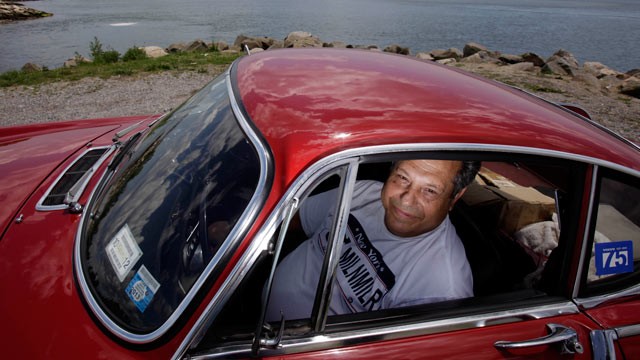
Irv Gordon's car already holds the world record for the highest recorded milage on a car and he is less than 40,000 miles away from passing three million miles on the Volvo.

By Paul A. Eisenstein, The Detroit Bureau
While buying a new car is a status symbol for many folks, Irvin Gordon takes pride in keeping his old jalopy going. And going … and going.

The Bay Shore, N.Y., retiree expects to hit 3 million miles in his 1966 Volvo P1800S sometime next year. And he has held a solid lock on the Guinness Book of World Records since 2002 when an entry for High Mileage Vehicle was created for him after passing the 1.6 million mile mark.

“It’s just a car I enjoy driving,” the 72-year-old former teacher told The Associated Press.

Before his retirement Irvin clocked 125 miles a day commuting. But he is an inveterate road-tripper. Before his divorce he would routinely pack up the family and head off to Canada, the Midwest, Texas. Even today, divorced and with his children grown, he continues to pile on the mile traveling alone.


Seth Wenig / AP

Irv Gordon shows a recent service statement for his Volvo P1800.

"I have had coffee in every state," said Gordon. "I am my own travel channel."

Irvin said it took him 21 years to reach the first million miles, another 15 to get to 2 million. Now, however, he’s driving more than ever, an estimated 85,000 to 100,000 miles annually as a retiree.

Ironically, he loves to go visit auto shows. But he’s looking, not buying. He said he has no interest in retiring the old Volvo – as a 93-year-old Florida woman did earlier this year when her 1964 Mercury Comet Caliente was put to pasture with 576,000 miles on it.

Actually, Rachel Veitch said she would have kept driving “my lovely chariot,” which is still in fine working order but admitted reaching the point where she was considered legally blind.


Seth Wenig / AP

Irv Gordon drives his Volvo P1800 in Babylon, N.Y.

"I have taken it in stride," she told a TV news reporter. "I don't have cancer, I don't have Lou Gehrig's disease. I am lucky." The car brought her plenty of notoriety before handing over the keys, including an appearance on the Tonight Show with Jay Leno in 2010.

His own health good and still 21 years younger than Veitch it’s anyone’s guess how many more miles Irvin Gordon might keep going. The Long Island man bought the car new on June 30, 1966 for just $4,150 – back then a full year’s salary. He skipped the optional air conditioning but forked over an extra $10 for the new AM/FM radio.

As you might expect, Gordon is rather exacting when it comes to keeping the car running. He does regular oil changes and tune-ups. He still has the original engine – although it has been rebuilt twice. And he doesn’t let anyone else drive the car.

“I have a feeling I’ll be dead long before the car,” he said.

Volvo hasn’t missed the chance to promote the fact that Gordon’s ’66 wagon is still on the road. He has become something of a brand ambassador appearing on behalf of the Swedish maker at a number of auto shows and other events over the years. Driving to them in the old Volvo, of course.

According to industry data, motorists are keeping their cars running longer than ever, reflecting factors such as the weak economy as well as improvements in vehicle quality and reliability. But at 11 years and perhaps 150,000 miles for the average vehicle, Irvin Gordon’s Volvo is anything but typical.

Yet, while his 3 million miles may be a record he is not entirely unique. The Guinness Book has recognized other reliable steeds, including a 27-year-old Land Cruiser owned by Emil and Liliana Schmid which has so far clocked about 650,000 kilometers, or 413,654 miles, as of May, earning it records for the longest travel journey and the most countries visited in a single car -- 172.

The Swiss couple note that over the years they have worn out 138 spark plugs, 54 shock absorbers, 31 batteries and 22 air filters. They’ve also suffered 166 flat tires.


Seth Wenig / AP

Irv Gordon's car already holds the world record for the highest recorded milage on a car and he is less than 40,000 miles away from passing three million miles on the Volvo.

They debated whether to replace the Land Cruiser – once, when it broke down in Borneo – but after finding a mechanic they kept on going.

And as for Irvin Gordon? Might he eventually find the desire, if not the need, to trade in?

“Why would I want to get rid of it?” he says, when asked. “Kind of like a good woman.” Which raises questions about Gordon’s divorce – but says plenty about the Volvo.

Friday, July 20, 2012

The hardest-to-find new cars

It’s been some time since the U.S. auto business boasted a bona fide “Next Big Thing” that had consumers pressing their faces up against showroom windows and paying hundreds – perhaps thousands – of dollars over sticker price to be among the first to get behind the wheel of what was a true head-turner.

Models like the Mini Cooper, Chrysler PT Cruiser and Volkswagen New Beetle were sudden sensations when they were first released, with demand far outstripping supply, at least initially. Similarly, the recently introduced ultra-quick Chevrolet Camaro ZL1 and the ferociously fast Ford Shelby GT 500 models are currently the hot tickets among auto enthusiasts who are willing and able to pay whatever it takes to beat their peers to the punch for vehicular bragging rights.

Hard to come by as those specific variants may be, the just-redesigned 2013 Mercedes-Benz SL-Class hardtop roadster is currently the industry’s most difficult vehicle to obtain. Brand-new SLs don’t come around very often, compared to most mainstream models, with the prior generation lingering on the market for a full decade. This has created a pent-up demand among affluent aficionados for the new rendition that dealers are having a hard time fulfilling.

We created the accompanying slideshow of what are the 15 hardest-to-find cars this summer, based on current “days’ supply” figures provided to us by TrueCar.com. This statistic represents the theoretical number of days it takes the average dealership to sell its existing inventory of a given model and is a good indicator of how easy or difficult it will be to find an ample selection in stock from which to choose (also how easy or difficult it will be to strike a good deal – more on that later). While the industry-wide average days’ supply for June 2011 among all makes and models stands at 51 days, Mercedes dealers have only eight days’ inventory of the $105,500 SL-Class on hand.

“The shortest days list is a combination of vehicles that are both in tight supply because of demand and 2013 model-year vehicles that are new to the market,” explains TrueCar.com senior analyst Kristen Andersson. “Many of the fuel efficient smaller vehicles are in tight supply due to demand and production limitations, while the 2013 model year luxury brand vehicles are just becoming available.”

Subcompact cars are in shortest supply on dealers’ lots at an average of 35 days, according to TrueCar.com, followed by compact cars at 38 days. To that end, many of the models in our hard-to-find list are small and fuel-efficient cars like the Hyundai Elantra, the Kia Rio and Soul, the Subaru Impreza, and – coming in second and third place, respectively – the Toyota Prius c and Prius Plug-in hybrids. “Toyota is selling all the Priuses it produces and dealers could sell even more if the vehicles weren’t in tight supply,” Andersson says. “Despite the fact that gas prices have come down the future for fuel is uncertain and consumers want a fuel efficient vehicle in which they can only save if fuel prices increase.”

Luxury vehicles, particularly posh SUVs for which TrueCar.com estimates an average 41-day supply, make up the remainder of the models playing hardest-to-get this summer. These include the all-new Infiniti JX and updated early-2013 versions of the Acura RDX, Lexus RX and the BMW X3, X5 and X6. “Inventory is low on changeover models, which is dragging the days in inventory down as production and deliveries to dealers ramp up,” Andersson says.

According to Automotive News, BMW dealers can boast having the hardest-to-get model lines in the business at an average 24 days’ supply, with Hyundai at 25 days, Mini at 26 days, Kia at 29 days and Audi at 30 days. Not surprisingly, nearly half of the 15 models on our hardest to find list come from BMW, Hyundai and Kia.

Unfortunately, given how strictly the law of supply and demand affects the ultimate transaction price of a new vehicle, don’t expect to be offered anything more than a token discount on any of the models that are presently in the shortest supply, particularly the early model-year 2013 entries that are just reaching dealerships. Bargain hunters would be advised to wait a few months until shipments catch up with sales to avail themselves of better deals down the road.

As an example, the just-released 2013 version of the Lincoln MKS luxury sedan remains scarce, with dealers having just 13 days’ worth of cars on hand. By contrast, its (admittedly stodgier) model-year 2012 predecessor stands as being among the most overstocked models in the industry, with an average dealer sitting on a whopping 138 days’ inventory.

© 2012 Forbes.com

Thursday, July 19, 2012

Volvo hit with $1.5 million fine for recall delay

By Paul A. Eisenstein, The Detroit Bureau
Volvo’s shiny halo as an automotive safety advocates has been tarnished a bit by federal regulators who allege the Swedish maker illegally delayed action on seven separate recalls.

The National Highway Traffic Safety Administration (NHTSA) is fining Volvo $1.5 million for the delays which involved a total of 32,000 vehicles in 2010 and 2012. Some of the recalls were relatively minor, such as one involving incorrect tire pressure labels, but others were more significant, including problems with vehicle stalling and defective airbags.

Though it officially denies any wrongdoing, Volvo has agreed to pay the fines and stated that it has “taken steps to improve the review process and analysis of potential quality and safety issues with our vehicles.”

The law requires a manufacturer to act in a “timely” manner, described as no more than five business days, once it discovers a safety problem that would trigger a recall.

NHTSA can levy fines of up to $17.35 million in the event of an improper delay and it struck Toyota with a series of fines for the questionable handling of several safety-related issues in 2009 and 2010 – including the months-long delay in ordering a recall for potentially sticker accelerator pedals. That problem eventually led the Japanese giant to call back millions of vehicles and to temporarily close a number of its assembly lines while it came up with a fix for the problem.

BMW, meanwhile, was slapped with a $3 million fine, earlier this year, due to delays in 16 separate recalls – the most serious involving BMW 5 and 6-Series cars from 2004-2010 and 7-Series models from 2002-2008.

NHTSA has been cracking down on manufacturers in the wake of the Toyota safety scandal. The federal safety agency was itself embarrassed when a Toyota document leaked out suggesting the maker had talked compliant NHTSA regulators out of ordering a recall that would have cost the company several $100 million.

A new U.S. transportation bill will double the potential fines manufacturers face for delaying recall actions.

Wednesday, July 18, 2012

The VW, Porsche marriage is back on track

By Paul A. Eisenstein, The Detroit Bureau
The on-again/off-again tie-up of Porsche and Volkswagen finally is set to be completed after a series of potentially costly snags that threatened to scuttle the deal.

The marriage – which follows an abortive David-and-Goliath effort by the smaller maker that triggered an assortment of lawsuits and a feud within the extended Porsche family – is “expected…to take effect as of August 1, 2012,” Volkswagen says.

Despite earlier fears that the tie-up could leave them vulnerable to billions of dollars in legal costs due to those lawsuits, the makers now contend the merger will generate a “clearly positive impact on consolidated profit(s).”

“We will concentrate all our strength on the operative business and the solid, profitable growth of the company,” says Volkswagen CEO Martin Winterkorn, adding that the newly combined firm should achieve “long-term synergies of about €700 million per year.”

“In the end, it’s all about the money,” said analyst Joe Phillippi, of AutoTrends Consulting. And once Porsche found a way to minimize the potential financial risks, Phillippi believes it was inevitable the deal would be completed.

The merger will come as a peaceful end to one of the most bitter battles the auto industry has seen in years. In a highly unlikely scenario, Porsche began accumulating shares of the bigger maker hoping to take over VW. But when it couldn’t complete the hostile acquisition Porsche found itself saddled with 10 billion Euros of debt. That led to the ouster of the maker’s once-celebrated CEO Wendelin Wiedeking.

It also threatened to lead to even more financial problems for Porsche as investors accused it of breaking various securities laws in its attempt to acquire Volkswagen.

The two makers agreed to a merger in August 2009 but put that deal on hold as the lawsuits – and potential risks – facing Porsche began to mount.

They’ve recently taken several critical steps to reduce their potential risks – while they also came up with a strategy to avoid as much as 1.5 billion Euros in taxes on the merger. The deal will be classified as a restructuring under Germany’s reorganization tax law.

Volkswagen already holds a 49.6% stake in its German rival. It will now assume Porsche’s remaining shares for a 4.46 billion ($5.9 billion) payment and issuance of a new common share to the Porsche holding company.

Adding to the complexity of the deal was the fact that it started out, as much as anything, as a feud between rival factions of the Porsche family. Wolkfgang Porsche, whose grandfather started the iconic sports car company, is a cousin of Ferdinand Piech, chairman of the Volkswagen AG Supervisory Board.

Observers suggest that once he thought he could win that internecine battle Piech was bound and determine to eventually make the deal come together.

But he isn’t the only one pleased that the merger will occur. Investors drove sharp gains for both VW and Porsche shares Thursday.

In the long run, analyst Phillipi contends the deal should pay off handsomely. “Both companies have lots of unique technological expertise they will now be able to leverage by working together,” says Phillippi, adding that with all the new emissions and fuel economy mandates being put into place – never mind increasing competitive pressures, “being able to spread your costs across a wider number of products will be more important than ever.”

Once focused on just a handful of high-performance models, Porsche has rapidly expanded its product mix in recent years, adding models like the Cayenne SUV and Panamera 4-door sports car. It is now readying a smaller SUV and is expected to add still more products.

The question that concerns some analysts is whether Porsche will be able to maintain its distinctive brand identity, something buyers pay a hefty premium for. But proponents note that VW has been able to maintain the unique identity of several other high-line brands, including Audi, Bentley and Lamborghini.

Tuesday, July 17, 2012

Crash avoidance technologies save lives

Crash avoidance technologies save lives

GM

GMC introduced the industry's first crash avoidance system in the 2012 Terrain.

By Paul A. Eisenstein, The Detroit Bureau
While it’s likely to be a number of years before fully autonomous vehicles start rolling onto the nation’s highways the latest crash avoidance technologies – including autonomous braking systems – are having a major impact, according to a new study that finds they result in significantly fewer crashes, injuries and fatalities.

The new report by the Highway Loss Data Institute (HLDI) reveals that forward collision avoidance systems – especially those that can begin to brake even before the driver is aware of a problem – and adaptive lighting systems are delivering the biggest benefits.

But not all the new crash-avoidance technologies are proving equally effective. There’s no clear evidence that blind spot detection and park assist systems have a measurable effect. And Lane Departure Warning technology “appears to hurt, rather than help,” the new report cautions.

"As more automakers offer advanced technologies on their vehicles, insurance data provide an early glimpse of how these features perform in the real world,” says Matt Moore, vice president of HLDI, an affiliate of the Insurance Institute for Highway Safety (IIHS). “So far, forward collision technology is reducing claims, particularly for damage to other vehicles, and adaptive headlights are having an even bigger impact than we had anticipated.”

Analysts for the insurance industry research organization looked at how each new collision avoidance feature affected claim frequency for vehicles produced between model-years 2000 and 2011, depending upon when the technologies were first introduced.

Experts caution, however, that such research can be misleading, especially early on. It can take time for makers to work out the bugs in new technologies – and for motorists to become both familiar with and comfortable using new technologies. In the early years of active safety technology – systems designed to intervene to prevent a collision rather than simply reduce the impact of an accident, such as airbags – there were problems with a number of devices now considered essential.

Early data appeared to show that anti-lock brake systems were resulting in an increased number of collisions. Yet today, ABS is not only mandated by federal law but serves as the base technology for more advanced systems such as autonomous braking.

But there is enough evidence that HLDI found a 14% lower rate of claims for Acura and Mercedes-Benz vehicles equipped with forward collision warning with autonomous braking when compared to otherwise identical vehicles not equipped with such systems.

“Mercedes and Volvo also offer versions of forward collision warning that don’t include autonomous braking,” a summary of the study notes. “These appeared to lower crash rates, too, but not to the same extent as versions that do include it.”

Meanwhile, HLDI found a clear pay-off when it examined the effectiveness of adaptive headlights on Acura, Mazda, Mercedes and Volvo vehicles – a drop in claims of as much as 10%. Adaptive headlights use factors such as the speed of a vehicle and the angle of the steering wheel to help aim headlamps so a driver can see around a corner.

“Injury claims of all types, both for injuries to occupants of the insured vehicles and to other road users, fell substantially for all but one make,” says the report.

Perhaps the biggest surprise of the study was the increased insurance claim rate associated with Lane Departure Warning technology. HLDI stressed that the increase was “statistically insignificant,” but suggests that this feature does not appear to be having the desired effect.

Those results will likely be re-examined and debated. The Insurance Institute for Highway Safety, another trade group associated with HLDI, previously forecast that lane departure systems could eliminate or at least mitigate up to 7,259 fatal crashes annually.

“Lane departure warning may end up saving lives down the road, but so far these particular versions aren’t preventing insurance claims,” Moore says. “It may be that drivers are getting too many false alarms, which could make them tune out the warnings or turn them off completely. Of course, that doesn’t explain why the systems seem to increase claim rates, but we need to gather more data to see if that’s truly happening.”

As with early ABS systems, researchers suggest that the industry will have to examine the way Lane Departure Warning systems operate. The first anti-lock brake devices often tried to warn the driver of an impending skid by violently pulsing the steering wheel, but evidence indicated motorists often responded by lifting off the brake when that happened.

With Lane Departure warning it may take some significant changes in the way the technology alerts a motorist – or perhaps the use of more automated systems. Cadillac has forgone the typical lights and buzzers with its new XTS and ATS models. It alerts motorists to problems – such as drifting out of one’s lane – by shaking the vehicle’s seat in the direction of the problem. Some Lexus products, meanwhile, actually help nudge a vehicle back into its lane.

“Just as forward collision warning systems that include autonomous braking cut crashes more sharply than those that don’t, lane departure prevention systems that don’t rely on a driver’s response may hold more promise than the systems HLDI has looked at so far,” says David Zuby, chief research officer at IIHS.

Monday, July 16, 2012

Mazda's famed rotary engine sputters and dies

Mazda's famed rotary engine sputters and dies

Dan Carney

The 1967 Mazda Cosmo was the first production car powered by a rotary engine.

By Dan Carney, msnbc.com contributor
The new and improved always prevails over the old and stale, doesn’t it? Surely the ancient contraption called an internal combustion reciprocating piston engine – a design that is approaching its 150th anniversary – must be superseded by something newer and simpler.

Maybe. But that replacement won’t be the rotary engine design invented by Felix Wankel in 1957 and popularized by Mazda since its introduction 10 years later. Mazda has announced that it has ended production of the company’s signature engine in favor of concentrating on its trademarked SkyActiv improvements to the piston engine.

It wasn’t supposed to be this way. The 1950s were the future, and when Wankel finally built a running rotary engine after nearly four decades of development, it seemed the engine would doom piston engines the way internal combustion engines killed external combustion steam engines.

Consider the advantages. The rotary, with its spinning triangular rotor is inherently smoother than the reciprocating engine, whose pistons start, stop and reverse direction twice with every single rotation of the crankshaft. The rotary has many fewer parts than the incredibly complex piston engine, especially in these days of variable valve timing, double overhead camshafts, intercooled turbocharging and direct fuel injection.


Mazda

The rotary is compact and light, which makes packing it into small cars easier and it leaves room for crush space in cars that must meet pedestrian protection impact standards. Finally, in this age of interest in diversifying fuel supplies, the rotary is able to burn a range of fuels, including diesel, gasoline, alcohol and hydrogen gas without modification. The only Japanese car to ever win the 24 Hours of Le Mans sports car race? The rotary-powered Mazda 787B.

Recognizing the engine’s potential, more than 100 companies rushed to license Wankel’s rotary design, but very few saw the engine to fruition.

Mazda has sold rotary-powered cars since introducing the Cosmo Sport in 1967, while Suzuki briefly sold a rotary-powered motorcycle in the ‘70s and Norton sold some rotary motorcycles in the ‘80s. During its heyday, Mazda even sold rotary-powered pickups.

But most companies found that manufacturing rotary engines that would run for more than a few hours an insurmountable task. The apex seals, the part at each tip of the triangular rotor, are an engineering nightmare. The seals are prone to wearing out and to developing vibrations that cause them to gouge the inside of the engine. They can even break off entirely, wrecking the engine. The oil seals on the rotors have also proved challenging to perfect.

Wankel’s employer, the German company NSU, made a short production run of rotary cars but quickly abandoned the technology. General Motors planned to make the Corvette rotary powered in the ‘70s, but gave up. Ford engineers, even while the company held a controlling stake in Mazda, found they couldn’t build successful rotary prototypes. American Motors Co. planned for the much-maligned Pacer to use a super-compact front-drive rotary arrangement, a design that would have made the bloated-looking Pacer’s styling more acceptable because of the resulting huge cabin.

Mazda got the rotary to work, barely. The engines have never lasted as long as piston engines, and along the way they were prone to consuming too much gas and oil. Burning oil led my own ’87 RX-7 to foul its spark plugs monthly. Sometimes I could clean them successfully, but other times I had to replace all four of them at $10 a pop. While getting 16 mpg in a two-seat sports car.

So that’s what it came down to. The rotary, as lovely a device as it is, proved too thirsty and insufficiently durable for widespread adoption. The struggle to preserve its signature technology has contributed to Mazda’s financial struggles, so the company finally had to retire its powerplant, at least until its finances improve.

Mazda’s advances in piston engine technology with its SkyActiv gasoline and diesel piston engine are impressive, especially considering the company’s small size and its long adherence to the rotary religion. But the company says it hopes the rotary is merely on hiatus, not dead.

“Work does continue on the next-generation rotary,” explained Mazda USA spokesman Jeremy Barnes. “Additionally, work continues on the use of fuels other than gasoline, taking advantage of the rotary’s unique ability to operation on multiple fuels without extensive reengineering. We’ll share more information on the next generation of rotary when we can.”

Fans who have experienced the rotary’s effortless rush to redline are surely keeping their fingers crossed. But it may be that the future has slipped into the past.

Sunday, July 15, 2012

GM talking with Facebook about advertising again

By Ben Klayman and Gerry Shih, Reuters
Although the two companies remain far from reaching an agreement, Facebook executives have assiduously courted the world's largest carmaker. One source said Facebook was not pushing for GM's immediate return, but offered to provide data showing the effectiveness of the website's paid ads.

Facebook Chief Operating Officer Sheryl Sandberg sent GM Chief Executive Dan Akerson an e-mail urging the company to reconsider its decision shortly after the third-largest U.S. advertiser pulled its ads in May, a move that undermined confidence in Facebook on the eve of its highly-anticipated initial public offering, according to sources who were not permitted to speak publicly because the talks are ongoing.

At a global advertising conference in Cannes, France, last month, Facebook global sales head Carolyn Everson sought out GM's global marketing chief Joel Ewanick to continue face-to-face talks, leaving open the option of GM returning to the fold, sources said. Facebook offered the same information it provides to all of its big advertisers, but did not offer any concessions.

GM and Facebook declined comment. The news was earlier reported by the Wall Street Journal.

Three days before Facebook's May 18 IPO GM said it was dropping paid ads on the website because they had little impact on consumers.

The decision by the carmaker, which spent $10 million on Facebook in 2011, was the first highly visible crack in Facebook's strategy and underscored doubts about whether advertising on Facebook works better than traditional media.

GM emphasized at the time that it would retain its Facebook pages, for which it paid no fees, to market its cars and trucks.

People familiar with a meeting that took place before GM's announcement in May said Facebook officials failed to convince GM's top marketing executives of the value of Facebook's paid ads.

GM, which ranks behind Procter & Gamble Co and AT&T Inc in advertising spending, spent $1.1 billion on U.S. ads last year, according to ad-tracking firm Kantar Media. Overall, GM's spending on advertising rose 5.2 percent last year to $4.48 billion, according to the automaker's annual report.

It spent about $271 million on online display and search ads excluding Facebook advertising, Kantar said.

GM previously said it spends about $40 million on its Facebook presence, but only about $10 million of that was paid to Facebook for advertising. The remaining budget covers the creation of content and the advertising and media agencies involved, the newspaper said.

GM also announced in May it would not advertise in next year's Super Bowl because it was too expensive. Ewanick has led a consolidation of GM's ad agencies globally that is expected to save the Detroit company $2 billion over five years.

Copyright 2011 Thomson Reuters.

Saturday, July 14, 2012

Auto industry the silver lining in gloomy economy

General Motors is clearly the leader in June auto sales. Overall, sales were slightly better than expected, reports CNBC's Phil LeBeau.

By Paul A. Eisenstein, msnbc.com contributor
There may be plenty of reasons to worry about the U.S. economy: Weak jobs numbers, poor housing starts and a European economic crisis that threatens to spill across the Atlantic. But based on June sales numbers, the American auto industry is not one of them.

Car sales outpaced even the more optimistic forecasts, with several manufacturers setting all-time records. A number of others, notably General Motors, saw demand surge to levels not seen since before the start of the lingering U.S. recession.

Significantly, while the industry was clearly pushing hard to sell, sell, sell, industry data suggest automakers didn’t fall into the past trap of buying sales with hefty rebates and other incentives.

“The combination of new products, available credit, lower fuel prices and modest economic growth was a stronger influence on consumer behavior than economic and political uncertainty,” said Kurt McNeil, General Motors’ vice president of U.S. sales.

GM posted a solid, 16 percent year-over-year gain, June bringing the maker’s best monthly unit sales since September of 2008.

Chrysler, meanwhile, delivered its 27th consecutive monthly year-over-year increase — an increase of 20 percent — making it Chrysler’s best June in five years.

Honda had to look back to 2008 for the last time it did so well in June, a month normally buoyed by the so-called Spring buying season. Overall, the Japanese maker gained 48.8 percent, but its struggling luxury division, Acura, gained 76.5 percent — helped by the addition of some critical new products like the entry-luxury ILX. The mainstream Honda division did well, with a 45.6 percent increase despite the fact that its Accord sedan is months away from being replaced by an all-new model.

The Japanese did well across the board, Nissan reporting a 28.2 percent jump — its own luxury arm, Infiniti, gaining 66.1 percent for the month.

But the real winner was industry giant Toyota. Like its Japanese rivals it suffered severely in spring 2011 as it was forced to close or sharply cut back production at many of its key assembly plants due to the March earthquake and tsunami that devastated Northeast Japan. For June 2012, it saw sales rocket upwards by 60.3 percent — and forecast still better days to come.

“June and first-half sales were driven by consumer interest in our new models including the Prius C … and the Camry,” which was redesigned for the 2012 model-year, noted Toyota division group vice president Bob Carter. “We expect to see continued stability in the automotive market during the second half of 2012,” added Carter, thanks to pent-up demand, low interest rates and a continued influx of new products.”

Toyota recently increased its forecast for the full year to 14.5 million vehicles, a figure more and more analysts now agree with. In fact, June’s Seasonally Adjusted Annual Sales Rate, or SAAR, came in at more than 14 million, up from 13.7 million in May.

And it did that even though the industry cut back on incentives by 1.6 percent from May to June, to an average $2,187 per vehicle, according to a preliminary estimate by tracking firm Edmunds.com. That was also down 0.8 percent from June 2011.

Nonetheless, there are some skeptics who worry that a weak economic recovery and the threat of a worsening crisis in Europe could cause the car market to stutter — or force makers to ramp up spending on givebacks.

"There was great pressure from automakers to close June strong, especially after the unexpectedly weak Memorial Day holiday weekend in May,” noted Jessica Caldwell, Edmunds’ chief analyst. “It is the end of a quarter so undoubtedly they wanted to finish big. Two weak months in a quarter would make for unfavorable reporting."

If anything, the industry may be suffering from too quick a recovery. Ford Motor Co. sales rose by a relatively modest 7 percent, but the maker has repeatedly warned that the cuts it made during the recession now leave it with a shortage of capacity. Hyundai has issued a similar warning and said it is struggling to break bottlenecks both at its U.S. plant and on assembly plants in Korea.

There were a few weak players in June, notably Jaguar which has been struggling to build demand for its flagship XJ resulting from reports of early quality problems (the big sedan getting a clean bill of health in the latest J.D. Power Initial Quality Survey released last month).

Luckily for the Indian-owned carmaker its British sibling Land Rover has scored a big hit with its first-ever crossover vehicle, the Range Rover Evoque. Overall Jaguar Land Rover sales were up a combined 2 percent.

A surprisingly weak performance came from BMW, up only 0.4 percent for the month, though its Mini subsidiary gained 14.7 percent — the combined brands collectively picking up 3.2 percent for June.

Meanwhile, Mercedes-Benz not only set a June sales record but had its highest-ever U.S. sales for the first half of the year. Porsche picked up 17.9 percent, the brand scoring with new versions of the flagship 911 sedan and smaller Boxster roadster.

Volkswagen gained 34.5 percent, steadily gaining momentum with its midsize Passat which was designed specifically for the U.S. market and which is being built at the German maker’s new assembly plant in Chattanooga.

VW sales are running at their highest levels since the golden days of the original Beetle. But the maker is targeting a goal of 600,000 vehicles annually before decade’s end, which would require it to double again its current sales.

So, like the rest of the industry, the maker is keeping corporate fingers crossed that June’s sales surge wasn’t just a short-term phenomenon.

Friday, July 13, 2012

Sergio Pininfarina, former Ferrari design chief, dies

Sergio Pininfarina, former Ferrari design chief, dies

The man who designed some of the most glamorous cars to hit the road in the past five decades, has died at 85. Here are a few of his iconic creations.

By msnbc.com staff and news wires
Sergio Pininfarina, the man behind the designs for some of the most glamorous cars to hit the road in the past five decades, has died, the company that bore his family's name said Tuesday. He was 85.

Pininfarina was an auto design genius whose stamp can be seen on a slew of iconic cars, including the 1984 Ferrari Testarossa, the 1996 Peugeot 406 Coupe, the 1986 Fiat 124 Spider, the 2002 Ferrari Enzo, the 2003 Maserati Quattroporte and the 2004 Ferrari Scaglietti.

He headed a family company founded in 1930 by his father, Gian Battista 'Pinin' Farina, a onetime Turin carriage maker, that had a knack since the 1950s for creating stunning production and concept cars. Pininfarina designed autos for Ferrari, the company most associated with the formidable design house, Alfa Romeo, Maserati, Rolls-Royce, Chevrolet, Cadillac, Bentley, Volvo and Peugeot.

The ground-breaking 1947 Cisalfa coupe, designed by Gian Battista after World War Two, now sits in New York's Museum of Modern Art. It was one of Sergio's favourite models.

Gian Battista also initiated the Ferrari connection in 1952, but Sergio ended up managing most of their common projects and turned the business from craftsman level into a world renowned name.

Born in 1926, Sergio joined the family firm after graduating in mechanical engineering from Turin's Polytechnic University, became chief executive in 1961 and then chairman when his father died in 1966.

Ferrari design chief
Benoit Tessier / Reuters

A Ferrari P4/5, designed by Pininfarina, is displayed on media day at the Paris Mondial de l'Automobile in Paris in this September 29, 2006 file photo.

In his half-a-century reign at Pininfarina, the company's automobile production rose from 524 units per year to more than 50,000.

Pininfarina was listed on the Italian Stock Exchange in 1986.

Sergio Pininfarina stepped down to become honorary chairman in 2006, shortly before the financial crisis, which hit the car industry heavily.

Many small builders, like Germany's Karmann and France's Heuliez, did not survive. Other design firms downsized, while Italdesign - another leading Italian stylist - was acquired by Volkswagen AG.

Pininfarina was forced to raise capital in 2009, re-negotiate its debt and shrink its business.

It had to close its manufacturing operations and reinvent itself as a smaller niche design player, with the family's 77 percent stake in the company used as collateral for loans with creditors it needs to pay back by 2018.

In May, Pininfarina said it expected to post its first profit this year since 2004.

Sergio Pininfarina's death comes about three months after the passing at age 76 of famed Porsche founder, and the designer of the iconic Porsche 911, Ferdinand Alexander Porsche.

Reuters and The Associated Press contributed to this report.

Thursday, July 12, 2012

Solid demand drives auto sales up in June

Solid demand drives auto sales up in June

Kevin Lamarque / Reuters

Auto sales are a canary in the coal mine for consumer spending, so the sales increases could indicate U.S. consumers remain somewhat upbeat.

By msnbc.com staff and news wires
UPDATED 10:48 ET: The major automakers -- GM, Ford, Chrysler and Toyota -- reported higher domestic sales Tuesday, driven by good demand that shows American consumers remain willing to shell out dollars for a new car.

Chrysler, the No. 4 automaker in terms of new vehicle sales, posted a 20 percent increase in sales year-over-year. It was the Fiat SpA affiliate's best June sales data since 2007 and its 27th consecutive month of topping sales from the previous year.

Ford Motor Co., the No. 2 automaker, said its U.S. sales rose 7 percent in June, helped by a 28 percent increase in sales of the new Escape SUV. Ford said the Escape had its best month ever at 28,500 sold. Ford also saw strong sales for its Explorer midsize SUV, which was up 35 percent.

General Motors Co., the No. 1 automaker, said its U.S. sales rose 16 percent in June on solid demand for small and midsize cars.

Auto sales are a canary in the coal mine for consumer spending, so the sales increases from the world's major automakers could indicate U.S. consumers remain somewhat upbeat, despite a stumbling job market, a debt crisis in Europe and signs that the recovery is slowing.

They are also a sign that Americans continue to replace vehicles that they held onto longer while the economy was in the throes of the Great Recession.

Last week, General Motors Co Chief Executive Dan Akerson said he expected sales for June would be "surprisingly strong" at an annualized sales rate of between 14 million and 14.2 million.

"We are looking for U.S. light vehicle sales for the industry to come in above 14 million," on a seasonally adjusted annualized basis, said GM spokesman Jim Cain on Tuesday.

On average, analysts surveyed by Reuters expect a 13.9 million annualized sales rate.

GM said its vehicle sales in June totaled 248,750, up 16 percent from the previous year. All four of GM's U.S. brands - Buick, Cadillac, Chevrolet and GMC -- showed sales increases for the month. GM said June sales were its highest since September 2008.

Sales of the Chevrolet Volt electric car more than tripled over June 2011, to more than 1,700. GM also saw double-digit sales increases for the Chevrolet Malibu and Buick LaCrosse midsize cars.

Sales of the Chevrolet Cruze small car were down 24 percent. The Cruze surged in popularity last year when Japanese cars were unavailable after the earthquake. But GM made up for some of that volume with strong sales of its new Chevrolet Sonic subcompact.

GM's best-seller, the Silverado pickup, was up 3 percent as housing construction continues to recover. GM said all truck and SUV sales were up 11 percent.

Michelle Krebs, senior analyst with Edmunds.com, on Tuesday said sales were underpinned by pent-up demand, as consumers replaced older vehicles, low interest rates and marketing incentives linked to the Fourth of July holiday.

Ford sales climbed 7 percent to 207,759 vehicles, according to the automaker, with strong sales of sedans, utility vehicles and pickup trucks.

Toyota Motor Corp, the No. 3 automaker in new car sales, showed a 60-percent June sales increase as it has fully recovered from the March 2011 earthquake and tsunami in Japan, which pressured sales for Japan's automakers in 2011. Toyota is the third largest in terms of U.S. sales.

Chrysler sales rose 20 percent to 144,811 vehicles, the company said on Tuesday, slightly topping analyst expectations.

Nissan, which is No. 6, showed a 28-percent sales gain, to 92,237 new vehicles. The Nissan brand had record June sales of 81,801, up 25 percent, while the luxury Infiniti brand showed a 66-percent sales rise to 10,436.

J.D. Power and Associates and LMC Automotive expect a 20-percent gain in U.S. auto sales for June.

Sales in the first four months of this year were boosted by mild weather and the post-earthquake return of Japanese inventories. But since then, the economic picture has gotten cloudier. In June, employers scaled back hiring and manufacturing shrank for the first time in nearly three years. Consumer confidence — which needs to be strong for buyers to invest in new cars — fell for the fourth straight month.

The news isn't all worrisome. If sales come in at 13.8 million for the year, they would still be stronger than the 12.8 million in 2011. And they'd be much stronger than the 30-year low of 10.4 million during the recession in 2009.

Low interest rates and better credit availability could also lure buyers. The average interest rate on a 60-month new-car loan is now 4.5 percent, down from 6.98 percent two years ago, according to Bankrate.com.

"The affordability of cars is probably at an all-time high," Chrysler Group sales chief Reid Bigland said last week.

Reuters and The Associated Press contributed to this report.

A look at what to expect from last June's auto sales, with CNBC's Phil LeBeau.

Wednesday, July 11, 2012

Enjoy ground States scattered speed traps

Enjoy ground States scattered speed traps

Mark Duncan / AP

Ohio State Highway Patrol trooper Bryan Dail records times for speeders on Ohio route 2 near vermilion, Ohio. While Ohio still aggressively uses aircraft to catch speeders, many states have cut back or eliminated aerial enforcement due to budget concerns.

By DAVID B. CARUSO, associated press
NEW YORK - highway signs throughout New York warn that when it comes to catching speeders, the long arm of the law extends even into the sky. "State Police aircraft used in speed enforcement," they say.

Actually, lead-footed drivers can keep their eyes on the road hitting the interstates for the independence day holiday. The New York State police, who once routinely used planes to clock motorists, haven't written a single ticket in that manner since at least 2005.

"It hasn't been entirely eliminated," Sgt. Kern Swoboda, a state police spokesman, said of the signs. "Have the airplanes still we."

But in these budget-conscious times, he said, launching aircraft to catch speeders just isn't fiscally prudent.

New York is one of several states to scale back the use of aircraft for traffic enforcement in recent years because of budget cuts or concerns about cost-effectiveness.

Typically, aerial plan involve a enforcement programs, a pilot, a spotter to time vehicles as they travel between lines painted on the road and several cruisers to pull people over and issue tickets.

"That ain't cheap," Swoboda said. He added that updated laser technology now allows a trooper on the ground to get speed readings over long distances and in heavy traffic — two situations where aircraft used to be superior.

"So what better way to do it than have three guys at a U-turn?" Swoboda said. "We found that it was far more efficient, and a lot less expensive."

A full accounting of which law enforcement agencies have curtailed the use of aircraft for speed enforcement what unavailable, but the list includes some states that had previously made robust use of the tactic.

The California Highway Patrol still has 15 planes used to catch speeders, but spokeswoman Fran Clader said that as the department's annual air operations budget has dropped from about $12 million to $8 million, aircraft became more focused on supporting searches and pursuits.

"We still enforce speed with the fixed-wing aircraft but in a much-reduced capacity," she said.

The Virginia State Police launched an aggressive aerial speed enforcement program in 2000 but largely abandoned regular patrols after year 2007. last, it flew only one such mission, which resulted in tickets being given to 20 drivers, the department said. It flew four missions the year before, none in 2009 and only one in 2008.

"Due to economic conditions and mandated budget cuts... we've had to look at cost savings," said department spokeswoman Corinne Geller.

She said it cost about $150 per hour to operate the plan - a figure that includes fuel and maintenance but not manpower. In the past, she said, the speed enforcement flights were paid for with federal grants. But with less federal money coming in lately, resources have been focused on keeping troopers on the road.

The Washington State Patrol's aviation section, which had been participating in roughly 13,500 traffic stops per year, had to scale back after suffering a $1.4 million budget cut over a two-year period that began in 2009, according to unit commander Lt. Jim Nobach. It lost three pilots, who had to return to road duties. Flight hours were slashed by 39 percent. As a result, aircraft are now stopping 5,000 fewer drivers per year.

Planes are still getting a big workout spotting speeders in Ohio and Florida.

Last year, the Ohio State Highway Patrol said it issued more than 16,000 speeding tickets based on aircraft observations, down only a little from a five-year high of 18,000 written in 2009. Over the Memorial Day weekend, the start of the busy summer travel season, the agency had 10 aircraft in the air doing traffic enforcement, according to Lt. Randy Boggs, the unit's commander.

Florida's Highway Patrol has eight aircraft and eight pilots, who issue approximately 30,000 citations per year, said the patrol's chief pilot, Capt. Matthew Walker. He said he hadn't suffered budget cuts.

When done right, insisted air patrols have distinct advantages, Boggs and Walker. From the air, it's easier to see the ultra-aggressive drivers who change lanes erratically, follow too close, and pose the greatest hazard on the road. Officers on the ground don't have to race around for miles to spot violations.

"It's very efficient," Boggs said.

Ohio tries to keep the cost of flights down by flying smaller planes and having the pilot clock drivers, rather than use a second spotter. Boggs pegged the fuel and maintenance cost of flying at $111 per hour.

The Pennsylvania State police have continued to use aircraft to catch speeders too, issuing 560 citations last year but now the program faces new limitations,.

This year, in a cost-cutting move, the department stopped using two of the three airports where its six fixed-wing aircraft had been based. The force is of so operating with just three airplane pilots, down from as many as 10 unit in previous years, said Sgt. Joseph Joynes, supervisor of aviation of the patrol's fixed-wing. That means the state now has twice as many planes as people capable of flying them.

Additionally, fewer spots in Pennsylvania have the necessary road markings used for enforcement, as the old lines have been covered over by new pavement and never replaced, said Joynes.

It isn't clear yet whether the changes will lead to fewer citations. Joynes said aircraft are still flying traffic enforcement missions two to three times a week.

"If you are just looking at cost, obviously, the trooper on the ground with a radar gun is way cheaper," he said. But he added that he thought the program what still worthwhile, given the ability of aircraft to spot reckless drivers in areas where traditional speed traps aren't feasible.

Other states have come to the opposite conclusion.

Alabama lawmakers instituted aerial speed enforcement in 1990, and the Alabama highway patrol still touts the program on its website. But aviation unit cpl. Kent Smith said the tactic hasn't actually been used for years.

"It's just not cost effective," he said.

In many places where speed enforcement by aircraft has tapered off, law enforcement air wings have remained busy conducting surveillance, tracking crime suspects, searching for missing people, and spotting marijuana farms from the air.

Police officials in Virginia, California and New York were unable to provide an estimate of how much money had been saved by the shift away from aerial speed enforcement.

In the meantime, workers have been gradually removing the aircraft speed enforcement warning signs along the New York State Thruway. About 11 still remained in June, a Thruway spokesman said.

© 2011 The associated press. All rights reserved. This material may not be published, broadcast, rewritten or redistributed.

Tuesday, July 10, 2012

The hottest convertibles of the year

The Porsche Boxster is S an entry-level Coupe for middle-aged accountants and dentists, right? Not exactly.

Think more in terms of James Dean.

"It's a sexy car for him," Porsche spokesman Dave Engelman says. The $64.100 is meant to evoke the legendary Porsche 550 Spyder driven by the "rebel without A cause" Star Coupe. "they have been designed as a total sports car without compromise."

In fact. Of course not, that Joe which accountants could not go, but the Boxster offers so much more than that. Three hundred are 15 HP and a 0-60 mph time of 4.7 seconds nothing to laugh at. Not to mention a top speed of nearly 175 miles per hour.

And if you a professional questions he will tell you that for most civilians, the mid-engine Boxster much more fun on the track to drive than its 911 sibling.

"The Boxster is a great car - it is far more than the 911 manageable" said Patrick long to me once at a party in New York. Would he know - long drives the Porsche 911 GT3 RSR flying lizard Motorsports in the American Le Mans Series.

All this to say that the Boxster S hot perfectly matched to our list of 10 convertibles on the market this summer.

Cars of the likely suspect belong to the this year's group (think, Aston Martin, Bentley, Mercedes-Benz) along with a few surprises. Some are impractical, but very attractive. Others look more brittle and will work for a weekend outing with friends. But they are all relatively expensive - Ford Shelby GT is the cheapest of the $60,000, what on the list - and muscle-car buffs and exotics lovers alike will agree, all rides they are hot. (We chose the winners on this list by model year 2012 or newer cars).

Delete or not?
Convertibles have been for more than a century (they were the original horseless carriages, after all - only questions, Gottlieb Daimler) but even conventional vehicles over their popularity was taken off. Sales nationwide sunroofs and Targa can be actually even more, thanks to the growing popularity of panorama tops slides.

According to the market research firm RL Polk convertible sales usually accounts for just under 2 percent of the car market but ran closer to 1.2 per cent in the past year. The Chevrolet Camaro was the best-selling convertible in the past year accounting 7,530 vehicle approvals. The Ford Mustang was second, with a convertible sales from 6.645.

On the side of luxury, the best-selling convertible sold the Mercedes-Benz E-class, only of 3,446 units in the past year; The BMW 328 convertible sold only 2.867 units. But convertibles are still an important part of every brand, says Lonnie Miller, analyst for Polk, because they act as a "Halo" vehicles - they gain attention and excitement. Even if someone actually the Roadster, which she buys a showroom enter of drool, at least it has them in the showroom.

"It is a good mood car," says Miller.

Hard or soft?
If you opt to drop-top, the biggest question often comes to form: what is better, a top or a hardtop? Change from a fabric cover for hardtop in each convertible given and it will affect all - performance, strength and (most importantly for many consumers) aesthetics - due to the differences in weight and structure. Each style has its advantages - it depends on just what you want.

Hard tips like the one in the $105.500 Mercedes-Benz SL550 are quieter and longer-lasting, especially for drivers in cold climates live available. They are accepted in General as a better-looking, when top is raised. But they are also heavy, which means that the hardtop Coupe cars are slower and less fuel-efficient, as if they were tops with cloth.

A fabric hood on something like Ford Shelby Mustang means more space in the trunk and a lighter (very efficient) vehicle. It is well suited for drivers that is likely to put the roof very often not required. But they see often dirty and cheap, if they are used, and they are usually more complicated than the push button to engage hard top. They tend also to something louder than something hard, despite the huge profits in recent years the seals are soundproof more.

One of the best in the field of advertising is bow Bentley Continental GTC. It has over 500 HP, with a top speed of 195 miles per hour and a 0-60 Sprint time of 4.5 seconds. Inside, there are unique eyes ventilation slots and wood-framed organ controls to stop Mulliner diamond quilted leather seats and a three spoke leather steering wheel with aluminium inlays. Price: just under $200,000, for the basic version.

It is a good looking car, to be sure. There is only a catch, and there goes everything on this list: the continental goes faster with the roof up.


© 2012 Forbes.com